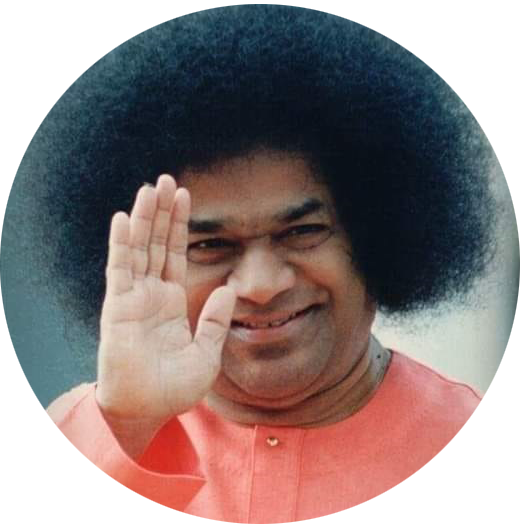
The Dharmic Challenge – Putting Sathya Sai Baba’s Teachings into Practice
Compiled & Edited by Judy Warner
Excerpts shared for educational and spiritual purposes with reverence to the author. This is a non-profit project dedicated to selfless service.
ALL IS GOD'S WORK
Phil Gosselin
I remember my grandfather asking me, when I was five years old, what I
wanted to be when I grew up. Although I had been named at birth for the hero in
Great Expectations, to his amusement I answered, “I want to be
a garbage man.” My family certainly had high expectations of me and always placed a
high value on career. My mother often counselled about work. encouraging me in
this or that possibility although, like the physician admonished to “heal
thyself,” she had a hard time finding her own vocation.
When I was a child, Careers was the family's favourite game.
However, by the time I entered college, the game wasn't helping. I was stumped
as to my vocation.
In my senior
year, after reading many books on yoga and meeting a variety of yogis, I
decided that being a yogi was a true and worthwhile vocation that matched my
awakening interest in spirituality.
This new
potential identity was at the same time very attractive to my ego, which was
enthralled by the exotic grandiosity of seeing myself as some special spiritual
being. My Western image of the wandering sadhu also matched my frugal,
even stingy, qualities. My hippie inclinations at this time were to be a casual
wanderer who could hitchhike everywhere and sleep anywhere. So besides being
drawn to the spiritual life of a yogi, I was also drawn culturally and emotionally
toward that image.
In order to go
to India, after college I drove a taxi to earn my way. That temporary career
became even more temporary than I expected. In fact, it quickly ended when two
young passengers in the back seat of my taxi held a knife to my throat and
demanded money. Fortuitously, they were seen and pounced upon by two undercover
policemen who jumped into the taxi. Luckily, I had earned enough to go to
India.
Shortly
thereafter, I travelled to the ashram of Sathya Sai Baba for the first time.
After living at Baba's for one year, He granted me an interview in March 1972.
Joining me were my mother, my sister, and my future brother-in-law.
At one point
during the interview, Sai Baba materialized a moonstone ring for my mother. A
Frenchman in the room gushed out, “Oooh, that's so beautiful! Will you make one for me?” Baba replied, “This is not a
store.” He pointed to a
plastic ring on my finger that had a cheap picture of Swami and said, “This is for money.” Pointing to my mother's ring, He said, “This is for love.”
I looked down
and noted that underneath Baba's picture on my ring was His motto, “Work is worship. Duty is God.”
After Baba
gave many teachings and admonitions, my sister, Janet, shyly asked the big
family question, “What kind of work,
Swami?” We all listened with bated
breath, for everyone in my family present in the interview room had been
puzzled about appropriate future vocations. Baba answered, “All is God's work. Teaching, office, family.”
During the
interview, He said to my mother about me, “Give him hard physical labour. He thinks too much.”Baba told me, “Yoga just
temporary.”I knew right away that Swami's words meant that I couldn't find refuge
in an identity or self-perception as a hatha yogi. He added about me, “Running here and there; this is not my teaching.”
My search for
an occupation to provide an outer persona was something that Baba demolished
both during this interview and over the future years through His various
instructions and hints.
After
returning from India and over the ten years following, it seemed as though the
jobs that I received were indirect gifts from Baba. After telling acquaintances
about Swami after my first India trip, I was unexpectedly offered a training
scholarship and a teaching job at the Arica Institute in New York, which was a
kind of New Age yoga commune.
One late
winter day in 1972, I was enjoying skiing by myself. The lift line was very
long. After a half hour in the line, I found myself paired with an older person
whom I took to be a businessman. I foolishly assumed
he was, therefore, uninteresting and so avoided any conversation. After
reaching the mountaintop, skiing down, and going through the lift line again,
perhaps an hour had passed - and amazingly I was again paired up with this same
fellow.
This time I decided to be more open to him. He asked right away what I
was interested in. I didn't mention religion or spirituality. I thought it
might scare this “typical”businessman. Instead I said, “psychology.” My chairlift partner then said, “Do you know
anything about avatars?”I gripped my
seat tight at this very unexpected question. To my amazement, he told me about
a co-worker who had just been to see Baba. This was quite a powerful
coincidence, especially in those days when Baba was much less well known. I
could feel the hand of Baba in this improbable encounter.
My chairlift partner's co-worker later became a fast friend as well as a
key figure in starting Baba centres in the Connecticut area where rd grown up.
This incident was a powerful lesson in my stereotyping and in my foolish
egotistical separatism. A major irony was that I later became a businessman
myself as well as a psychologist.
In the early
1970s, I took short-term jobs in order to go back to India as often and for as
long as possible. After my Arica job, and following another trip to India in
1974, I took a job teaching at a small institute in southern California. I had
met the founder of the institute at an interview with Baba earlier that year,
and I was hired because of my Arica teaching experience.
After a short
stint at that job, I moved back to the East Coast in the fall of 1974. I took a
job as a parking lot attendant to earn enough money to return to see Baba in
1975. After several months at the job, one day I put a car into parking gear
and went to move another car. To my horror, I saw that first car move across
the lot and crash into another parked vehicle. Apparently, the transmission had
popped into reverse. This car belonged to a high court judge in town. Thus,
ended my parking lot career. Amazingly, I had just enough money to go back to
see Swami. I promptly returned to the ashram.
After eight
months at Prasanthi Nilayam, I again returned to America. My next short career
was as a nursery school teacher. My future wife, Margaret, had convinced me to
work with her at a Montessori school. She was keen on getting married and had
asked Baba about it in late 1975. I was not ready for such a big step, and Baba
said no to the marriage. Upon questioning Swami further, He did say, however,
that we could work together – which we did as teachers shortly after in New
York City. Again, my work life was tied to my relationship with Baba through
His “permission” to take this teaching work.
While I was at
Prasanthi Nilayam from March to December of 1975, I made the acquaintance of
several Wall Street businessmen who were devotees. I went out to California in
the summer of 1976 to attend a Sai Organization meeting in Los Angeles.
Afterward, I hitchhiked north from Los Angeles, planning to spend the rest of
the summer in Montana at friends. After going about 30 miles, I couldn't seem
to get another ride. I felt I was supposed to turn around and go back. It was
the only time I had ever felt that way and, when I went to the other side of
the road, I got rides almost immediately to the L.A. airport. I flew right back
to New York. A few days later, on an August Sunday in a hot and empty New York
City, a Wall Street friend I'd met in India called me because I had expressed
some interest in working on the Street. A famous Wall Streeter and a close
associate of his had to make a sudden move from one Wall Street firm to another
and needed an assistant who could start that day. He was so desperate that he was
willing to take on someone with little experience. My new job was a sudden gift
– perhaps from Baba? Having just been a nursery schoolteacher for six months, I was now on Wall Street. When asked, “What's the quickest way to God?” Baba has responded, “Learn to love my uncertainty.”Certainly, I was trying.
Although now
it's a stereotype that baby-boomers move from long hair to pin-stripe suits, in
1976 this situation was quite unusual. Still new in my job, I was invited to a
party on the Upper East Side of New York. When I asked what to wear, the host
said, “Oh, just informal.” With much of my wardrobe consisting of clothing from my India trips, I
blithely wore a rough cotton shirt emblazoned with Sanskrit mantras, and found
myself surrounded by people in blue blazers and club rep ties. I was out of
place, but I liked to imagine that I was Baba's man on Wall Street, put there
by Baba. It felt in accord with my assumptions that the world is an illusion or
the play of the Gods. Initially, I also enjoyed the humour of the situation.
Yet the world of money and power was confusing to a would-be yogi. I went to
India originally to transcend and be away from the world. Baba, however, placed
me directly in a most materialistic and worldly position. Swami has said, “Be like the lotus blossoming in the mud but untouched by it.” Unfortunately, I often felt neither blossoming nor untouched by my
situation.
I spent my
first several years with a fast-growing firm and found it all very exciting. I
was very lucky in the beginning. At that time in the market, when even
financial veterans were having difficulty, I seemed to be handed clients.
Actually, I wasn't much of a salesman, I was more like an intellectual
croupier, helping peoples' gambling with my educated guesses about risk
factors.
Sometimes, I
would become confused as to whether I was supposed to be selling harder. That
didn't feel quite right to me. I had little urge to get people to buy
securities about which they were unenthusiastic and which might not be too
secure. I was well aware of attitudes around me at work, such as one bit of
advice I received, "You have to be a bit of a thief to succeed in this
business. I had puzzled co-workers one time by saying I didn't care about the
money (certainly only partly true). One office joke compared me to Mr. Clean or
Supreme Court Justice Earl Warren. I was secretly pleased, although to my
co-workers these names were insults about my naivete or lack of aggressiveness.
I would
sometimes forget that the financial work was a gift from Baba, and I would feel
that I was the doer. I would occasionally get caught up in the illusion of
having the power to make people wealthy or happy. As a result, my ego would
rise and fall with market fluctuations.
Now that I had a “regular” career and had started a family, I could only go for
short visits to see Swami, but I still had the occasion in the late 1970s to be
spoken to by Baba. In His presence, I felt some shame about my work. In India,
I would feel how inappropriate this type of work was for a devotee.
Occasionally, I would receive words or looks from other devotees about what an
unsuitable line of work I had. However, Baba, with His own particular sense of
humor and impossible-to-decipher agenda, seemed to feel quite differently about
my work. In 1978, He asked me what type of work I was doing. The word “stockbroker” came out in
such a constricted whisper that He asked me again. When I got it out, He was
all smiles, telling me, “Good!” When I tried to ask Him if I should be in another
line of work, He blithely ignored my concern. Instead, He directed me to focus
my energy on sadhana, work in the Baba Organization, as well as on my
present job.
A very
difficult work period started in 1981 and continued for six years. I worked for
one company that went spectacularly bankrupt. Two other firms I subsequently
worked for also went through much turmoil, eventually going bankrupt several
years after I left them.
In August
1982, my family was fortunate enough to get an interview with Sai. I was quite
down about my work situation, feeling that I couldn't make money for clients or
myself. When I saw Baba, I complained silently about my work situation. Baba
responded verbally by saying, “You're worried about your work. Don't worry. You will see. Everything
will be completely different soon. Very soon.” It was a number of months later before I realized that the day Baba had
said that to me was the exact bottom of the bear (down) market and the start of
the roaring bull (up) market of the 1980s. The Baba I know knows all but, as
with the Delphic Oracle, the people coming to Him seem to be able to make only
partial use of His words: I hadn't had a clue as to what Baba had been
referring. Further, I still couldn't seem to make any money, and I was feeling
the pain of losing other people's money. My situation was reversed from the
'70s. Now, it seemed that everyone else was making money and I no longer could.
My ego was starting to identify me as a failure. Even though He had shown me
His omnipresence, I was unable to see God as the doer.
Swami says, “I am like the dhobi (an Indian laundry person). First I raise them way
up over my head, then I bring them down hard. I repeat this again and again
until they are clean and then I hang them out to dry.” Now lean often see Baba's washing action on my ego, but at that time I
couldn't.
I stumbled
through another five years as a stockbroker, at the same time trying to go into
other related fields. There were many promising leads that seemed to end
nowhere. Before, work had come almost effortlessly, and now nothing came, even
with much effort.
In 1984, at my
last interview, Baba looked at me disdainfully saying, “He's worried about money, thinks too much about money.” Then changing His tone with all the soothing sweetness that He can
bring to words, He said to me, “Nooo. Don't worry about money.” Looking off into space, Baba seemed to transform into a wide-eyed
country bumpkin seeing in his mind's eye a giant mound of gold. He started
murmuring, “A lot of money.” Then He looked at me with great amazement and what looked like envy and
said, “A lot of money
coming.” Then, again, staring off into
space, He mumbled, trailing off, “Two months, two years ...” I almost felt that I was a conspirator with the Lord and should have
responded, "Let's split it!" I was very pleased, but I also realized
that there had been something very comic about His performance, as though He
had been burlesquing my foolishness.
Lots of money,
of course, never came. However, something better came of what He told me. Now,
whenever I think of money, I often think about “A lot of money” and that playfully sweet and intimate association with Baba. Money has
become a private joke with the Lord. This Swami, who can turn the sky into mud
and the mud into sky, could change a person's inner or outer circumstance.
However, His interest is not in making devotees rich but in making their hearts
rich.
Many
speculations cross my mind when I think back on my Wall Street career. I wonder
if Baba was trying to teach me to be more extroverted. Perhaps He was trying to
show me the illusory world of up and down, high and low, rich and poor. Perhaps
He was trying to jar me out of some of my habits, or even concentrate and
accelerate my karma, or keep me in one place for my own good. Of course, I
really don't know, but I do believe that, in His grace, He had used my work
concerns as a way of connecting me to Him. My work life became inextricably
tied up in my relationship to Baba. Perhaps my work life was used by Swami as
just another way of remembering Him.
In 1987, I
left financial work. I am now doing work as a psychologist that I find more
satisfying. Recently, in the bull market of the 1990s, a friend excitedly
called me to come back as a stockbroker, offering me another job on Wall
Street, but financial work seemed like a funny lesson learned long ago. I've
received calls from younger devotees asking for advice on how to maintain the dharma while working on Wall Street. Unfortunately,
I don't have much sage advice. I found that “the world” and its ethical dilemmas did get
to me. However, it also was a great opportunity to see how that illusion could
grab me. I wasn't quite the yogi that I had thought or hoped
for, but I became a lot lighter and freer of inflated
views of myself.
Perhaps this
story may be useful for those who think about Swami and who are worried that,
perhaps, their work life doesn't fit their devotional life. Interestingly, Sai
told a close friend (also a would-be yogi) in our 1972 interview to return to
America and work in his family's tobacco business. Perhaps it's not what you do
that's so important. Perhaps what's important is that God is remembered. Let us
hope that we all find, in our own way, that all is God's work. May we all be
able to turn our work into remembrance and worship.