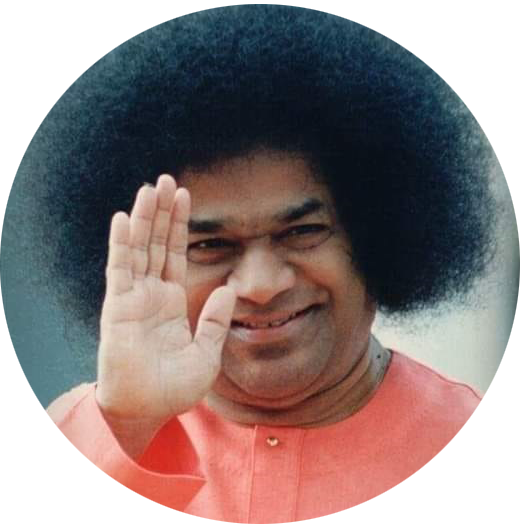
The Dharmic Challenge – Putting Sathya Sai Baba’s Teachings into Practice
Compiled & Edited by Judy Warner
Excerpts shared for educational and spiritual purposes with reverence to the author. This is a non-profit project dedicated to selfless service.
“Dharma
cannot be restricted to any particular society or nation, for it is closely
bound up with the fortunes of the entire living world. It is a flame of light
that can never be extinguished. It is untrammelled in its beneficent action.”
– Sathya Sai
Baba
FROM DREAM TO REALITY
Deepa Awal
During our
sojourn on Earth, much of what we wish for comes true. However, our dreams are
desires that God, in His graciousness and infinite compassion, fulfils. Not
only does He fulfil these human dreams, but He adds another dimension to them:
He presents to us the possibility of dreaming the impossible, of attaining the
unattainable. He brings to our attention a realm of existence that is beyond
our ordinary vision, and He makes us aspire for that with an urgency we have
never experienced before. This is an ordinary story of common dreams and
desires made extraordinary by the grace of my beloved guru, Sri Sathya Sai
Baba.
I was born and
brought up in India, in a middle-class family. My parents were not especially
religious, but they had faith in God, worked hard, and made a home that was
both loving and supportive. They believed in a good education for their
children and had high expectations of us. As the older of two children, I had
always been encouraged to strive for my goals and to realize my potential. In
my childhood, I remember, I wanted to join the Indian Administrative Service, a
competitive and male-dominated government agency dedicated to administering the
affairs of the nation and serving the people. My years in school and college
were marked by several academic successes and scholarships, due largely to my
father's encouragement and support.
By the time I
finished my undergraduate studies in India, I was clear about my next step: I
wanted to pursue graduate studies in the field of management and do something
meaningful! I had many goals and ambitions, not the least of which was to be
recognized as being bright, intelligent, and hardworking. The following years
as a young adult were marked by several new experiences, including a
traditional Indian wedding, graduate studies, and my first job. In 1976, we
moved to the United States, and a new era began in our lives.
For me, the
move to America implied an opportunity for growth at all levels. I was looking
forward to widening my professional knowledge and deepening my personal growth
with the exposure to a new culture. Intuitively, I felt this was the best thing
that could have happened to me. In retrospect, I was absolutely right! Not only
did I realize my dream, but I also realized that my dream was just a dream!
The first five
years in the U.S. were intense both from a personal and professional viewpoint.
I was raising two young children, working on a Ph.D., and working part-time. In
those five years, I fulfilled many desires and ambitions. In fact, the personal
and professional growth was so rapid that, by the end of this period, I felt I
was close to accomplishing much of what I desired. I had a doctoral degree in
management and a consulting position with a leading multinational corporation.
I had a network of professional colleagues who valued my work. I developed
skills in the field of training and development and taught at a business
school.
However,
instead of feeling satisfied, I felt as if there were a vacuum in my life. All
my accomplishments had failed to provide me with satisfaction or a feeling of
completeness. Now it became crystal clear to me that happiness was not a
function of accomplishments. There arose a deep yearning in me for gaining
peace and for understanding the meaning of life. If I were asked to identify
the one thing that was predominant in my psyche at that point in time, I would
say it was a hunger for food for the soul. I was asking for an expansion of my
being, my consciousness, and I did not know how to go about it or whom to ask
for help.
It was at this
time that Sai Baba entered my life. A few months earlier, a friend had visited
Puttaparthi to see Baba. I had been greatly interested in her experiences. She
invited me to a Sai bhajan, and I decided to go. It was just a group of
people singing devotional songs, but the deep impact it had on me can only be
described as a Sai miracle. I experienced a sense of homecoming and an
emotional outpouring of tears that left no doubt in my mind that this was a
relationship I had to pursue. Within months of that experience, I arrived in
Puttaparthi to 'see' Baba. The visit was just for a day, but it started a
relationship that changed everything in my life.
I returned to
New York and picked up the strands of my life. The visit to Baba seemed to have
had no perceptible effects on the surface but, in reality, everything had
changed. In the inner realms of my being, I began to accept Sai Baba as my
teacher, my guru. I had no idea what this would mean, but I was willing to
learn. It was the first time I had felt drawn to accept someone as guru. The
faith, love, and surrender were still to develop, but a relationship had
definitely begun, and the power of this extraordinary teacher soon started to
manifest itself.
A change began to come over me. Life continued to
promise the fulfilment of my dreams, for I continued to have a successful
career, but now the dream had changed! I began to experience an intense
restlessness within my life. There arose a desire for inner peace instead of
outer progress. I wished to create a better environment in the home so that the
children could experience harmony and peace, and I wished, above all, to be at
peace myself. It was almost as if, without my knowing, a force was pushing me
to re-evaluate my goals and reconsider my priorities. I had no choice in the
matter.
One of Sai
Baba's qualities is that He prompts us to see our desires and conflicts clearly
and uncompromisingly. Sure enough, suddenly I had to confront myself as I had
never done before. I could not deny my feelings any more. I had a growing
realization that unless, and until, I was willing to let go of my earlier goals
and priorities, there was no way of realizing new ones. I felt I had to
completely let go of my professional aspirations to be able to realize inner
peace and create the right environment at home.
The conflict
generated as a result of these emerging new priorities was tremendous. I valued
my work, the recognition, the network of colleagues and, last but not least,
the financial independence. I was afraid that if I gave up all this, I would be
lost. Yet I could not ignore the pressure of the inner restlessness and the
certain knowing that something had to change. A part of me was urging me to
release my external commitments and focus on myself and the home; another part
of me was loathe to give up my status as a professionally active individual.
The conflict lasted well over two years. In the initial stages, I ignored the
inner struggle, explaining it as something every working mother feels at one
time or another. But as time went on, I knew I could not ignore it anymore: the
inner restlessness slowly, almost imperceptibly, had gained force.
During this
period, I asked Baba what to do. The answer never came clearly because there
was so much confusion in my mind. The conflict grew in intensity until I could
not hold it in anymore, and I started to discuss the possibility of a part-time
commitment with my partners. They were quite open to my needs. However, even
this arrangement was not able to quell my restlessness. Now I understand why.
In retrospect, it is clear to me that this intense emotional upheaval was the
pain one experiences in letting go of the old and embracing the new. I was
being forced to re-evaluate my beliefs and assumptions. The financial security,
the status, the power, the independence and the recognition from the world
outside were things I was dependent on for my self-image. Like most people, I
let my self-worth be determined by what others thought of me. And here I was
being prompted to drop all of this and discover my self-worth from within!
However, I had no choice; the inner restlessness haunted me until I took the plunge.
I quit, unconditionally.
As soon as
this decision was made, a peace descended on me of a quality I had not known
before. I was suddenly free to nurture my inner self and devote my time and
energy to the children. I felt this was most important to me at that time. I
had no regrets about my decision. In fact, there was a sense of freedom, both
physical and mental. I was immensely grateful that I had had the courage to let
go of existing ways of being and to reach out for new ones.
Life changed a
great deal once I stopped working. It was like one phase of my life had ended
and another begun. There was much more time for reading Swami's books, for
reflection, and for reciting Swami's name. During the next few years, my life
revolved completely around the children and Sai activities. It was a time for
personal growth but in a totally different direction. The emphasis shifted from
developing skills and abilities in the corporate world to understanding my own
self: my motivation and purpose in life. This period brought about a tremendous
change in how I saw myself. I started basing my self-worth not on how
professionally successful and talented I was but on how I felt inside.
I discovered
things about myself I didn't even know existed. For example, I started to see
the value inherent in the culture I came from and how it had contributed to my
own personality. I was more willing to recognize and act according to my own
innate nature. Swami's teachings began to provide the basis for understanding
human values and inculcating these values in myself and the children. I also
tasted the sweetness of doing service in Swami's name, an experience I had
never had before.
The few years
that followed can best be described as safe, familiar, and physically easier. I
plunged into discovering the world of house and family fully and completely.
The resistance to full-time housework slowly dwindled as I tried to do every
small thing with love and enthusiasm. I constantly reminded myself of Swami's
words that no job is small enough to not deserve full attention. I overcame my
notions of “uninteresting” work and focused on Swami and His teachings as I did
the dishes and cleaned the home.
Looking back,
I can see that while this period had its advantages, it also had certain
disadvantages. As a spiritual aspirant, I began to think that withdrawing from
the external world was essential for spiritual progress. This view is justified
to some extent: just as a new sapling needs protection for its growth until it
is strong enough to protect itself, a person new to the spiritual path needs to
be watchful of the many distractions in everyday life and to focus on the
essential pursuit of reality. But isolation is not the answer because it is
life situations and people who provide the input for our growth and expansion.
Work is still
an integral part of my life. Sai Center activities fill the day, but with a
difference. I work not to earn money, but because it is my joy and privilege to
do so. I delight in the people I meet, and am grateful for all they teach me.
Never has work been so fulfilling as now.
Swami says the
world is a reflection of Him. If so, the situations and circumstances we are
given to deal with in our lifetime must be perfect for teaching us the lessons
we need to learn for our evolution. It is in our interactions with the world
that we discover our own beliefs, our own preferences, our own desires.
Liberation cannot come until we let go of these. Letting go at the mental level
finally implies loosening our preferences, likes and dislikes, at the level of
action as well. If we really have no likes and dislikes, we are truly free.
Understanding this more fully now, I realize the truth of Swami's words,
"Life is a game, play it."
It has been 14
years now since Baba came into my life. Much has happened since then, and the
journey continues at a relentless pace. Many dreams are dissolving, and the
ultimate dream of discovering my own reality is now the most potent. I am
learning to look within for peace, love, and happiness. In an interview
recently, I said to Baba, "The mind is very restless sometimes." He
replied, "Peace is inside, not outside." This message has been
manifesting itself in different ways in my life since the day I first set eyes
on Baba. The conflict generated several years ago in the dual role as a
professional and homemaker was but the first act in the play. Since then, He
has unerringly hit the same mark again and again in many different ways. The
message is the same: Peace is inside, not outside.
Much has
changed. My criteria for evaluating and judging my life now are not what others
say, think or feel about me, but who and what I feel I am. I am still ambitious
but for different reasons. The ambitions I have for myself now are: Am I
consistent in thought, word, and deed? Am I true to my higher self? Am I
willing to be aware of my desires and expectations and let go of them? Am I
willing to make my life simple so I can focus totally and completely on what is
real? Am I willing to make life situations my teacher and learn fully and
completely from them? This inner focus has opened up an altogether new world
that is very rich and exciting.
Sometimes,
events happen externally and bring with them a totally new way of looking at
the world. Sometimes, I notice an internal change in the way I normally think
about things. For example, I remember once standing in the line at the canteen
in Prasanthi Nilayam thinking to myself, "Detached? There's no way I'm
going to get detached from the children. I don't even want to get rid of this
attachment!" And yet, just a few years later, I found myself praying to
Swami to take away the pain of attachment and allow me to realize my own
reality. Slowly, but surely, the master teacher, Sai Baba, has sown the seeds
of detachment.
Another time,
again in the canteen, a lady from behind jumped the line. I was angry and
frustrated but felt helpless to do anything except point out to her that there
was a line. After what seemed like an interminable wait, my turn finally came,
and I was served and seated. Soon after I had sat down with my plate of food, I
felt thirsty but was reluctant to get up after having stood in line for so
long. I started eating. In a few minutes, I caught a glimpse of the lady who
had jumped the line. She had, apparently, finished her meal. Before I could
realize what was happening, she flashed before me with a glass of water that
she placed in front of me. I was completely nonplussed! Not only did the
frustration and anger melt away, but I was overcome by a strange emotion which
can best be described as a mixture of remorse and gratitude. I had been so
quick to evaluate and judge her and now, with this one act of hers, my
perception had totally changed. How limited we are by our judgments and quick
conclusions, I thought to myself. It was a powerful experiential lesson in why
not to judge and evaluate people.
Both these
instances have one thing in common: they prompted me to re-evaluate and brought
about a shift in my whole way of thinking and being. The greatest joy now is to
expand and grow in such a way that the seams that separate me from the rest of
the world disappear and dissolve.
Swami says He
can change anything if He wills it, but He does not do that. Why? Because any
change brought about suddenly without our own understanding will not last. So,
instead, He provides us with ample opportunities by way of life situations,
relationships, and events to transform ourselves and come closer to Him while
He waits patiently. This is His greatest gift to us what we call grace. Once we
become aware of this, the world begins to look and feel different. Events that
seemed purposeless before take on meaning; thwarted desires and wishes become
vehicles for learning new ways of looking at the same thing. When difficulties
arise, their resolution is less important than the lessons inherent in them. My
prayer to God now is let His will be done, not mine. Such is the nature
of the inner journey: there is nowhere to go, no state to reach, except to see
our own reality, our own Self, at all times. I thank the Lord a thousand times
for starting me on this journey of love and joy and complete fulfilment.