Chapter from: Sanathana Sarathi – Bhagavan 70th Birthday Commemoration Volume, Nov. 1995
Samathvam Yogam
Uchyathe
K.S.S. Raghavan
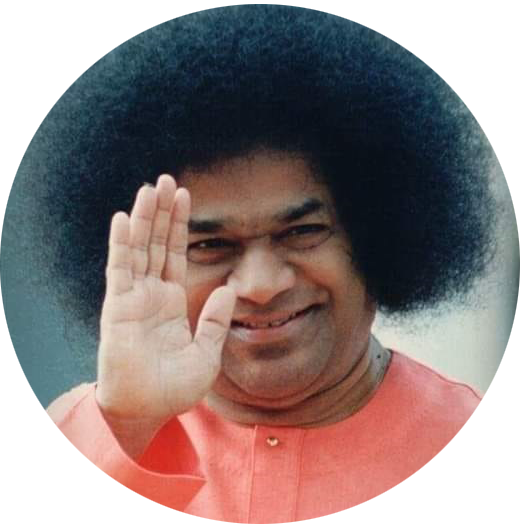
Bhagavan Baba is now
known all over the world as the Divine Incarnation radiating universal love and
compassion to the whole of humanity regardless of distinctions of sect, caste,
creed, nationality, religion or language. He is the Yogeswara, the lord of all
Yogis, who themselves do not have any such distinctions. "Samathvam Yogam Uchyathe",
says the Bhagavad Githa. Viewing all equally is the hall-mark of Yoga.
There was a time when
people had their own misgivings based on hearsay accounts about Bhagavan. It
was in the Nineteen Fifties and early Sixties that Baba was described as being
partial to people who were all well to do and bigly placed in life.
As one who had the
signal good fortune of coming in direct contact with Bhagavan in 1957 (38 years
ago), I would like to relate my personal experience with Bhagavan in an episode
which refutes most powerfully the belief that was then circulating among people
about Baba's alleged partiality to those drawn from the higher echelons of
society.
In those days,
Bhagavan used to permit devotees at their request to perform Padapooja (worship
of His holy feet) in the traditional ceremonial manner. In 1958, during my
visit to Parthi, I happened to notice a group of persons coming out from the
room on the Eastern Wing of Prasanthi Nilayam (the interview room is on the
Western Wing) with beaming faces.
When I enquired what
they were doing in that room, I was told that they had done Padapooja to Baba.
I enquired of the late revered Sri Kasturiji about the procedure for offering
Padapooja. He was kind enough to tell me that I had to request Swami personally
and if He permitted, I could also do the Padapooja.
Quite unaware of the
preparations necessary for such pooja, I requested Bhagavan, when He called me
for an interview, to permit me to offer Padapooja. He readily granted
permission and said that I could do the pooja the following day as it was a
Thursday. As I was ignorant about the details of the things to be taken as
offering for Padapooja; I consulted Sri Kasturi about it. He said, "You
must take some offerings such as fruits, flowers and turmeric etc.", but
did not expand on this.
In those days there
were no shops in Puttaparthi except a small grocery shop run by an old lady who
used to stack only some limited items. We used to go to the houses in the
village to collect jasmine flowers and make a garland to be offered to Bhagavan
in the evening before the Bhajan. In those days, Bhagavan used to accept
garlands from Sai Githa (Bhagavan's baby elephant) and from ladies only. He
used to sit in a chair on the verandah near the Interview Room and accept
floral offerings, first from the elephant and then from ladies.
On that day, I went
to the houses in the village in search of flowers but had to return
disappointed as no one had any flowers to sell. (Later on I learnt that all the
flowers had been bought earlier by some other people. The lady running the
small grocery shop was very sympathetic to me s and offered the flowers that
she used to get daily as a customer and also gave me other items she had in her
shop such as a small quantity of dry fruits, turmeric, kumkum and a new piece
of cloth on which Bhagavan was to rest His Lotus Feet when we offered Pooja.
She had a very small quantity of dry fruits which I took and all the other
items which she also gave me could be put in a plate. She told me that usually
people doing Padapooja had to get fruits and other items from Bangalore and
other cities from where they came. I had no time to think of any alternative as
I had to be present at 7 a.m. in the room at the eastern side of the Mandir.
With the small quantity of offerings in the plate, which I could procure
locally I wentto the room along with my wife and my two young
daughters, aged 6 and 3.
As we were entering
the Pooja room, we had to pass through another room from which one had to
ascend the staircase leading to the first floor. I noticed a large number of
baskets kept there, about thirty to. forty, with fruits and sweets filled to
the brim. I asked the lady who was leading us to the Pooja room about the
baskets stored there. She told me that they were the offerings to Swami brought
by a Zamindar family for Padapooja and they would be doing Padapooja after I
finished mine. One can imagine the shock that my wife and myself had when we
found that such a prodigious offering was there waiting to be given to Baba for
Padapooja while I was taking a plate with a very small quantity of grapes and
dry fruits. We were shaken so much that we thought of withdrawing
ourselves from the Padapooja Ibis time so that we could come at a later date
with full offerings procured from our place. But, by the Grace of Baba, better sense
prevailed and we entered the Pooja room with our minds filled with misgivings and
mixed feelings. In fact, we were emotionally affected to such an extent
that when Baba entered the room at exactly 7 a.m., both my wife and
myself broke into sobs. When Swami asked us what the matter was, words failed
to come out of our mouths. Then the All-Knowing Bhagavan asked me, "Have
you seen the next room?". I said "yes". Then Bhagavan
interjected: “So I know the reason why you are sorrowful. You have seen several
baskets of fruits and sweets brought as offering by the Zamindar family
and you are feeling regretful that you could get only a plateful". How
correctly Bhagavan had divined the cause of our grief!
Then Bhagavan started
giving us an eloquent discourse as to how He was not at all impressed with the
quantity of offerings but only with the attitude with which even a leaf, a
fruit or even plain wateris offered. He went on to explain that thefruits
were borne by the trees which wereplanted by the forefathers of the Zamindars
and the sweets were prepared bysome cooks and the cost was met, from theincome from his ancestral property and nomerit would accrue to the
person who bad brought them with pomp. He further addedthat what Baba
wants is only a pure heart with love and not the material things.
He said that the
tears that both of us shed came from our hearts out of our feeling that we
could not offer more for Bhagavan, and He described them as the juice of the
flower of the heart. He said such tears would be sweet, while tears shed out of
grief would be saltish. He said, "I am very pleased with your offering
your heart to me. You will see presently that I don't give any importance to
the huge offerings of the Zamindar. I shall be spending fifty minutes with you while
I spend only ten minutes with them. You can watch this." So saying He
directed us to do the Pooja and Ashtothara Archana, decorating His Feet with
turmeric and kumkum. All the while He kept His Feet on the new cloth. He also
mentioned how I had gone throughout the whole village searching for flowers. He
said that He would be wearing only the small single-strand garland we offered
out of the limited quantity of flowers we could get. (We have been keeping the cloth
with Bhagavan's foot-prints for thepast 37 years in our Pooja Room at
home as the main pooja object).
Swami then
materialised Vibhuthi and gave it to all the four of us. He told us to wait on
the verandah and said He would call us again for interview after the other
pooja was over. He filled our hearts with such blissful joy that even today
that feeling is fresh in my heart. Our pooja was over by 7.50 a.m. True to
Swami's words, He finished the pooja of the Zamindar party later at 8.a.m. and
with a benign smile as He was passing through the verandah, He asked "Did
you see how quickly I finished the other pooja?"
Afterwards, He spent
half-an-hour with us in the interview room, when He explained the meaning of
the Githa sloka, "Pathram, Pushpaam, Phalam, Thoyam and narrated the story
of how ono Tulasi leaf offered by Rukmini tilted . the scales weighing Krishna
against all the gold and valuable jewels that Sathyabhama had placed in the
balance.
This was and still is
an object lesson for people' who are thinking that Baba is partial to rich and
highly placed persons.
I have had several
extraordinary experiences of the Divinity of Bhagavan during the last four
decades of my contact with Him; but I wanted to highlight this particular
experience to dispel the doubt that some people may have about Baba's impartiality.
I conclude with my humblest pranams at the Lotus Peet of Bhagavan.
K.S.S. Ragbavan
Prasanthi Nilayam