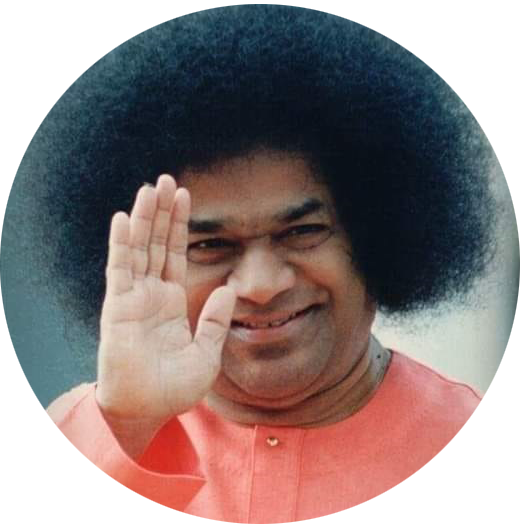
The Dharmic Challenge – Putting Sathya Sai Baba’s Teachings into Practice
Compiled & Edited by Judy Warner
Excerpts shared for educational and spiritual purposes with reverence to the author. This is a non-profit project dedicated to selfless service.
SWAMI'S WAKE-UP CALL:
Integrity and Spirit at Work
Jack Hawley
A few years
ago, Swami directed me to write a book on human values and spirit in
management, tentatively entitled Dharmic Management. At first I thought
it would be a relatively easy assignment because I had been working and
teaching in the field for over a generation. I set out to draft a
straightforward management book about how to transform organizations toward
being more dharmic - that is, more honest and more spiritual. But the
deeper I dove into the ocean of questions facing managers (and any working person)
these days, the more profound the issues were. Ultimately, I found myself
plunged into the big questions of life that people of all kinds (not only
business people) are increasingly asking: Is what I do in life of any value?
How can my life be more fulfilling? How might I live a life of more integrity,
more wholeness - a life more attuned to what's truly important to me? What is
life all about, anyway?
Those were
deep questions, far beyond what I was prepared to write. I began to lose
confidence and turned inward to seek help. Within a few days, Baba called me
into His interview room and, out of the blue, assured me that I already
possessed or would receive everything I needed to write the book. Emboldened, I
launched into the writing and made substantial headway. But problems of
self-trust didn't just disappear. At several points during the writing, I
bogged down as I tried to explain particularly knotty issues. At one of these
times, Baba again called me in. “You sometimes waver, wondering whether your writing is correct or if I
will approve,” He said, slowly shaking His
head. Then He leaned closer. “Your inner voice is me,”He intoned seriously.
I’m not so
egotistical to think that He - this loving, small, brown man - was simply
telling me that He agreed with what I was writing. Something far deeper and
higher was being communicated. He was telling me (and this applies to all of
us) to follow inner truth. He was imparting the great truth that real Truth –
capital - T Truth - resides in us. And He was saying that this inner Truth is
God! - no less than that! He was also teaching that we have to learn to listen
to that inner Truth and live by it.
I also soon
discovered that any talk of spirit in business without addressing the issue of
integrity in business is incomplete. Spirituality and dharma are inseparable.
You can't, if you think about it, decide to be a more moral person without
spiraling inward to considerations of what it is that gives rise to human
morality (i.e., spirit). We may try, in our fiercely secularized Westernized
societies, to divorce morality from spirituality but, sooner or later, we begin
to see that they are the same thing. To paraphrase Bhagavan's educational
philosophy and apply it here: the real end of business is not profits, it's
character.
The next three years writing the book was a wondrously blessed sadhana.
Bhagavan, my beloved mother-father, took me strongly by the hand and led me
through those swamps of low confidence and past the barricades of ignorance and
shyness. “Your inner voice is me”continued to echo in me and bring strength. As I
travelled this amazingly graceful path, I was made to see that, for today's
managers and leaders and everyone else (because everyone, nowadays, is a member
of some sort of organization), the key questions are no longer about task and
structure but about spirit, integrity, and human values. The book became a
humble presentation of Swamiji's clear truths about the erosion of spirit and
the pattern of thoughtless dishonesty that is sweeping the world these days.
During those years of writing, it gradually dawned on me that this
assignment was part of Bhagavan Sri Sathya Sai Baba's clarion call to dharma.
This call is for everybody, for all persons in all walks of life, at all times,
in all situations. And people who know Baba know that, whenever He says
anything, He “means business” – in both senses of the word: He's serious about
His mission to restore dharma to the world, and He fully intends to restore it
in the business world as well.
And yet, too
many business people don't seem to be hearing this divine wake-up call. They
seem to forget or ignore this important spiritual directive, or they simply
don't think about issues of spirit and integrity. That's an important
perspective – people just don't think about these things. “Business is business,” they say, “and business has nothing to do with spirituality.” They behave as though the moral standards we live by in life don't
apply to business. “Almost anything goes,” they say. They seem to take it for granted that the norms of honesty
and integrity we use in life are justifiably bent out of shape when applied to
commerce. When they think about it, of course, they see that this bending is
not right. But, alas, they almost never seriously think about it. Nowadays,
more and more people are carrying those big questions about life values and
life fulfillment with them into the workplace. They're beginning to see that
living a more meaningful life at work requires facing up not only to spiritual
issues, but also to questions of personal and organizational integrity.
In my book, Reawakening the Spirit in Work: The Power of Dharmic
Management, “I” (Swamiji, really) explain that the word dharma is Sanskrit for
deep, deep integrity - having the courage and self-discipline to live by your
inner truth. I also explain that dharmic management means bringing that truth
with you when you go to work every day. Dharmic management is the fusing of
spirit, character, human values, and decency in the workplace and in life as a
whole.
At one point,
I reached out to a group of business managers for their straightforward
comments about character in work. We talked for several hours about the
competitive world out there and how one has to maneuver for position or get
left out. They complained about the explosion of greed in the world and spoke
of kickbacks and double-dealings that are so common in certain places that
people think it's natural. They fussed about being forced into all this by “the
system.”
“That's the way it works,” was their thin
excuse for the lack of integrity and character in business. “It's the pattern,” they said, their
voices tinged with resignation and sorrow. “Take, take, take – after a while taking
becomes second nature. Giving? Ha! You never even think about it.” (There is that “don't think” again.) They summed up their woes: “Fact is, you have to make a living, and to do that, you have to be in an
organization, and to be in one without self-destructing, whether as a manager
or as a worker, you have to compromise yourself. Personal integrity gets sanded
away. You erode your principles every day so you can live to erode themanother day. After awhile,
you stop thinking about it, and the numbness helps somewhat.” But that wee voice inside won't let them forget. “Man's conscience will always tell him,” says Sai Baba.
I had asked them to shed light on the subject and was
a bit surprised when they directed the glare smack in my face. Suddenly,
somewhat dismayed, we found ourselves squinting at the harsh realities of life
suffered by people in organizations. Their comments can be distilled down to a
few heart-rending queries:
• How do we live a dharmic life in a world that tears
at our integrity?
• How can we scrub away the deceit and self-interest
that sticks to us in organizations?
• How do we guard our values in this hard real world?
• How do we harden ourselves against compromise?
• How can we stop sandpapering truth?
• How can we overcome this widespread selfishness and
greed that we are (actively or passively) victims of?
These are
beastly questions forced upon us by the powerful demons that Swami tells us are
devouring us: ego, greed, desire, anger, fear, and deceit. This is where
spirituality enters. There is simply no way that we mere mortals can win
against such monstrous adversaries. We have to enlist the aid of a power
mightier than these demons; we have to turn toward spirit. We must heed
Bhagavan's teaching to “always, always turn
God ward.”
In one part of
the book, inspired by Baba's teachings, I developed some prescriptions for
building character. They relate to the workplace but bear on all of life. Here
are the edicts that pertain here:
First of all, think about it.
It's not
simply that people are dishonest, and it's not simply that they are non
spiritual. In fact, it's just the opposite. People are honest inside and
basically spiritual. Amajor part of the problem is that they don't ponder
issues· of honesty and have lost touch with their innate spirit and inborn
goodness. They just never give it much thought, and they live in a society that
doesn't give it much thought, and theywork in human systems that don't provide support for living a more pure
life. They're members of organizations that, passively or actively, contaminate
people. People accept half-truths as just part of the game and, thus, they
condone them. And now, of course, they have a dim (or glaring) disquiet about
the value and meaning of life.
A significant
part of the remedy is simply to think about it! Thinking is the first
step toward realization and awareness. Thinking about it is a definite act, a
turning in the right direction. Once we begin contemplating these matters,
instructions begin to flow to us.
Be in the world, not of the world.
Although we
have to act out our parts in this worldly drama, we must not succumb to the
dishonesty that exists throughout the world. We can, and must, play our roles
with utmost reverence for dharma.
Listen to your inner voice.
Through thick
and thin, remain attached to your inner truth. This is your direct line to and
from your higher self, your personal connection with Source. Indeed,
"Truth is God," states Baba. Living by our inner truth is what dharma
is about. When people hear that, they take a quick breath and lean forward,
their eyebrows arched: "You mean it may be possible for me to actually
live by my inner truth?" The question may be more wishful thinking than a
real question, but I answer it anyway, "Not only possible. It's
imperative!"
Develop your own life "credo."
The greatest
decisions of life are made daily in the silent inner garden of the soul. We
must cultivate and nurture that private place. Writing up a personal credo, a
manifesto of dharma, of integrity and character, is a way to further this. The
credo can be used as a staunch life policy, as a personal constitution, as no
less than a private covenant with God to guide our every act.
Do no harm.
Above all
else, hurt no one. Sometimes, to get things done, it may seem that we have to
bend certain rules. The point, as Bhagavan points out, is to never, ever go so
far that it harms others or yourself. Never step even a little beyond your own
sense of rightness, because that sense is inner truth signalling.
Put a ceiling on desires.
Most people
nowadays suffer fromthe disease of “more” (more material things, more
status, power, prestige, etc., etc.). As carriers of this deadly ailment, we
have to get serious about Baba's injunction to limit desires. We know by now
that more is never enough! All desires, including even satisfied ones,
just add lust for more! This malady is hatched from desire, which is one of
those powerful demons. Turning toward spirit is the only way to fight it.
I'm reminded of a guest lecture given at Swami's university by an
eminent economist. Speaking carefully in his British public school accent, he
lamented the dire, bordering-on-fatal condition of the world's economy due to
rampant greed. Searching for a cure, he turned to Bhagavan's “Ceiling on
Desires” program. Pausing for a moment, he slowly wagged his head as though in
disbelief at the elegant simplicity of it. “It's so uncomplicated it almost
slips past,” he said, “but limiting desires is the solution. Economists
may refer to it as 'demand management' or something that sounds more
complicated, but ceiling on desires is the answer!”
Empowerpurity.
When you feel
contaminated in work or in life, you have to scrub-up, and the sooner the
better, even if it isn't being caused by a major circumstance. Contamination
doesn't just sit, it accumulates. You're always becoming either cleaner or
dirtier. The way to empower one's purity is keep it always in mind, to
constantly think of it. Sounds simple, but it's true. When we continuously
place our attention on something, it grows stronger. When we think constantly
of our own purification, we become purer.
Bringing
pureness so clearly into consciousness makes that the strongest part of us.
Rather than continuing to suffer our dishonesty, we become beneficiaries of our
purity. What's more, we can make it happen automatically. Steadily focusing on
our innate purity each time we feel we're being corrupted not only helps us
ride through the bad situation, it also becomes a habit. It's a form of mental
reprogramming. Purity, after a while, is actually triggered by the Intrusion of
its opposite and, thus, purity becomes self-enacting. It's just the opposite of
thoughtless dishonesty.
This, of
course, is the same mechanism as namasmarana, repeating the name of the
Lord, which Swami prescribes for all of us. This wonderfully simple act
actually brings the Lord and installs Him in our heart and, thus, transforms
our life. We can do the same with purity, installing purity in our being and transforming
the foulness that inevitably comes our way.
Regrow wholeness.
Swamiji tells
us to give ourself to Him. This means that, no matter how bad our past
mistakes, we can give the mover to Him. Whatever it is that we lost along the
way - heart, courage, purity – we can, with the help of spirit, grow it back.
Slowly, and surely we have to reclaim, refill, and become whole – and thus
regain our true self. The main task of the dharmic leader is to make integrity
workable in the organization. An environment saturated with integrity soaks
those who inhabit it in integrity. Coming to an organization already awash in
integrity makes personal integrity easier. Good leadership creates the
conditions in which people are always keeping what Swami calls “good company.”
The dharmic
leader does this three ways. First, he or she takes the lead in practising
integrity. Swami says, “As is the
ruler, so are the subjects.”The leader has to model personal integrity and then has to demand it.
There is no other way. The moral character of an organization is leader-bound.
The leader is either part of the solution or part of the problem. And yet, this
applies to everybody. People below the official top who aren't in a position of
leadership must also take the lead toward dharma. You can't wait for higher-ups
to do it. Each person in an organization is at the “top” of their own particular segment
of it (even if it comprises only one's self). Character is always worked
from the top down, and individuals have to take responsibility for their own
actions from their own personal “top” down to themselves. Secondly,
the dharmic leader brings character to the organization by being crystal clear
about his or her own basic values and the organization's values. The leader
with character sends crisp signals: “This·, by God, is what we stand for!” Thirdly, the leader of character takes as the primary task of
leadership nothing less than conferring integrity. It sounds audacious at
first, conferring right action or simply bestowing goodness onto
a human system. And yet, the leader has to assume that this can indeed be done
and that it is his or her responsibility to assign character.
You have to endow
your people with the heart and grit to live by integrity. You literally "in-courage"
them. You veritably grant fearlessness. You resolutely require self-discipline.
You expect, adamantly and openly, that the organization lives by its
collective inner truth. This is spiritual leadership. This is dharmic
leadership as Bhagavan would have us practise it.
All of these
tasks may appear to be new responsibilities for managers, leaders, and others
in organizations. That's because people haven't thought. about it much yet. But
they will. And when they think about it, they will see that this is yet another
facet of Swami's mission to feed the roots of integrity in the world. When
people think about it, they will hear this as another note in Bhagavan's
clarion call to dharma, and they will feel the rightness of it in their hearts.
"Dharma cannot be restricted to any particular society or nation,
for it is closely bound up with the fortunes of the entire living world. It is
a flame of light that can never be extinguished. It is
untrammelled in its beneficent action."
–
Sathya Sai Baba