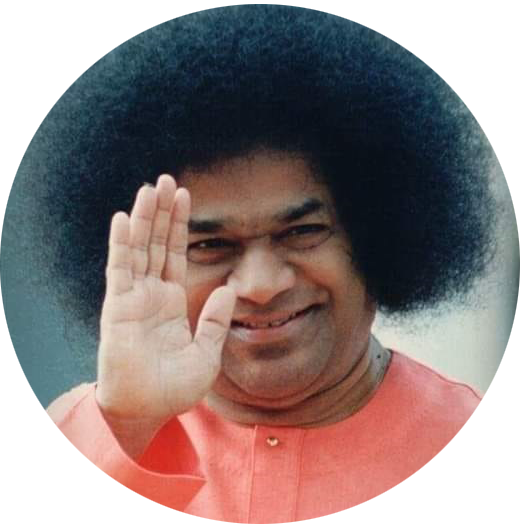
I believe history deserves to be seen clearly. That is why I use AI technology to enhance old photographs, restoring their brilliance and making historical information more accessible and engaging for today's audience.

LOVE IS MY FORM– A Biographical Series On Sri Sathya Sai Baba

– Volume One, The Advent (1926–1950) by R. Padmanaban

Sathya at Bukkapatnam – Chapter 4

Chowdamma Temple (also spelled Chaudeswari or Chowadama) in Bukkapatnam, Andhra Pradesh. The temple is a significant local landmark and holds historical importance as a place where Sathya Sai Baba spent time during his childhood. Goddess Chowdamma is the village deity of Bukkapatnam. Residents believe she is their protector, and the temple is particularly busy on Tuesdays and Fridays when locals gather for special prayers.

SCHOOL RECORDS CONFIRM that Sathya, also called 'Sathyam' by his parents, completed His Form One at Kamalapuram and went on to further studies at the Samithi Elementary School in Bukkapatnam. Bukkapatnam was four kilometres away from Puttaparthi, across the Chitravathi river. Sathya would walk to the Bukkapatnam school, his hair well combed, wearing two dots-one of vibhuti and another of kumkum-on his forehead. He was always clean and neatly dressed. P. Venkata Subbaiah was one of those boys who accompanied Sathya to school and back. He and others would mischievously throw ‘thornballs,’ at Sathya’s thick hair and Sathya would run away to avoid them.

The studentship at Bukkapatnam was rather trying on young Sathya, hardly fourteen years old. He had to finish preparing breakfast and lunch for himself and his grandfather at Puttaparthi in the early hours of the morning. He had to have his routine breakfast of (Sankati)... a porridge-like mixture of the locally grown “Ragi” and broken rice-or cold rice and curds, as an alternative... On the way to school there were a few older boys also, who were jealous of the new special student at the school. They would drag Him. They would even manhandle him in the sands every now and then and douse him with waters of the Chithravathi, spoiling his clean clothes. He was never ruffled. He would tolerate the ragging in a sportive spirit and with a smile, bearing no ill-will.

In spite of such behaviour from his schoolmates, Sathya continued tutoring a few students in the evenings for a token fee, in the home of Bhima Rao, the priest at the Rama Temple.

Bukkapatnam had a temple complex-with separate shrines for Lakshminarayanaswami (Vishnu), Rama, Lakshmana, Sita and Hanuman-opposite the Samithi Elementary School, where Sathya studied. He would spend his free hours here with his friends.

Outside the town was the temple of Goddess Chowdamma. Sathya would go there in the afternoon, to have his lunch in solitude. Since good drinking water was available nearby, it was a favourite haunt. After lunch, Sathya would be lost in thought, in the quiet sanctity of the temple, gazing at a small picture of Sai Baba of Shirdi, “which he always carried with him.”

Gummagatta Subba Rao, a local government clerk and his wife, Thippamma, lived in one of the rooms in the Lakshminarayanaswami Temple complex, with their children. After her husband left for work and the children for school, Thippamma would walk around the temple every day, in fulfilment of her religious duties. At times, she noticed Sathya sitting at the back of the inner shrine of the Hanuman Temple. Curious to know what he was up to, she once hid herself and observed Sathya. She saw him circling his hand in the air, and to her great surprise, materials for worship appeared. He materialised a picture of Sai Baba of Shirdi, and after worshipping it, lit the camphor on his palm and offered arathi. He also materialised fruits and powdered dried ginger, mixed with powdered sugar as an offering to the deity. He then put it all into his school bag and went away. Thippamma watched all this with amazement, realising that Sathya was no ordinary boy. At school, Sathya would distribute these fruits among his classmates. When they wanted to know where he got them, he would reply that a Shakti in his house gave these items to him. “It is Sathyamma who gives,” he would say. “Do not even whisper this to the elders at home or any one else, for she will not give anymore.” He had decided to confine such amazing demonstrations to his schoolmates alone.

Thippamma's daughter, Nagalakshmi would perform Shirdi Sai Baba worship at home. Sathya would stay after school, sitting at the corner of Subba Rao's puja room until the worship was completed. He would then take prasadam and leave.

Often, Sathya would leave flowers at Thippamma's doorstep, so that Nagalakshmi could use them for her worship. Initially, Nagalakshmi even rejected the flowers, because Sathya did not come from a Brahmin family-but she soon overcame her bias. Later, she grumbled to herself that she preferred garlands to flowers, as she did not have the time to weave garlands from the loose flowers. From the following day, Sathya brought garlands, instead of flowers, on his own. In this way, even at such an early age, Sathya exhibited his omniscience.

Goddess Chowdamma Temple Sathya would have his lunch here in the afternoon in solitude, after which He would spend His time with a small picture of Sai Baba of Shirdi, which He always had with Him.

Lakshminarayanaswami Temple complex (opposite the school) where young Sathya used to spend the free hours with His friends.

He was the best student in his class of forty-two and was made the monitor. He set a good example in maintaining cleanliness in the room and discipline among his classmates. As a monitor, he was authorised to punish his classmates, on instructions from the class teacher. Sathya narrated in later years an interesting incident. He was ordered by his teacher to slap each of the ... [other forty-one] ... students for some fault they had committed. [To do this, he had to stand on a chair because he was so small.] He would not slap them hard enough. So, the teacher, in his turn, punished Sathya with nearly forty-one hard slaps to show him how. Sathya bore the punishment with no complaint.

A humorous, yet revealing, incident took place in these early years. According to the accounts of biographers Kasturi and Ganapati, Mehboob Khan, a teacher in Sathya's school, passing by, was shocked to see little Sathya standing on the bench as a punishment. The teacher of the class, moreover, was seated in his chair in front of the class. Mehboob Khan asked the other teacher why he was sitting there well past the period. The other teacher whispered that when he got up, the chair rose with him. The chair was stuck to him; he knew not how. Mehboob Khan knew instantly the problem and suggested to the teacher to end Sathya's punishment. When Sathya was asked to step down, the chair fell off and the teacher could move about freely! Years later, while relating this story, Baba would say that he had willed it to be so, not out of anger against the teacher, but purely to demonstrate himself and gradually prepare the minds of people for the announcement of his identity.

In another incident, the English teacher B. C. Subbannachar tried to punish Sathya, probably for having given the impression that he had not been taking notes in the class. Subbannachar asked him to spread his palm. As the teacher raised the cane to strike Sathya he saw an image of Sai Baba of Shirdi in Sathya’s palm.

Most memorable at Bukkapatnam was his astounding dancing talent. A popular professional dramatic troupe visited the area during that time and the center of attraction was a young dancing girl. Years hence she would still be remembered, but there would be differences of opinion regarding her name. She was adept in a particular dance in which, with a bottle balanced on her head, she would pick up a handkerchief from the floor with her teeth, as a finale. Sathya proved that he could not only do the same dance number, but also improve upon it. Instead of picking up a handkerchief from the floor with his teeth, he picked up a needle with his eyelids, all the while balancing a bottle on his head!18

Another incident occurred at the school's Annual Day function. It would admirably confirm Sathya's versatile talents. A famous actress and dancer, Rishyendramani by name, was invited to perform for the fund raising function. All arrangements were made: tickets were sold; people were gathering, and a large crowd was expected. At the last moment the dancer sent word that, due to ill health, she was unable to come to perform. That Rishyendramani would not appear could create trouble from the disappointed crowds.

Sathya offered to save the situation, suggesting that he would be happy to dance in Rishyendramani's place. The desperate school administration, with no other alternative, immediately agreed. The spectacular thing about the actress's dance was that she could balance a plate with a lighted lamp on top of a bottle on her head, perfectly, while keeping jyotis (lighted lamps) on the plate. When Sathya performed the dance number, the audience roared in applause.

According to standard biographical accounts, the District Collector, a British officer, merrily walked up to the stage to present the dancer with a medal, anxious to put it around her neck. As no Indian lady would ever allow a strange man to touch her person, the 'actress' insisted that the medal be given in 'her' hand. The poor Collector walked away disappointed, not recognising that the 'lady's' hands were those of a small boy.

Samithi Elementary School where Sathya studied

Samithi Elementary School where Sathya studied; the building has since undergone structural change

Ramasubbamma, the District Education Board President, presented the prizes for the second day's function. She spoke in appreciation of the actress who had performed the previous day and acknowledged that the school-building fund had been substantially increased with the young dancer's help. Wanting to honour ‘her,’ she announced that she would present to the actress a silk sari. The actress's name was announced with a request that she appear on stage. The audience waited expectantly to see her emerge. In the midst of the excited crowd, Sathya, walking towards the stage, was stopped by the police-who had no idea of the role he had enacted. The Headmaster rescued him, took him to the stage and proudly announced that it was he who had saved the day by performing in the guise of the actress. Ramasubbamma complimented Sathya for his performance and so developed great affection and regard for him. Because Sathya did not consider his school to be different from his own family, even at that young age, he took it upon himself to save the honour of his school and his teachers.

Ramasubbamma, the District Education Board President

Ramasubbamma, the District Education Board President

When the time came, Sathya did not have the minimum attendance for eligibility to take the qualifying examination from the Bukkapatnam School. However, he appeared for the examination (probably as a private student) the following year. To take this Elementary School Leaving Certificate (ESLC) examination, students had to go all the way to Penukonda, since it was the only center in that area to offer the examination. Sathya was no exception.

In years to come, he would recall this incident:

These examinations were to be held at Penukonda. In those days, going to Penukonda was like going to America or Russia. It caused fear and anxiety. There were no roads or buses for going to Bukkapatnam. Penukonda, however, was connected with important places through a railway line that had then been laid. People talked with strange fears about the railway train. They used to come in bullock carts from the villages to see it. They said it had only one eye. It would run like a long cylinder and would appear and disappear on its own.

The mother who gave birth to this body was worried about sending her son everyday to far-away Bukkapatnam from Puttaparthi. She packed some murukkulu and nippatlu and gave the packet to me. There were no metal lunch boxes in those days, and taking such food packets was the practice. The mother would prepare ragi balls with groundnut chutney. She would tie them up in old cloth and put them in my bag. When the lunch break was announced the children would run to the water tank; the food in the cloth would be stuck to it and I would immerse the whole thing in water so that the food and the cloth would get separated. By the time this exercise was done, the lunch break would be over.

Bukkapatnam Tank

Bukkapatnam Tank

As the time for going to Penukonda approached, the family was in tears. Venkamma, Parvathamma and the others were worried that Penukonda may be too far. Such were the conditions in those days. To send me to Penukonda was like sending me to a foreign country.

Preparations began for the journey to Penukonda. Eight of us students planned to go from Bukkapatnam to Penukonda by bullock cart. Our teacher also agreed to come with us. The road was so bad that we would travel by cart for a mile and then walk five! Most of our time was spent in getting into the cart and out of it again. Perhaps it would have been better to walk the entire distance. As our teacher was good, he helped each student to get down from the cart when the road was bad; likewise, he lifted each boy into the cart, when the road was in better condition. In this way, he underwent a lot of trouble. You see my height now; I was even smaller and shorter then. Others who came with me were also small.

We started at five o'clock in the morning and, travelling like this, all through the long day, reached Penukonda at nine o'clock at night. There were no facilities there-neither a bus-stand nor a place to rest. There was a mango grove outside Penukonda, and we camped there. We slept under the bullock cart during the night. We had brought rice, chilli powder and some spices with us. We cooked rice, mixed it with these powders and ate it. We spent two days this way, took the examination and returned home.

Meanwhile, Seshama Raju had qualified himself as a Telugu scholar, both in language and in literature. He had obtained a teaching position at Bukkapatnam and was living there. Sathya, now called 'Raju' by his school friends, stayed in Puttaparthi, but would often visit his brother's residence. As Eighth Standard was the highest class at the Bukkapatnam School, Seshama Raju decided to take Raju to Uravakonda, one hundred and thirty nine kilometres away from Puttaparthi, once he had obtained a teaching assignment there. In addition, the family thought that the shift to Uravakonda would likely bring to rest the extraordinary powers that Sathya-called­Raju was demonstrating at Puttaparthi.

One of the reported incidents occurred during the northern monsoon season. Raju's sister, Venkamma, was building a house, and there was still a large kiln of wet bricks, waiting to be baked. The sky grew dark and menacing. A downpour would surely reduce all the bricks to a huge mound of clay.

A helpful neighbour told Venkamma to cover the bricks with bundles of dry sugar cane leaves and recommended that a friend, living on the other side of the Chitravathi, be asked to provide them. A long line of men, women and children ran over the sands, in a desperate hurry, with Raju joining them at the last moment. But when they got to the middle of the riverbed, he suddenly called out to everyone to stop. “Venkamma!” he said, “Vaana Raadu” (it will not rain).

A few quiet words from Raju, with his small palm silhouetted against the dark sky for a moment and up above the wind-the clouds and the rain obeyed! The astonished group watched as the clouds scattered, the day brightened and the threat was over. Everyone returned home-with no bundles of leaves.

Raju's artistic talents were not limited to commercial advertisements and the school stage, but went far beyond these. Even as a small boy, he was audacious enough to write lampoons lamenting the changes that had come about from abandoning the traditional styles of dress.

Speaking about these times, Baba was to say later:

The Karnam had fallen into certain immoral ways and was thus wasting his time. We were all small children. I would take my friends to the canal and teach them the songs I had written. Subbamma's house was called Brindavanam. We would gather there in the evening, and the children would sing the songs I taught them. They were all meant to correct the conduct of Subbamma's husband. Hearing the songs, her husband was, understandably, furious. The songs were not new. They spoke of his evil habits and taught him to correct himself. One such song was:

Mindagattela chera poku!

Khanditamuga neevu kaduneechudavutavu. Mindagattela chera poku!

Kabukkula varalu, ninnu kunda muttaneiru,

Banduvulu ninu choochi bqyatellagodutaru,

Snehitulu ninu chooste chepputogodataru.

Shun the company of women of bad character

Or you are bound to degrade yourself;

Your caste will not condone you;

Your relatives will drive you out;

Your friends will slipper you well!

Within the house, the Karnam boiled with fury. He had loud habits and he wore a wristwatch on his left hand. In those days, having a watch in a small village was a big thing. In fact, very few villagers had ever seen a watch. He also wore costly clothes. Even the ladies in that house had peculiar dress habits. Instead of wearing a big bottu on the forehead, they wore a small bottu. Instead of adorning themselves with traditional ornaments likegolusulu, addigalu and kaasula danda, they wore thin and delicate fashionable necklaces. Seeing the fall of cultural values in the ladies of the house, I taught the following song to the children:

Yemi kaalambuvachenu.

O! Janulara yemi kaalambuvachenu!

Kaasula dandan poyi, mosaginchi chainulocheyemi kaalambuvachenu!

Chukka bottu soonyamaye, soonyamaina janulakinta yemi kaalambuvachenu!

Yedama chethi kadala,yendu tala tala billa tolu papidigatti yaladagandutaru

Yemi kaalambuvachenu!

Kantitho choocheki kani avataralyeti yeshalappa evil

Podugati meesalu karigi, naasikam vadda naalagun chukontaru.

Yeti yeshalappa evil

How changed the time is, O people;

What times have come!

Delicate chains have replaced 'Kaasu danda;'

What times have come!

The large 'bottu' has vanished;

What times have come for these people!

To the left wrist is tied

A leather belt-seven inches long!

What times have come!

Oh sister, what fashions are these?

The long moustache is cut,

And the nasal moustache is grown,

What times have come,

What fashions are these!

Seshama Raju

Seshama Raju (1911-1985) - Sathya's oldest brother

Seshama Raju (1911-1985) - Sathya's oldest brother with his wife Susheelamma

Seshama Raju (1911-1985) - Sathya's oldest brother with his wife Susheelamma

Drilmaster - M. V. J. Rathnam

Drilmaster - M. V. J. Rathnam

Batta Venkatesh Sathyas schoolmate

Batta Venkatesh schoolmate

T. Venkatasamy Sathyas classmade

T. Venkatasamy classmate

Sankara Chinna Obulesu Sathyads classmate

Sankara Chinna Obulesu classmate

P. Venkatasubbaiah - Sathya schoolmate

P. Venkatasubbaiah - schoolmate

Ashwathnarayana Reddy - Sathyas classmate

Ashwathnarayana Reddy - classmate

Boya Narasimhulu - Sathyas classmate

Boya Narasimhulu - classmate

Narayana Reddy - Sathyas classmate

Narayana Reddy - classmate

In those days, it was a habit to replace the long moustache with a short and small one. The Karnam paraded his short moustache with pride. To correct the follies and foibles of the 'ultra-modern' people, I wrote songs about 'the erring ones' and taught them to youngsters who sang the musical pieces before houses of persons meriting the ridicule. My songs would reach a crescendo with: “What sort of age is this when people are wearing these moustaches sitting like insects under their noses?” Then the children would break out into a chorus of “Hitler Moustache!” On the third day, after this song was sung, the Karnam removed his moustache.

Raju composed a ten-line lampoon about the ingratitude meted out to the men who toiled in sun and rain in order to grow food for the rich who revelled in luxury. The poems denounced the caste system, as it had degenerated into a medium of agony for the workers. The urchins sang the lines as they followed the cattle to the pastures. The rich felt flustered, wondering how Raju could host this spark of revolution in his young head. They suspected that some sinister force was working through him. But Raju could not be silenced-he had decided to condemn and correct. Easwaramma and Subbamma wrung their hands helplessly and prayed for his well being.

How long could Raju continue to suppress the truth? Living the truth was his nature. Through these songs and lampoons, he proved to others that 'tell' he would. Besides, something else about him was slowly finding expression through his excessive creative zeal: the spiritual ties with his 'Shirdi' aspect were beginning to show up. How long could he hide them? Raju had to control himself by sharing his secret only with his trusted classmates whom he so much loved.

The young boy had become someone who was admired, feared, loved and even suspected. Easwaramma too was caught in this strange whirlpool of feelings towards her son. She longed to have Raju behave like a normal boy, but was repeatedly enchanted by the spiritual prowess of this young prodigy. She would watch him sing and act in plays and weep to see him tortured-his performance was so convincing.

When Seshama Raju discovered the problems caused by Raju's exploits, he came to Puttaparthi and chided him, persuading Raju to accompany him to Uravakonda.

Raju's father, however, felt differently. He simmered in silent helplessness, over the ‘phenomenon’ of his son. Adversaries had taught him to be cautious and therefore, he would not interfere with Raju's nature to reject anything improper or wrong. He silently allowed Raju's spirit to break new grounds at Bukkapatnam.

Sathya’s Preoccupations with Dance and Drama

Sathya had an instinctive interest in music, dance and drama. He was exposed to the dramatic arts, even as a child. He was a precocious child revealing great creative talents with a know penchant for the dramatic arts. Street operas were his first love and very early in his life, he had played feminine roles in several plays with mythological or scriptural themes. There was a generic flow of the dramatic mode in him. This apart, his latent divinity was a great aid to his interest in epic and mythological plays. These plays were moving and full-blooded symbols of the deep spirituality of India.

In this book, Sri Sathya Sai – A Story of God as Man, Dr. N. Rao weites: “Being slim and young, he was perfect to take up feminine roles in mythological dramas. He was known to have enacted the roles of Mohini in Babaasuram, Devaki in Keishna Leela and Tara in Kanakarakshanam.”

Saris belonging to Venkamma were used for Sathya’s costumes.

Krishbama Raju, Sathya’s cousin, would say to the author: “Sathya and my brother, Subba Raju, had together acted in several plays, like Kanaka Dhaara and Lava Kusa. During World War II, the District Collector permitted Sathya to enact two plays at the Kothacheruvu Festival. The proceeds from the sale of tickers went to the War fund. Sathya played Lava in Lava Kusa and Tara in Kanaka Dhaara. He was very fast and vibrant dancer. He used to dance balancing a bottle on his head.”

Vengamma would remember that Raju, while balancing bottle on his head, would bend down and with his tongue pick a coin placed on a matchbox.

Karnam Gopal Rao was not aware if Sathya had ever met Rishyendramni, a great dancer of those times, but believed that her dancing was a certain inspiration for Sathya. He would further say that Rathnabai, a street dancer and actress, along with her troupe, visited Puttaparthi in bullock carts and stayed for a week. Her performances furthered Sathya’s interest in dance and drama. Krishna Raju would supplement by saying that Sathya took part in a play Kurukshetra, wherein be shared the stage with renowned stage actresses Subhadrabai from Guntur and Rathnabai from Anantapur.

Sathya’s classmate at Bukkapatam, Sankara Chinna Obulesu, told the author, “Dancer Rathnabai came with a theatre troupe to Bukkapatnam and presented a program in witch she danced with a pot full of water on her head.” Venkataswamy adds, “In the class, he used to dance very well, during free hours. There was a dance programme, in the Bukkapatnam School, by a famous dancer.” Sankara Chinna Obulesu compelled Sathya to dance. “… Some boys put a long glass bottle on his head and after some time, they out oil and a wick into bottle and lit it. He danced with that, for a long time, and everybody appreciated the performance.” At Bukktapatnam, the plays Krishna Leela and Rangoon Rowdi were also enacted. In the play Bhookailasam, performed in the school, Sathya played the role of Krishna.

In 1939, at Brahmanapalli, Sathya sang and danced in the play Kananka Dhaara, wherein B. V. Siva Reddy, a private tuition student of Seshama Raju played the role of Raghyu Rama. 

A.V. Narayana Reddy of Janakampalli Reddy mentions that around 1940, Krishna Leela was staged at Janakampalli. Sathya and Subba Raju acted as Gandharvas and Narayana Reddy as Narada in the play. Karnam Gopal Rao also remembers staging a Bayala Natakam at Janakampalli. He took the role of Gorrelakapari and Sathya took role of a lady. Sathya sang “Mogudo… Pellam” and danced.

Kasturi mentions that Sathya’s teacher, Thammiraju once asked him to stage a play. Sathya then wrote, produced and enacted the play entitled “Cheppinatlu Chesthaaraa” (‘Do You What You Say’). The play reflected Sathya’s disillusionment with the ways of the world. It exposed the hypocrisy of teachers and parents who set bad example to their children. It was a scathing criticism of the compromise on values made by the institutions of the family and the school – both of which he was to abandon, later on. It was hilarious skit that had a great impact to the entire village.

G. Narasimha Dass, of Uravakonda, speaks of Sathya having written another play, Parijathapaharanam, which was staged in their house. Sathya asked Dass’s father, Anjaneyulu to arrange a stage for the performance. Anjaneyulu, who had eight attendants, arranged the stage in no time. This was a private performance and Sathya wore Dass’s mother’s sari. Dass’s father dressed him up and his sister Subburathamma played the role of Devandrudu, Sathya the role of Sathyabhama. He asked Dass to act as Sri Krishna. As Sathyabhama, Sathya was to kick Sri Krishna (Dass) on the head. Dass would cherish the experience with reverence. Subburathnamma refers to the realistic way Sathya used to show them how to improvise a fall. He advised them not to feel bad, if hurt.

Eaven in the later years, Bhagavan Sri Sathya Sai Baba would take a keen interest in dance and drama. He would become the inspiring Music Director and Stage Director of music concerts and play, staged at Prasanthi Nilayam by visiting devotees and by the students of his University. The Centre of Performing Arts, now under construction at Prasanthi Nilayam, is the most recent expression of his interest in dance and drama.