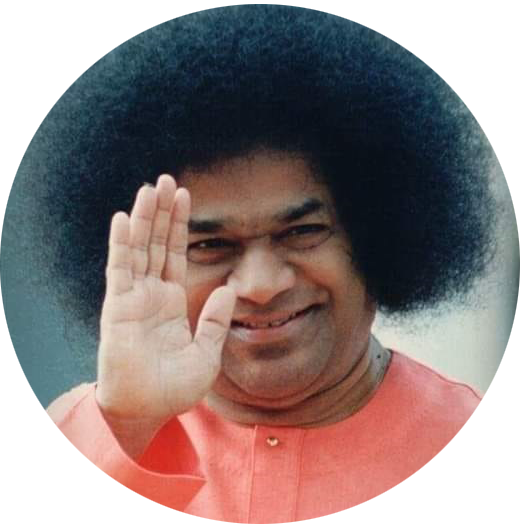
From Nuclear Physicist to Renowned
Musician
A brilliant Indian student by the name
of Vemu Mukunda had taken science courses at universities in India. Then he
left his motherland to conduct post graduate research in Scotland. He took a
job in England working in the field of nuclear science. Although outwardly he
seemed to have successfully established himself in his chosen field, yet he was
not happy. He had left his family, friends, and culture behind and now found
himself living in an environment where the advancements in technology were
considered the highest goal and his only social life consisted of attending
endless rounds of cocktail parties. He felt his life was empty and without
purpose and this feeling came to a crisis point when his brother and sister
both died back in India. Furthermore, the negative use of nuclear science to
build weapons of mass destruction weighed on his conscience and made him
question his choice of career. He began to sink into a state of chronic
depression which was only briefly relieved by the release he felt when he made
music on the Indian stringed Veena that he had played since childhood.
It was during that period of black
despair that a series of strange incidents occurred to bring a new influence
into his life. By coincidence, a mutual friend in London had a veena at home
that was badly damaged and when he heard of Vemu's skill with the instrument he
invited him to his home to see if he might be able to repair the instrument.
Vemu went to the home along with some friends and indeed found the instrument
so badly damaged that he was completely unable to get any pleasant sounds out
of it at all. However, he agreed to take the instrument back to his home and
see if he could repair it.
On the way home, the friends who had
brought him wanted to stop at a house where they knew the residents were
conducting Sai Baba bhajan sessions (sacred singing). Though Vemu had no
special interest in doing so, since he was riding with them he went along with
the plan.
When they arrived at the house and
went in, he saw a picture of Sathya Sai Baba on the wall and immediately had
the thought: "Oh, no not him". His parents had been followers of
Shirdi Sai Baba and they felt that Sathya Sai Baba, who claimed to be the
reincarnation of Shirdi Sai Baba, was an imposter and so Vemu had also taken on
this attitude. Shirdi Sai Baba left his body in 1918 and many of his original
followers were unwilling to believe that he had taken on the Sathya Sai form
eight years later (Sathya Sai was born in 1926) even though Shirdi Sai Baba had
told his followers just before his death that he would take birth again eight
years hence.
Vemu had no interest in the bhajans
and so he sat behind the other singers and took no part in the singing.
However, during a lull in the bhajans the hostess put a veena in his hands and
asked him to play something. In an abstract mood he began to strum the
instrument and presently a tune came into his head and he began to play. The
others very much enjoyed his playing and when the song ended they asked him to
play another song. He agreed, playing the first tune that came to mind. At the
end of the second song, he suddenly realized that the two songs he had just
played had been composed by two different Indian Saints but the titles of the
songs had the same meaning in the respective languages of the composers: "No
One is Equal to You".
Now Vemu looked down at the veena he
had been playing and realized that it was the badly damaged one he had been
playing and realized that it was the badly damaged one he had been taking home
to repair. But mysteriously, every note he had played on it had been completely
harmonious. Now he tried to play it consciously and not a single harmonious
note would come out of it. He began to feel as if something miraculous had
occurred and he felt the hair on his head standing on end.
He thought to himself: “Sai Baba!
What power. Is he a black magician?”
After this incident Vemu began to get
invitations to play professionally. He accepted whenever it fit into his
schedule and strangely, wherever he played he would run into someone who would
talk about Sathya Sai Baba. At home his friends in London kept pressing him to
attend Sai Baba bhajan sessions. He began to feel that he was being pursued by
Sai Baba!
Vemu had been schooled on the
principles of science and so his confidence was more on the field of matter
than that of the spirit. He felt that the realm of spirit was only a way by
which some people escaped from harsh reality. And yet some part of him wanted
to proceed into the spiritual realm while the other part wanted nothing to do
with it. His mental torment increased and he felt himself being torn in two
different directions. He continued to resist the spiritual impulse and yet, the
world of physics and materialism had lost its charm for him.
Finally in a state of complete
desperation he sat down and addressed a letter to Sathya Sai Baba at his
residence at Prasanthi Nilayam. Although he had heard that Sai Baba does not
answer directly by writing back, it was said that he would provide the answer
in some more direct form. He poured out his heart's dilemma asking Sai Baba if
he should continue in his chosen profession of nuclear engineering, quit and
become a full time musician, or renounce the world and become a religious
devotee (Sannyasi).
As he boarded a flight to Paris for a
Veena concert, he wondered how and in what form he might receive a response to
his letter but nothing unusual happened on the trip. On his return to London,
he began to feel an inexplicable urge to visit the same home where he had
played the damaged veena during the bhajan session. This was curious to him
since he didn't even want to go there the first time. He ignored the urge for a
while but finally gave in. Approaching the house, he noticed the "Om
Sai" written on the front of the house. The owner of the house, Mrs.
Sitabai, greeted him at the door and told him she was very glad he had come
because she had something for him. They went to the shrine room and she handed
him a photograph telling him an unknown visitor had attended the last bhajan
session and had asked that the picture be given to Vemu as soon as possible. He
looked at the photograph and saw that it was a picture of Sathya Sai Baba
playing the veena!
He was immediately overcome with
emotion and surrendered to Sai Baba by prostrating before the large photo of
him on the wall. Tears of emotion ran down his cheeks. He knew now that he had
his answer. He soon quit his job and became a full time musician. His
reputation as a skilled veena musician spread and he began to get calls from
all over Europe, including as far away as Russia. He felt that somehow his
sudden success was due in part to the guiding hand of Sathya Sai Baba and he
began to feel that he wanted to return to India and visit him. At about this
time his mother and father were also asking him to return to India to see them
and so he began to think seriously about making the trip home. But at the back
of his mind was a fear that all the events were just coincidences and the
result of his own imagination and that Sai Baba might refuse to see him. It
would be a great disappointment to him if Sai Baba ignored him.
He decided to write to a friend and
have him ask if he should come to visit Sai Baba. Soon afterwards he had a
vivid dream in which Sai Baba came to him and rubbed his sacred ash (vibhutti)
on his left shoulder beneath his shirt and said to him: "Come to
India". When he awoke the dream seemed very real but he still felt that it
might have been created out of his wish to go to India to see the great
teacher. After several days of struggle he made up his mind to go so he
canceled all his performance reservations and took a plane to India.
When he arrived at Swami's (i.e. Sai
Baba's) residence he took his place on the grounds at the end of a line of men.
One of the devotees told him that he had arrived just in time for Darshan, in
which Sai Baba circulates among his devotees giving sight of a holy person.
Vemu sat quietly enjoying the feeling
of peace that emanated from the place and waited patiently. Soon there was a
stir at the other end of the lines and he caught sight of the orange colored
robe of Sai Baba as he circulated slowly, gracefully among the devotees,
stopping briefly to talk to some, to create vibuthi for some lucky ones,
or to take letters from others.
As Sai Baba got closer, Vemu felt his
excitement and anxiety increase. As he saw the robe and delicate feet approach
him he could not bear to look directly into his face, encircled with a halo of
hair and so he cast his glance downward onto the ground. His heart was in his
mouth and his body became rigid as he noticed the feet approach ever closer.
Vemu had written a letter to give to
Sai Baba but he had completely lost his wits and did not even think to hand it
to him. He felt Baba take the letter from his hand and then he raised him up
and he heard him say in a quiet voice: "Go inside and wait".
Vemu went inside and when at last he
faced Sai Baba alone in the interview room, Sai Baba created vibuthi for
him and rubbed it on his left shoulder under his shirt just as he had done in
the dream. Then Sai Baba began to discuss the obstacles in his life showing
complete familiarity with his career struggle, his desire to play the veena,
his depression, and other details of his daily life. As the talk ended, Baba
circled his hand and produced out of air a five faced rudraksha bead in
a gold setting at the end of a gold chain. He gave it to Vemu to wear
constantly and told him that he would have great success both in his new career
and in his spiritual progress. He then invited Vemu to play the veena at a
musical concert to be held at the Sathya Sai College in Brindavan.
When the time of the concert came,
Vemu brought along his eighty year old father who had been a close devotee of
Shirdi Sai Baba. His father told the son he would just sit outside on the outer
grounds and wait. But when Sai Baba learned the father was present he
immediately called him inside and in Vemu's words: “For a whole hour Swami
talked to my father like a loving mother to her child. After that my father was
a changed man.” Now the entire family, Vemu's father, mother, brother and
all the other members of the family are followers of Sathya Sai Baba.
from a story
that appears in its original form in Sai Baba, Avatar by Howard Murphet