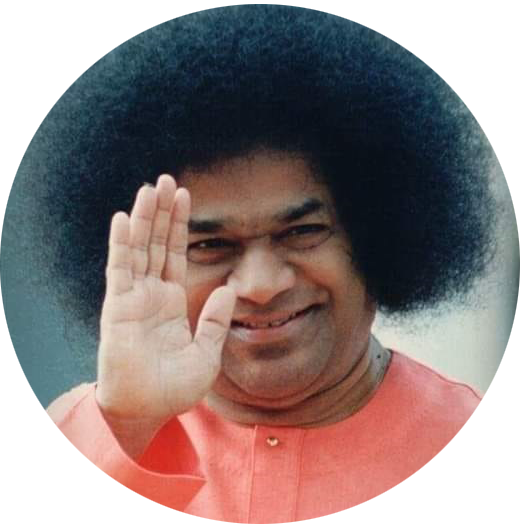
Bhagavan Baba – Spiritual directions/advice on Operation of Sai Centers
Questions & Answers
Published by Sri Sathya Sai Central Council of Malaysia in conjunction with the MINI CONFERENCE of FAR EASTERN Sai Centers Kuala Lumpur, Malaysia, July 1984
SEVA AND THE DEVOTEE
Q: What exactly is
Seva? Is it the way in which bhakthi manifests itself, a consequence of
devotion? Or is it the cause of bhakthi, one of the methods by which bhakthi
is expressed and developed?
A: It is neither. It
is not the sine qua non of Bhakthi, nor is it the result. It is the very
essence of bhakthi, the very breath of a Bhaktha, his very
nature. It springs from the actual experience of the Bhaktha - an
experience that convinces him that all beings are God's children, that all
bodies are altars where God is installed, that all places are His Residences.
(Sathya
Sai Speaks, Vol. V, Page 332)
Q: Where does the
first duty of a seva member lie?
A: The first lessons
in Seva have to be learnt in the family circle itself. Father, mother,
brothers, sisters -in this limited group, which is well-knit, one must engage in
loving service and prepare for the wider Seva awaits outside the home.
(Sanathana
Sarathi, December 1981, Page 289)
Q: What is the age
limit for Seva Dal members?
A: The age can be
anywhere from 16 and above. Why should we deny the chance to anyone or discard
anyone as too old? The skill and enthusiasm, the discipline and sense of duty
of everyone can be put to some good use.
(Sathya
Sai Speaks, Vol. V, Page 126)
Q: Swami, what are
the necessary qualities needed to be a Seva Dal member?
A: You have to serve
people with special love and care. Do not go about strutting with pride that
you are with Seva Dal; go humbly among the people with love in your hearts and
softness in your speech and sweetness in your acts. It is a badge which a
"servant" alone is entitled to wear, not a "master" lording
over others. If your hearts are filled with pride, and a sense of superiority
over others who have no badge on their chests, then the hearts themselves will
be affected by the evil aroused by this decoration. The badge and scarf do not
entitle you to go around, indulging in low talk and vulgar habits. It does not
allow you to exercise authority over anyone or appropriate anything from
anyone.
It is a call and a
challenge for you to provide comfort and consolation to those in need, to seek
out means and methods to increase the ways in which you can help others and
contribute to their joy. Remember with each act of love and service, you are
nearing the Divine Presence, with each act of hate and greed you
are moving further and further away. The ideal of service must inspire those in
authority, those who possess riches, those who are endowed with skills and
intelligence, leisure and health to serve the community and the community will serve
you. Exploit it and it will exterminate you. Put an end to laziness, bury your
clamorous ego; bury the greed for power and pelf, then you get the
qualifications needed to be a member of the Seva Dal, and maintain the high
ideals of the Seva Dal Organization.
(Sathya
Sai Speaks, Vol. IX, Page 131-132)
Q: How do I become a
worthy Seva Dal member and what are the qualities you look for in such a
member?
A: You have to uproot
the egoistic tendency, get rid of all sense of mine and thine, and burn into
ashes the pride that comes of the feeling that you are offering service to
someone poorer and less fortunate. Do such deeds as are holy and beneficial,
untarnished by ego and greed. You have to win purity of heart. You must examine
your motives and skills, your intentions and qualifications and discover for
yourself what you hope to achieve through the Seva.
Watch for divinity
that is latent in every man. Pay attention to the ONE that is the truth of the
many. Siva is omnipresent; He is the inner motivator of all beings. He is ever
present, everywhere, in our inner realms as well as in the realms around us.
This fundamental truth has to be firmly believed in by every Seva Dal member,
and realizing this, he has to be humble and full of
reverence towards all. The Seva Dal member who shines in the splendor of the
faith that "God is in himself as well as equally so in all",
can transform the members of his family, his neighbors, the society in which he
lives and the entire country in which he belongs.
(Sathya
Sai Speaks, Vol. 10, Pages 219-222)
Q: What qualification
must I have before volunteering for a particular seva project?
A: You must have not
merely enthusiasm to serve, but the intelligence and the skill; then only can
you be efficient and useful. Enthusiasm without efficiency is often a source of
loss and grief.
(Sathya
Sai Speaks, Vol V, Page 126)
Q: Why can't I do
seva on my own as an individual without an organization?
A: What a single
individual cannot accomplish, a well-knit group or society can achieve. A man
walking alone will feel tired and miserable at the end of five miles, but,
walking with ten others as a group he would find the five miles a happy jaunt.
He arrives refreshed and strong. We find social living contributions to
increased happiness and more efficient effort even among birds and beasts.
(Sanathana
Sarathi, December 1981, Page 289)
Q: What is the
attitude I must have so that my activities may be rendered as unselfish Seva?
A: The tonic of
unselfish Seva is... Do not serve for the sake of reward, attracting attention,
or earning gratitude, or from a sense of pride at your own superiority in
skill, wealth, status or authority. Serve, because you are urged by Love. When
you succeed, ascribe the success to the Grace of God, who urged you on, as Love
within you. When you fail, ascribe failure to your own inadequacy, insincerity
or ignorance. Examine the springs of action, disinfect them from all trace of
ego. Do not throw the blame on the recipients of the Seva, or on your
collaborators and co-workers, or on God.
(Sathya
Sai Speaks, Vol. Vll, Page 54)
Seva in all its
forms, all the world over, is primarily Sadhana! It is spiritual discipline,
mental clean-up. Without the inspiration given by that attitude, the urge is
bound to ebb and grow dry; or it may meander into pride and pump. Just think
for a moment: Are you serving God? Or is God serving you? When a pilgrim stands
waist deep in the Ganga, takes in his palms the sacred water, and, reciting an
invocatory formula, pours the water as an offering to the Deity, an Arpan as he
calls, it, what he has done is only poured Ganga into Ganga! When you offer
milk to a hungry child, or a blanket to a shivering brother on the pavement,
you are but placing a gift of God into the hands of another gift of God! You
are reposing the gift of God in a repository of the Divine Principle! God
serves; He allows you to claim that you have served! Without His Will, not a
single blade of grass can quiver in the breeze. Fill every moment with
gratitude to the Giver and the Recipient of all gifts.
(Sathya
Sai Speaks, Vol. Vll, Page 55)
Q: Sometime devotees
start doing seva with some reward or attachment in mind?
A: Let them work for
the good of others. Of course, they will not be able to do such service in a
detached way at first. But that does not matter. Let them continue this
practice of doing unselfish work which will purify their mind. When the mind is
sufficiently purified and the heart is filled with selfless love they will
intuitively feel the existence of God and develop a longing to realize Him.
(Golden
Age 1980, Page 222)
Q: Can I only do the
type of seva or activities at the Center that appeal to me?
A: When you have the
Goal in view, wherever you are, it will fill you with genuine joy. Do not seek
to do things that give you sensual or temporary satisfaction only. Do not crave
to do what you like but train yourself to like. what you do, or what you have
to do. It is Sadhana. When you willingly undertake work that promotes your real
welfare.
(Sathya
Sai Speaks, Vol. Vll, Page 222)
Q: If I perform the
allotted hours of seva activity is this sufficient sadhana?
A: God will not ask
you, what Seva did you do? He will ask, with what motive did you do it? What
was the intention that prompted it? You may weigh the Seva and boast of its
quantity. But, God seeks quality, the quality of the heart, the purity of the
mind, the holiness of the motive.
(Sanathana
Sarathi, December 1981, Page 291)
Q: If I perform all
the duties allotted to me, as instructed by the leaders and coordinators, is
this sufficient Sadhana?
A: Let me tell you
that mere execution of some duties enjoined on the Seva Dal by the rules cannot
be recognized as Bhakthi, or acts of dedication. Duty done without Love
is deplorable; duty done with Love is desirable. But acts of Love that emanate
from a person because it is his nature, and not because it is enjoined on him
as a duty he has to fulfil, he is really Divine!
(Sanathana
Sarathi, January 1976 Page 259).
Q: Baba, I would like
to earn the grace and love from you by serving help my fellowmen. In what
manner can I do this? Can you help me see why serving my fellowmen do is so important
and means so much to you?
A: You have to
execute various 'seva dal' activities in the spirit of sadhana, which
enjoins you to revere Duty as God and to engage in work ... as worship of the
Lord Himself. Seva has to be saturated in selfless love. The service that you
render must reward you, not only with your satisfaction, but with the
satisfaction and relief of those whom you serve. When those whom you serve are
not relieved or made happy thereby of what avail is your elation at the help
you have been allowed to offer? You should have the joy of the recipient as
your objective. Try to discover whether your act of service has really been
worthwhile, whether it has been intelligently rendered with full appreciation
of the peculiar circumstances of the individual who needed it. Do not think of
the fame or praise you win; think of the good that people derive. Do not crave
for publicity; crave for the joy that shines in the face of the people whom you
help.
Seva brings you
nearer to ME. The flower, that is your heart, gets fragrance by means of the
seva you do; and so, it becomes more acceptable to ME. Through seva, you
realize that all beings are waves of the ocean of divinity. No other sadhana
can bring you into the incessant contemplation of the ONENESS of all living
beings. You feel another's success as your own. To see everyone else as
yourself and yourself in everyone, this is the core of the sadhana of seva.
Seva makes you humble before the sufferings of others. The hardest heart is
slowly softened into the softness of butter by the opportunities that the seva
dal offers. Seva is prescribed as one of the nine steps towards Realization.
(Sathya
Sai Speaks, Vol. X Page 33-38)
Q: Swami, tell us how
and in what spirit seva should be done?
A: Service rendered
to cattle, beasts and men is laudable sadhana. Keeping the environment of our
residence clean, providing help to those who live around the place, going to
hospitals and serving as far as possible the patients who are in the wards - in
such acts of service the members of the Seva Organizations must take active
part. You should keep God in your mind as the pace setter, whether you are
serving the patients in the hospitals or clearing the drain in the bazaar. That
is the ta pas that is the highest form of sadhana. More Anand a (Happiness) can
be won by serving others than what can be got by merely serving oneself. Just
offer some service to anyone in need with a full heart and experience the
Ananda that results. Every one of you must become a Sevak, eager to help those
who need it. When the Sevak (helper) becomes the Nayak (leader) the
world will prosper. Only a kinkara (servant) can grow into a Sankana
(master). Of course one has to eliminate the ego totally. Service helps you to
remove the ego. So do not pay heed to what others might say when you engage in
service activities. Let compassion and sacrifice be your two eyes, let ego
lessness be your breath and love be your tongue: Let peace reverberate in your
ears. These are the five vital elements you have to live - upon. God will not
ask you what seva did you do? He will ask with what motive did you do it? What
was the intention that prompted it? God seeks quality-the quality of the heart,
the purity of the mind and the holiness of the motive.
(Sanathana
Sarathi, December 1981)
Q: Bhagawan, why do
you require devotees to participate in community work and what is its
importance and aim?
A: Neither
performance of Tapas (austerities), nor pilgrimage to all holy places, nor
study of all Sastras, nor immersion in Japa, will ever help one to cross
the Ocean of Samsara (cycle of birth and death).
The only path that will help you to be liberated from Samsara is dedicating
yourself to the service of others. Human birth is very sacred indeed. There is
nothing noble than using this life in service of others and rendering help to
the needy.
There is, however, a
deeper significance in the word "service" and all should understand
it. It is just not doing some service, good though it be. Service does not
simply mean doing something good for others. One should grasp the meaning of
service. Thus, each one of you should cultivate that attitude and spirit of
service, that whatever service you are rendering to “others” is rendered
service “unto God Himself”. The service should be free from all selfish motives,
and you should never think of the reward - for such activities (for yourself).
Nor should you expect, or desire gratitude from the person you serve.
Everything you do, you have to do as worship of God, without desire and
expectation of reward and just as a duty and a privilege.
The river is
permanently flowing, but its waters are for the benefit of others only. It
seeks no reward for itself. Likewise, the tree bears fruits only to give them
to others, but not for its own eating. The cattle give milk only for others, it
does not drink it. Thus like the river, the tree, the cattle, all of them are
teaching us a lesson, how to live for others, how to serve the God embodied in
others. Furthermore, if the river, tree and cow can exhibit such exemplary
qualities of sacrifice, it is deplorable that Man, who has inherited noble
qualities should be lacking in the spirit of sacrifice.
Such is true Seva
(service). It is selfless service, service to God. Such spirit and attitude of
service you should cultivate and practice. Through this you will be able to
destroy the demons of Ego and Selfishness in you. Selfless and Sacred love
which you put into your work and Service takes you to the very heights of
Divinity.
(Message
to Sai Sarathi, Pages 1-2, July 1980)
Q: What is the best
way to win Grace while performing seva? A: The best way to win Grace is to obey
instructions, to follow the advice, to submit to the control exercised with so
much Love.
(Sathya
Sai Speaks, Vol. V, Page 131).
Q: Do we serve God
when we serve Man?
A: People say that
the service of man is the service of God, that manavaseva is madhava-seva.
That is a true statement. But though the service of humanity is holy, unless it
is merged in the bigger ideal, men will not benefit, however huge the service.
Mere repetition of the slogan is useless, if service is done without faith in
the divinity of man and with an eye on name and fame and the fruits of one's
action. Whatever actions one undertakes, if one has constantly as a companion
the contemplation of the Lord and if one has faith in the essential divinity of
man, then the statement about Manavaseva and Madhavaseva being
the same is justified.
(Prema
Vahini, Page 79)
Q: Swami, do we serve
God or does God serve us?
A: When a pilgrim
stands waist deep in the Ganga and takes in his palms the sacred water and
reciting an invocatory formula pours the water as an offering to the Deity, an
Arpan as he calls it, what he has done is only poured Ganga into Ganga! When
you offer milk to a hungry child or a blanket to a shivering brother on the
pavement, you are but placing a gift of God into the hands of another gift of
God! You are reposing the gift of God in a repository of the 'Divine
Principle'. God serves; he allows you to claim that you have served! With out
His will, not a single. blade of grass can quiver in the breeze. Fill every
moment with gratitude to the Giver and the Recipient of all gifts.
(Voice
of the Avatar, Part 11, Page 213)
Q: Swami what is the
right attitude a worker must have when he joins the SevaSamithi?
A: When you join the
Seva Samithi and share in its activities, you are doing so, not for the sake of
Swami, nor for the sake of the people, but for the sake of Dharma, which you
have a duty to uphold and foster. Attachment to Dharma, practice of Dharma
and its varied manifestations as Seva and Prema can alone help transform Manava
(Man) into Madhava (God). The destruction of the insidious poison of
egoism is essential for the restoration of health and happiness in the mind.
Unless you tap the inner spring of joy in your own Sachidananda Principle, you
cannot be established in Ananda. This is the best way for you to offer the
highest possible Seva to your country.
(Sathya
Sai Speaks, Vol. IX, Page 14)
Q: What should be the
Sadhana of Seva Dal members?
A: Seva Dal
members should take seva as sadhana as an offering to the Lord. Let compassion
and sacrifice be your two eyes, let ego lessness be your breath, and love be
your tongue. These are the elements you have to live upon as sevaks.
(Sanathana
Sarathi, December 1981)
Q: Should we copy the
Seva activities done by other Centers!
A: Doing something
because it is being done elsewhere is a sign of ignorance. The programs must
satisfy local needs, solve a local difficulty. They must arise out of felt
needs and should be adapted to local conditions. It must be taken into
consideration whether the place concerned is urban or rural, industrial or
agricultural, a pilgrim. center or civic extension, a developing area or a
sinking economy, a tribal settlement or a hill station. The person who borrows
some ideas from another region and executes it might feel satisfied that he has
achieved some concrete program. But do the people whom he tried to benefit feel
better and happier? That is the test.
(Sathya
Sai Speaks, Vol. X, Pages 32 & 33)
Q: How does a Sai
worker maintain his calm under stress where crowd discipline is difficult to
maintain.
A: You must have
Prasanthi in your hearts; you should not be agitated or worried or angry or
upset. Behave in keeping with the dignity conferred on you... The best way to
show respect to them. is to treat them. as reasonable devoted nice respectable
people. If any of them talk loud, not knowing that he must not disturb the
silence of the place, do not rush to him or place your palm across his mouth.
Go near him and whisper in his ear, the rules and discipline... Then, he is
certain to cooperate and recruit others too, into the forces of silence.
(Sathya
Sai Speaks, Vol. V, Page 125)
I have known many
volunteers who reel off the excuse, “They won't obey Swami, if we speak
soft; they are accustomed to rough treatment only.” I will never pardon
such volunteers. The fault is always in the manner of the speaking, the way in
which they explain their actions, the temper, the attitude, the approach.
(Sathya
Sai Speaks, Vol. V, Page 124)
...when you ask
others to maintain silence, a thousand eyes will be watching, whether you are
yourself maintaining silence. You must not exhibit impatience or anger; you
must not show any partiality to persons from your village or region, those who
speak your language, nor should you show any disrespect or negligence of people
from other regions, those who speak languages other than your own. In all
matters, try to discover what action will please me and then behave
accordingly. Whoever may or may not watch you, I shall be with you, wherever
you are, now or later, here or elsewhere; so, be sincere, never try to
hoodwink, or pretend or deceive.
(Sathya
Sai Speaks, Vol. Vll, Page 95)
...The crow sits on
the back of the buffalo and thrusts its break into the raw wound. There is no
conception of the pain the beak causes... volunteers are not aware of the pain they
cause by angry words, or even by a gesture ·of contempt or resentment. Imagine
what such a gesture can do for you, if you are in that position-and so avoid
it. Always try to put yourselves in the position of the other and judge your
action against that background. Then you will not.be wrong.
(Sathya
Sai Speaks, Vol. VlI Page 96)
Q: I do not agree
with the way a coordinator/ co-worker is conducting a seva project. How do I
approach him and tell him I do not want to be involved?
A: I advise; “Even
if you cannot oblige, you can at least speak obligingly.” This means
that you have to cleanse your speech of cynicism and satire and be sincere and
sweet. You may differ from co-workers on methods and programs, but this should
not leave a scar on your heart or on theirs.
(Sathya
Sai Speaks, Vol. X, Page 226)
Q: Sometimes the
Chairman of the Centre or the Seva Dal Coordinator does not appreciate
the seva I perform?
A: Do not think of
the fame or praise you win; think of the good the people will derive. Do not
crave for publicity; rave for the joy that shines in the faces of the people
whom you help.
(Sanathana
Sarathi, January 1976, Page 259)
Q: Why is that
service we do sometimes not appreciate or does not give results to the
recipient, Swami?
A: You are all
engaged in seva of one type or other and I know that you are frustrated with
the result. You are not happy with the service you do, nor are the recipients
happy when they receive help. But try to develop Prema or unselfish love, based
on Sathya, Dharma and Shanti. Try to fill every act of service with that Prema,
try to see every act of service that you receive with the eye of Prema. Then
there will be no frustration. The person who serves is the person served; you
serve yourself when you serve another. You serve another because his suffering
causes you anguish and by relieving it, you want to save yourself from that
anguish. Unless you have anguish, your service will be hollow and insincere.
(Seva
Dal, 3 /1981, Page 11)
Q: What is the
attitude I should maintain should the seva I perform not satisfy the recipient?
A: The seva that is
entrusted to you, you must do intelligently and to a successful finish. It does
not matter if the recipient is not hilly satisfied;
you must have done your best, without falter or favor.
(Sathya
Sai Speaks, Vol. V, Page 127)
Q: Swami! Sometime
differences in opinion are difficult to avoid. What should we do?
A: You must work
together joyfully as brothers and sisters. When any differences of opinion crop
up between you, how can seva be done with uniform attention and enthusiasm? You
have to reconcile such differences silently and with love, and place seva in
the forefront of your activities. When seva calls you, all must come together
as one. There should be no politicking in the region of seva you do. No idea of
separateness should tarnish your thoughts. Do not talk harshly to anyone.
Through soft and sweet speech, we can transform even demonic people into decent
individuals. From words honey drips, words are fragrant flowers, words enshrine
Vedic wisdom. Words can build heaven or even hell.
(Sanathana
Sarathi, January 1982)
Q: How to conduct
hospital visits?
A: Visit the patients
in the hospitals, read nice story books sitting by the side of the patients in
the beds, write letters for them, and generally be kind and friendly to them in
their loneliness and pain.
(Sathya
Sai Speaks, Vol. 8 Page 194)
Q: How should we
undertake service in hospital?
A: You need not be
wearing the uniform or parading the·badge; he need not wear the uniform of
supplication or parade the badge of pain. Sit by him, as you will sit with your
brother. Hold the patient by the hand, look into his eyes with compassion, fill
his palms with prasadam, inquire how you can help him and let tears of
gratitude flow from his freshened eyes. That is the reward which must sustain
you. Even if there is no expression of thanks, even if you are received with cold
silence or: shrug of dislike, carry on, for it is your nature to be giving and
forgiving.
(Sathya
Sai Speaks, Vol. VII, Page 261)
Q: Can a devotee
working in a hospital or home helping others be considered to have performed
Service in the spiritual sense?
A: People may claim
that they are engaged in social service, that they are directing or sharing in
Government activities which promote the welfare of the Community. But whatever
is done as a job, without inspiration or renunciation and heart-felt Love,
cannot be 'Service'.
(Sathya Sai Speaks,
Vol. VII, Page 329)
Q: What is Swami's
comments on the seva of blood donation?
A: Of course, it is a
laudable act of service. Remember that there is something more laudable; to
charge-every cell of the blood circulating in you with Love and the spirit of
Dedication to God.
(Sanathana
Sarathi, June 1976, Page 93)
Q: By engaging in
seva, am I not creating more Karmic bonds for myself?
A: Wherever you are,
whatever work you do, do it as an act of worship, an act of dedication, an act
for the glorification of God who is the inspirer, the witness, the Master. Do
not divide your activities as “These are for my sake” and “These are
for the sake of God”. Even if you divide zero by zero, you get one. When
you work, there should be no remainder, nothing should remain over. See all
work as one. You should not as the Sastras say, leave any remainder or balance
in debts, in disease, in vengeance against enemies, in the cycle of birth and
death. Finish all, down to the last. They should not recur again. If you offer
all activities at the feet of the Lord and free them from any trace of egoistic
attachment, the consequence will not bind you; you are free, you are liberated,
you have moksha.
(Sathya Sai Speaks,
Vol. VI, Page 33)