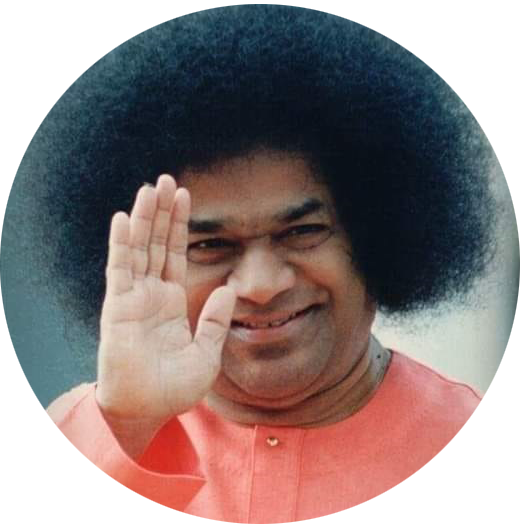
Bhagavan Baba – Spiritual directions/advice on Operation of Sai Centers
Questions & Answers
Published by Sri Sathya Sai Central Council of Malaysia in conjunction with the MINI CONFERENCE of FAR EASTERN Sai Centers Kuala Lumpur, Malaysia, July 1984
OTHER CENTRE ACTIVITIES: BAL VIKAS & MAHILA VIBHAG (Women's Wing)
Q: What is the
responsibility of a Guru in respect of teaching children?
A: Teachers must
endeavor to help each pupil to unfold his native talents and innate skills and
recognize his latent potentialities. When you plant a sapling, you provide it
with water and manure; you ensure that it receives plentiful sunlight and air.
But the wonder is the plant does not become air, soil, manure or water. It
grows as the very plant which was the truth of the seed. Recollect your own
childhood and boyhood, the struggle for preserving and promoting your
individuality and dealing with your students who have the same problems and the
same purpose. There is a Telugu proverb, "It is always an old mud pot, if
the mother-in-law breaks it". When she stumbles over a glass tumbler and
breaks it, she blames the daughter-in-law for keeping it at that spot. When the
daughter-in-law stumbles and breaks it, the fault still is the
daughters-in-law. “Have you no eyes?” she asks. The mother-in-law holds
that she is never in the wrong. Such an attitude has to be given up. Self-examination
helps the correction of one's attitudes. Emperor Bhoja had a unique way of testing
and judging the worth of Gurus. He never pitted one Guru against another. He
arranged contests and competitions between the pupils of different gurus and
from the result of these tests, he honored the Gurus.
In our educational
institutions and in this Institute, students must shape themselves as 'images'
of their teachers. They must spread the messages of our ideals throughout the
world. Teachers must live that message, and students must imbibe it and become
it. The Atma is the Truth of Truths. When one achieves awareness, all knowledge
is added unto him. Imagine a coconut tree with a headload of nuts. It casts a
long shadow on the ground, and the shadow of fruits are equally plentiful. When
one climbs the tree and plucks the fruit, he can also be seen moving along the
shadow tree and plucking the shadow fruit. So too, when one seeks to know the
Atma and succeeds, he can at the same time progress along the "World"
(Which is an illusory shadow) and gain the shadow fruit (which is trivial and
temporary).
This is a noble task
-a hard but heavenly sadhana. Teachers have to undertake it with patience and
humility, always standing forth as examples and ideals. They can then confer on
the world the invaluable boon of Atmic Awareness, through the students whom
they instruct.
(Sanathana
Sarathi, May 1984, Page 125)
Q: What should be the
attitude of Guru in respect of punishing children?
A: When ridiculing,
reprimanding or punishing pupils, teachers must try to picture themselves in
their position and discover how they would have reacted to the same, when they
were pupils. Self-inquiry of this kind will be very useful.
(Sanathana
Sarathi, May 1984, Page 124)
Q: Under whose
direction should the Bal Vikas gurus be placed?
A: Only the teacher
of teachers can direct the Bal Vikas gurus. That is to say, he who has
mastered the process and problems and the significance and secrets of
education, can so direct. He must be able to correct the gurus and convince
them. It might happen that State Presidents may not have all these abilities.
Their abilities might well be great in other aspects of the organization. They
might have specialized in other fields of service. So, my suggestion is that
the State President should not be related in any way with the Bala Vikas. He
has to organize, supervise and give guidance to the BhajanMandalis,
the Seva Samithis, the Seva Dal and other service units. The BalVikas gurus will benefit more through the very apex of the organization.
Women in charge of the Bal Vikas are easily moved by excitement or
dejection, and it is better they do not immediately carry their problem to the
State President; by the time they communicate with the central authority, the
emotion would have cooled down. They can be directed more firmly by the center,
and they will follow the directions more willingly if they emanate from the
center.
(Sathya
Sai Speaks, Vol. X, Page 282)
Q: Being the subject
to the scrutiny of the public how should the Bala Vikas Gurus act?
A: Workers and
office-bearers, gurus, and Seva Dal members of the Sathya Sai
Organization all over the world, all must remember that they are subject to the
scrutiny of the public wherever they are and whatever they do. They must be
free from the habits and practices which they recommend others to give up. The
gurus should not leave their own children out of the Bala Vikas class: they
should not lose temper; they should keep their emotions under control and not
exhibit depression, dejection or wavering of the will. The quality of work is
more important than the quantity. So, they should not undertake to do more
than they can render satisfactorily. Let their own conscience be the judge: if
they feel that they have discharged their duty sufficiently from the children
or to society, then they may be contented.
(Sathya
Sai Speaks, Vol. X, Page 162)
Q: What qualities
must the Gurus cultivate?
A: More than all
else, the guru must equip himself or herself with sahana a calm and
quiet temper; he should be prepared to meet without being ruffled, the
buffetings of the environment. When someone inquires -whether you have a ca1m
temper do not get enraged! Some people get angrier and angrier when they are
asked this. Even when you have to speak harshly to a child or parent because
all other means of bringing a point home have failed, let your heart be soft,
let it not be hardened by prejudice or hatred.
(Sathya
Sai Speaks, Vol. X, Page 164)
Q: Sometime Gurus
seem to find fault with other Gurus... .ls this expected of them?
A: Of course, our Bal
Vikas gurus should not indulge in jealousy or faultfinding. They can
undertake the task of teaching only after they rid themselves of evil traits.
If gurus talk ill of other gurus and promote misunderstanding and factionalism,
the children can never improve. So, resolve now to adhere to the right path.
(Sathya
Sai Speaks, Vol. X, Page 282)
The guru should be
alert that the weeds of hatred, envy and similar vices do not take root in her
own heart. These weeds are rampant in the political field, and they creep into
other fields too. Teachers should not form rival groups-some proud of their achievements,
some envious of the praise others earn-which engage themselves in
recrimination. See others as your own brothers and sisters, for all are one
when viewed as Atman.
(Sathya
Sai Speaks, Vol X, Page 288)
Pour out all your
Love on the children around you and instruct them gladly and sincerely. This
attitude alone can justify association with Sathya Sai Baba Bal Vikas.
(Sathya
Sai Speaks, Vol. X, Page 288)
Q: What is Baba's
comment when two gurus quarrel?
A: If two gurus
quarrel or become unfriendly, both will be removed. No inquiry is necessary; we
condemn both for having been involved. One poisonous insect can destroy an
entire crop.
(Sathya
Sai Speaks, Vol. X, Page 283)
Q: Swami, why is it
that Gurus are being praised as equal to God himself?
A: Guru is referred
to reverentially as Brahma, the first Trinity entrusted with Creation, as
Vishnu, the second of the Trinity entrusted with Preservation and Protection of
Creation, and as Maheswara, the last of the Trinity charged with
Destruction and Dissolution. This descr1ption is symbolically correct, as we
can see when we analyze the work which the Guru is expected to carry out. The
Guru shows the seeds of virtue, of wisdom and of faith in the heart of the
pupil. He is therefore Brahma -in the nature of the Creator. He is like the
farmer who plants saplings in the well-prepared soil of his field. But the
farmer does not sit with folded hands there-after. He takes incessant care to
see that the saplings grow vigorously and well, and he is vigilant to water the
growing crops and feed them with fertilizers at the appropriate
stage of growth. This is the role of Vishnu so far as education and the
educator are concerned. The Guru cannot sit back and silently watch the fate of
the pupil, after the first few lessons. He has to guide the pupil at every
step, foster and encourage good habits, sound reasoning and valid emotions, and
act as Vishnu the second of the Trinity.
The Guru has also the
duty cast on him. to watch every step of the pupil and warn him. off, when he
takes a false step, or develops a bad habit, or entertains deleterious doubts.
Like the farm.er who has to be vigilant against the growth of weeds or upsurge
of pests, the Guru too must be ever alerted to destroy the pests of vice and
weeds of sloth and unsteadiness. The Guru must always be conscious of the
spiritual role which he has taken on and its responsibilities and values. Gurus
are the lamps from which tender hearts must receive Light and Love. By
adherence to Truth, Righteousness, Peace and Love, Gurus will inspire these
qualities in the children that come to them and the homes from where they come
from.
(Sathya
Sai Speaks, Vol. XI, Page 6)
Q: What should be the
sum and substance of the Gurus Message to the children Swami?
A: Be convinced that
there is God, guiding and guarding us. Remember him. with gratitude. Pray to
Him to render you pure. Love all, serve all. Join good company. Visit temples
and holy men.
(Sathya
Sai Speaks, Vol. 6, Page 3)
Q: What should the
attitude and role of a Guru be, Swami?
A: As teachers of the
Bal Vikas classes, you do not look forward to monetary or material benefits and
so you have ample opportunity to make the child's heart and intellect blossom
through the rays of love. The Guru should place before himself three duties to
his pupils.
(1) To develop in them the joy of physical
labor. Only those who have gone through pain and suffering can understand and
sympathize with those who are in pain and those who suffer.
(2) To ensure the physical health of the child
so that it can have a healthy mind.
(3) To promote sharpness of intellect.
Intelligence is not to be measured or promoted by placing “question papers”
before them and challenging them. to write the answers. What the pupil has
learnt has to brighten or modify his conduct and attitude.
(Sanathana
Sarathi, August 1982)
Q: Bhagawan can you
please explain to us Gurus the correct perspective of education?
A: Education confers
humility, endows one with an authority to command, that will entitle one to
affluence. With the help of this affluence, charity and compassion can be made
fruitful and by this means, happiness in this world and peace in the next can
be won. Education is thus a great constructive force for mankind. The
effectiveness of the education system, and the boons it could confer on man
have been ignored and neglected. The name is now given to the art of collecting
information of the objective world. The far more important task of transforming
the nature of men into the divine is given up, as beyond its ken.
(Sathya
Sai Speaks, Vol. IX, Page 1)
Q: What are some of
the demands expected from the Bal Vikas Gurus?
A: The Gurus have to
be embodiments of Love and Patience. The impact of the Gurus has got to be
extra strong if it has to act as a catalyst in the process of modification of
the behavior pattern of these pupils.
The Bal Vikas chores
are bound to elevate and sublimate the thoughts and emotions of the Gurus far
better than any other sadhana can. Remember that as Gurus, you too, in turn,
have a guru guiding you and overseeing your seva. So, you are pupils too, and you
learn the lessons of equality, equanimity and selfless love while acting as a
Guru.
(Sathya
Sai Speaks, Vol. 10, Pages 162-163)
Q: Swami, why and how
do the Mahila Vibhag (Women’s Wing) Members (Bal Vikas Gurus)
teach the children in their Bal Vikas class?
A: The Bal Vikas
children whom they are tending and training, are
going to be the future pillars of the country.
They are going to be
the destiny makers of the nation. To make them fit and worthy instruments for
the great task ahead of them, this sacred and holy responsibility has been
taken upon by our Mahila Vibhag (Women’s Wing) members Bal Vikas
Gurus.
The children should
be made acquainted with our sacred texts like the Ramayana, Bhagawata,
Mahabharata, Bhagwad Gita, Bible, Koran and other religious
texts. The knowledge of these will broaden and mellow one's outlook. What is
taught at a young age will make such a deep impact and impression; it will
remain with them a lifelong companion and treasure. To learn and recite verses
and stotras which are so sublime and which are characteristic of our
holy traditions and culture are soul elevating. They are food and nourishment
to the Spirit.
(Seva
Dal, 4/83, Page 8)
Q: What should be
laid down as the cardinal principle to the basis of education Swami?
A: Unquestioning
loyalty to truth, faith in righteous activity, cultivation of serenity and the
spontaneous upsurge of love.
(Sathya
Sai Speaks, Part III, Page 170)
Q: What is the
primary aim of the Bal Vikas Program?
A: The Bal Vikas
is the primary basis of the great movement to restore DHARMA in the
world. It is raising a generation of boys and girls who have clean and clear
consciousness .... (and) .... the Creation of an atmosphere where noble habits
and ideals can grow and fruitily.
(Sathya
Sai Speaks, Vol. 10, Page 163)
Q: Swami, can the Bal
Vikas classes serve children of all faiths or are they meant only for children
of the Hindu faith?
A: This question has
arisen because you do not know the very fundamentals of the Hindu faith. There
is only one religion, remember, and that is the religion of LOVE; there is only
one caste that is the caste of Humanity. You must be careful not to encourage
or entertain the slightest trace of “difference” on the basis of religion,
caste, creed or color, in the Bal Vikas classes.
Do not tarnish the
spotlessly clean minds of the children by infecting them with a sense of
distinction between one child and another. Impart instructions and inspirations
equally to all. Select stories from the scriptures of all faiths to interest
the children in the values of good life. Speak to them of the moral heroes of
all lands, the saints of all· faiths. For they are all from the same stamp. No
scriptures enjoy violence or lays down untruth as a way of life. All religions
extol truth, Righteousness, Peace, Brotherhood and Love. All Saints are
embodiments of service, compassion and renunciation.
(Sathya
Sai Speaks, Vol. IX, Page 9)
Q: What subjects may
be taught to the Bal Vikas?
A: You have to teach
the equal validity of all faiths. Teach them through quotations from the Bible,
the ideals of Christianity. So, too, use the sacred texts of Zoroastrianism,
Buddhism, Islam, etc., to acquaint them with the ideals held aloft by those
faiths. Also tell them the stories contained in the scriptures of all
religions. Do not belittle any religion or give predominance to any single
religion. There was a suggestion that children must be taught the entire Gita.
That is a mistaken view. Of course, if they desire through their own ardor and
enthusiasm, they do not stand in their way. But what we have to do is to place
before them in sweet, simple style, the teaching of all faiths. The "Sai
religion" is the harmonious blending, through Love, of all religions.
Though some followers - of other faiths - feel that the "Sai
religion" is contrary to theirs, we should not entertain similar feelings.
Our totality, the sum. So, we should not limit or restrict our vision.
(Sathya
Sai Speaks, Vol. X, Page 283 & 284)
Q: What are the
Qualities Bal Vikas Children should have?
A: You must have Bhaya,
Vinaya and Viswasa - Fear, Humility and Faith, Fear of What? Fear
of doing wrong, of falling into falsehood. Humility before whom? Before elders,
teachers, parents. Faith in what? Faith in God, in your own strength, in your
own victory.
I want each one of
you to grow into strong, steady straight persons. Your eyes should not seek
evil sights; Your ears should not seek evil tales; your tongue should not seek
evil speech; your hands should not seek evil acts; your minds should not seek
evil thoughts. Be pure, be full of love. Help those who are in worse condition,
serve those who need your help. Then, you shall be worthy members of the Sathya
Sai Bal Vikas.
(Sathya
Sai Speaks, Vol. VI, Page 53)
Q: How should the Bal
Vikas Children behave when there are visitors coming to the house, or answering
a phone call?
A: You are member of
the Sathya Sai Bal Vikas. You must shine as fine examples to the other
boys and girls. When you are at home and when some friends of your father come
in, you must rise from your seat, talk politely and clearly, receive them
gladly, and be nice towards them.
When you have to talk
over the phone, don't shout rudely, “Hallo, Hallo”; to everyone. Elders must
not be addressed so lightly. Hallo, Hallo is not polite; it is used only
among chums. I would like you say, Om. Then, even your parents and
elders will learn to say Om, from you.
(Sathya
Sai Speaks, Vol. VI, Page 53)
MAHILA VIBHAG (Women's Wing)
Q: Swami, what is the
importance of Mahila Vibhag's (Women’s Wing) work?
A: Mahila Vibhag's
(Women’s Wing) work, especially the Bal Vikas activity of Mahila Vibhag (Women’s
Wing) is very commendable indeed. The women deserve to be complimented for
devoting all their spare time to organizational work, especially the Bal
Vikas work, and thus serving the future of the country.
(Seva
Dal, 4/83, Page 8)
Q: Can the Mahila
Vibhag (Women’s Wing) have its own leader?
A: Of course, the Vibhag
(Women’s Wing) can have its own Chairman and Secretary but both have to follow
the advice and suggestions of the Chairman of the Seva Samithi, and the
rules laid down for the Samithi.
(Sathya
Sai Speaks, Vol. 8, Page 73)