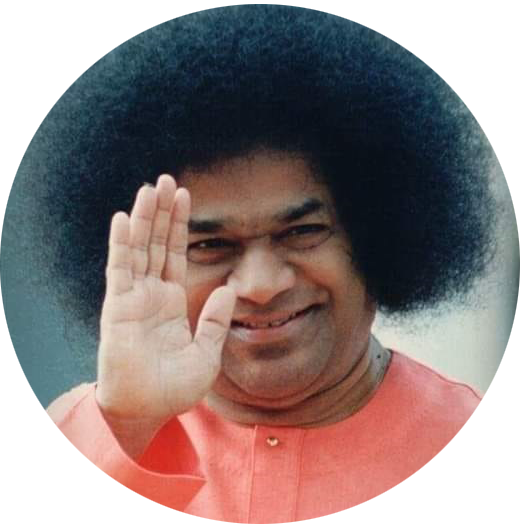
Pathways to God – Volume III by Jonathan Roof
Excerpts shared for educational and spiritual purposes with reverence to the author. This is a non-profit project dedicated to selfless service.
Desirelessness - The End of Mind - Chapter 3
A. The Mind: Captor or Liberator?
From the time we are small children, we are taught about the
importance of education. Particularly, the importance of logic and problem-solving abilities are explained to us from a young age. In the modern world,
the mind is enshrined as the source of scientific and technological progress.
Modem culture, especially in the West, has held that the mind can be used to
solve all problems. However, much of our success depends on how we use our
minds. The mind can lead us toward spirituality, and even to the doorstep of
Self-realisation, or it can drag us down into the pursuit of empty material
pleasures.
“The Vedanta (timeless teachings of India)
declares that the mind (manas) leads man either into the prison of petty desire
or the vastness of spiritual opulence. If it involves itself with sensual
pursuits, it drags man down into subhuman levels; if it seeks higher truths,
integrated knowledge, unifying experience, the deeper reality, the more lasting
joy, then it enables man to rise to the height of the divine.”
– Sri Sathya Sai Baba Sathya Sai Speaks 6, p.115
Mastery of the mind is essential in the quest for spiritual
liberation. The mind is the key to Self-realisation. Turn the key to the left
and the door is locked; turn it to the right and the door opens. A weak mind is
controlled by the senses. A strong mind masters the senses and sees beyond
them. The five senses are directed to the outside world and direct the mind
toward external objects. But a strong mind focuses its attention within. When
the mind focuses within, it yields to the intellect (buddhi). The
intellect directly reflects the light of the atma. The mind is often compared
to the moon, because it possesses no light of its own. The mind reflects the
light of the atma, as the moon reflects the light of the sun. When the mind is
polished like a clean and flawless mirror, it clearly reflects the divinity of
the atma.
“The mind of man alone is responsible both for his bondage and for his
liberation. The difference between bondage and liberation exists only in our
thought.”
– Sri Sathya Sai Baba Summer Showers 1974, p.12
The sights, tastes, sounds, feelings, and smells of the world easily
engage our senses. The weak mind grasps these sensory objects and fails to
release them, even when they cause suffering and bondage. A wise person trains
the mind to pursue only lasting values. When we practice spiritual disciplines,
harmful tendencies of the mind are curbed. Godly thoughts cleanse desires from
the mind, allowing the intellect, and ultimately the atma, to control our
actions. The rich man is one who has no desires. The poor man is one whose
desires are beyond his control. Desire is the fundamental illusion. The concept
has not changed since Lao Tsu stated it in the ninth century B.C.
“There is no greater sin than desire, No greater curse than
discontent, No greater misfortune than wanting something for oneself, Therefore
he who knows that enough is enough will always have enough.”
Tao Te Ching, Verse 46, Lao Tsu
The practices of dedicated action (karma yoga), devotion (bhakthi
yoga), and spiritual wisdom (jnana yoga) all aim for the attainment of
desirelessness as a primary goal. The path of action is effective only when
duty and service are performed without desire for the fruits of action.
Devotional practices are directed toward surrender to divine will and negation
of personal ego. Without ego there is no place for personal desires to find a
home. On the path of wisdom also, desire is overcome when the seeker understands
the Oneness of all beings in God. When all are One, what can be desired that is
not already a part of us?
Shankaracharya noted the tendency of the mind to create its own
illusion more than 1200 years ago. He saw that the outward reaching senses
prevented the recognition of inner truth, by holding the focus of consciousness
on external objects instead of in the spiritual heart. The desire for sense
objects creates powerful emotions and ego tendencies, which hide the subtle
awareness of the divine light and bliss within us. Although the atma is
ultimately the power behind the mind and senses, it remains hidden from us when
we give in to desire and egoism.
“The sun's rays bring forth layers of cloud. By
them, the sun is concealed; and so it appears that the clouds alone exist. In
the same way, the ego, which is brought forth by atma, hides the true nature of
the atma; and so it appears that the ego alone exists.”
Crest Jewell of Discrimination, Shankara, p.55
Desires foster ego. They support the delusion that we are the body,
mind, and emotions. And when we succumb to the pull of selfish desires, we are
caught in the delusions that wealth, fame, or popularity (among many delusions)
can make us happy. Such delusions divert us from the goal of Self-realisation.
In fact, the word 'moksha', meaning liberation, comes from the Sanskrit words 'moha'
(desire or delusion) and 'kshaya' (destruction). Therefore,
liberation results from the destruction of desire or delusion.
“The disappearance of delusion is the liberation all crave for. Moksha
is the kshaya (disappearance) of moha (delusion or desire).”
– Sri Sathya Sai Baba Sathya Sai Speaks 7, p.308
When the mind believes itself to be bound to a particular body and
personality, it feels the need to compete with others and to acquire objects to
enhance its status. Desire originates when we fail to control our egos and
senses. The senses naturally reach out to enmesh themselves in the sights,
sounds, and physical sensations of the external world. The outreaching senses
create acquisitive desire in the mind. The teachings of the Vedas and
the experiences of the saints and sages exhort us to search for divine
consciousness on the inner path and not in the outer world. Desires hide the
entrance to that inner path. The Buddha's quest for sense control enabled him
to master ego and desires and to find the inner road to spiritual bliss.
“Buddha respected the teachings of the Vedas. He conquered desire and
attained the high state of desirelessness.”
– Sri Sathya Sai Baba Sanathana Sarathi, August
2001, p.230
Desires, which are created by the lower mind's involvement with the
senses, cause us to identify ourselves with the body. Believing ourselves to be
the body, together with mind and emotions, we crave for ego satisfactions. We
believe that our happiness is tied to the fulfillment of the ego's desires for
wealth, prestige, education, beauty, and possessions. When the ego's desires
are not satisfied, fear, worry, envy, and various other dissatisfactions are
generated. Thus, as a result of uncontrolled desires, the mind creates the very
cause of its own suffering. If we look into the causes of suffering, as the
Buddha did, then we will recognise their origins in ego and desire.
“People are under the mistaken notion that they get happiness when
their desires are fulfilled. In fact, happiness results not when desires are
fulfilled, but when they are controlled. One can enjoy the state of bliss by
controlling one's desires.”
– Sri Sathya Sai Baba Sanathana Sarathi, August 2001, p.228
When we are able to act with detachment, then we travel quickly on the
spiritual journey. The aspirant who renounces ego and wrong desires progresses
swiftly on the path to liberation. Developing broad vision and striving for the
benefit of others, he overcomes self-interest. Active concern for others
diminishes the importance of our own desires. Service to those in need grants
greater satisfaction than the fulfillment of personal cravings. Aid to
unfortunate brothers and sisters releases us from the tyranny of our own
cravings. Undue self-concern pushes liberation away. If we remain unable to
release the small self, how can we grow into the larger identity of the
universal atma? Ego and desire walk hand in hand. To eradicate desire the ego
must also be subdued.
“The state of desirelessness is really the state of egolessness. And
what is moksha, or liberation, except liberation from bondage to the ego? You
deserve liberation when you break away from the bond of desire.”
– Sri Sathya Sai Baba Gita Vahini, p.247
Until illusory desires and attachments arc relinquished, the mind
provides no opening for liberated consciousness to enter in. As long as the
motion picture plays, we cannot see the screen upon which it is projected. So,
we must clear out the clutter of distractions from already. The source and most
basic component of consciousness is the atma. It manifests as blissful
Self-awareness. That Self-awareness does not submit itself to examination by
the instruments of lowerconsciousness. They are unable to perceive its
illumination with their gross instruments. Atma dwells on a higher level than
the mind (manas) or intellect (buddhi). The capacities of the mind and
intellect are inadequate to analyse it. It is our most basic reality. But we
cannot see it until we remove the dross of ego and desires that cover it.
“We talk of moksha. What is it? It is only giving up the anatma, the
unreal. Suppose you want a tumbler (cup) of fruit juice. Unless you throw away
the water already in the tumbler you cannot pour the juice in the tumbler.
Similarly, unless you give up materialism, atmabhava (spirituality) cannot come
to you. Moksha is not a distinct and different sadhana. It is only giving up
unnecessary desires.”
– Sri Sathya Sai Baba Sathya Sai Speaks 11, p.28
B. The Lower Mind
In
Vedantic parlance, when we speak of the mind we are usually referring to manas,
the lower mind. The lower mind is conditioned by attachment to the
body-mind-personality complex. These three elements together with the emotions,
and 'I' sense (ahamkara) are identified with the ego. The lower mind is
a tool for conceptual thought and problem solving. Ideally, it should serve as
an instrument of the higher consciousness. However, it often arrogates unto
itself the role of master. It demands that all personal objectives meet its
defective rule of logic and ego ambition. Its judgment on matters of spiritual endeavor
is usually flawed, because it remains unaware of the higher realm of spirit. In
its attempt to foster the goals of the ego, it generates more and larger
desires until it has ensnared itself in a sticky web of cravings.
“As the silk worm gets entangled and imprisoned in the cocoon that it
spins around itself, so man too spins a cocoon of wishes around himself and
suffers.”
– Sri Sathya Sai Baba Upanishad Vahini, p.78
Sathya Sai Baba tells us that the mind is like a piece of cloth. And
that cloth is woven from threads of desire. If one could pull out each thread
of desire, the cloth would disappear. Similarly, when desires are removed from
the mind, the capacity of the mind to delude and bind us disappears. Conquering
desire requires us to look within and examine our experience. Do we really
benefit from the mad quest to fulfill ever increasing desires?
Inner search is not a natural tendency for the outward directed
senses, the mind, or the ego. Only external goals satisfy the ambitions of the
ego, because the ego is bound to enjoyment of the senses. The ego views family,
houses, cars, and symbols of wealth as the only objects that satisfy its
cravings. But, in fact, the fulfillment of desires only creates new and greater
cravings. Desire is like a fire that is never satisfied by the fuel brought to
it. Added fuel only increases the size and heat of the conflagration. It is
rare indeed for the satisfaction of a desire not to give birth to more and
larger desires. Only in controlling our desires can we discover the freedom of
our true unlimited being.
“The manas, or mind, is the villain; it is another name for desire;
the texture of the mind is just desire, both warp and woof are desire and
nothing else. If desire goes, the mind disappears. When you pull out all the
yam from a piece of cloth, you have no more cloth. So too, pull out desires
from the mind; it disappears, and you are free.”
– Sri Sathya Sai Baba Sathya Sai Speaks 4, p.85
In the current age, most people's everyday awareness is subjected to
various degrees of sensory overload. The over-burdened senses prevent us from
realising the presence of the atma. The events of each day engage us in an
incessant play of desires and attachments. These desires and attachments often
cause our minds to spin out of control. Until we break away from the demands of
the lower mind and senses, we cannot experience inner bliss. As Eckhart Tolle
observes. our thoughts, fears, and desires alienate us from the underlying
truth of atmic Being.
“You cannot stop thinking. Compulsive thinking has become a collective
disease. Your whole sense of who you are is then derived from mind activity.
our identity, as it is no longer rooted in Being, becomes a vulnerable and
ever-needy mental construct, which creates fear as the predominant underlying
emotion. The one thing that truly matters is then missing from your life:
awareness of your deeper Self- your invisible and indestructible reality.”
The Power Of Now, Eckhart Tolle, p.92
The mind hinders spiritual progress if it acts as a slave to the
senses. Unless the mind controls the senses, the senses deluge the mind with
never-ending desires. The senses reach out to objects of desire unless they are
restrained by the intellect (buddhi). The mind is a wonderful instrument
for analysing inputs from the outward directed senses, but the mind has little
capacity to control the senses in the absence of the higher intellect. The mind
analyses sense objects fairly well, but is unable to know its own nature. As
the eye can see everything but itself, the mind is blind to its own
limitations. The mind can point us in the direction of liberation, but we can
only experience the atma on a level above the mind (manas) and even
above the intellect (buddhi). In spiritual endeavour, the mind searches
for solutions that cannot be answered by its logical tools. Therefore, we must
realise from the start that the mind (manas) cannot provide experience
of the Self.
“What always hides the atma is the mind. The clouds, which are formed
due to the sun's heat, hide the sun itself. As long as the mind is there, one
cannot hope to understand anything about the Self, not to speak of realising
and experiencing the bliss of the Self. That state in which one is established
in the Self at all times and under all circumstances is called
"sakshatkara" - Self-realisation.”
– Sri Sathya Sai Baba Indian Culture and Spirituality, p. 115
Like removing a cataract from the eye, removing desire from the mind
enables it to see clearly. When sense objects are cleared from the mind, divine
light from the atma shines unimpeded. The mind is a useful servant, but an
ignorant and domineering master. If we are to open the door of liberation and
recognise our inner divinity, we must throw off mental delusions. Those
delusions cause us to believe that we are the body that we inhabit. Those
delusions tell us that we are the ego that requires wealth, fame, position, and
all manner of sensual satisfactions. Desires create and reinforce ego. They
cause us to believe that we are separate from others. Ego causes us to compare
ourselves to others and to compete with others, believing that they are
different from ourselves. Desire prevents us from seeing ourselves as we truly
are. Desire is the nature of the lower mind (manas).
“Moksha, or liberation, results from the breaking of the mind, with
all its vagaries and wishes. You have to break your mind ( like a coconut) but
how can you do it when the fibrous armor of sensual desires encompasses it?
Remove them and dedicate the mind to God and smash it in His presence. That
moment, you are free.”
– Sri Sathya Sai Baba Sathya Sai Speaks 4, p.109
Once King Janaka challenged the scholars and sages in his kingdom to
teach him about the immortal atma. He announced to the assembled teachers,
"In the time it takes me to climb onto my horse, one should be able to
give me full Brahma Jnana (knowledge of the absolute)." The
scholars were aghast at the formidable challenge. How could anyone possibly
convey realisation of Self in such a short period of time? None of the sages
who heard this challenge dared to propose a solution. They could only look at
each other and shake their heads in worry about how to meet the challenge.
A short time later, the sage Ashtavakra entered the kingdom. He asked
the scholars and sages assembled in Janaka's royal court why they were so
worried. They explained to him their dilemma. Ashtavakra, however, was
undeterred by the challenge. He approached the king and stated that he could
accomplish the task. But first the king must come with him to a quiet and
fitting location for spiritual discipline. Ashtavakra accompanied the king out
into the countryside along a narrow road. When Ashtavakra selected a quiet
rural setting, he first announced to the king that as his preceptor he was due
an offering from his new disciple. King Janaka readily agreed to the condition
and offered him anything he wanted.
Ashtavakra requested that the king give him his mind. Janaka agreed to
the condition. So Ashtavakra told him to sit down in the middle of the road
beside where his horse stood. Ashtavakra left the place and went back into the
solitude of the forest. After some time, when the king and sage did not return
to the capitol city of Mithila, some soldiers and ministers went looking for
them. They found the king on a lonely road sitting on the ground beside his
horse. The king had closed his eyes and was perfectly still. They could elicit
no explanation from the King as to what had occurred.
Soon, the queens and ministers also arrived at the spot and still no
one could obtain an explanation or even a word from the king. And so the
members of the king's court went in search of the sage, Ashtavakra. They found
him sitting quietly under a tree in the forest. He was unconcerned by their
urgent pleas for an explanation, for he resided always in perfect peace.
Ashtavakra was brought back to where the king sat in the road. He questioned
Janaka as to why he had not responded to the enquiries of the ministers and
queens. The king responded that thoughts, words, and deeds are associated with
the mind. And he had given his mind to Ashtavakra.
The sage told him to mount his horse. By the time Janaka had seated himself
squarely in the saddle, he had attained Self-realisation.
The story illustrates the role of the mind in aiding or hindering Self-realisation.
If one is able to attain complete mastery of the mind, it will cease to be an
obstacle to spiritual progress. When the mind controls the outreaching senses,
desires, and even thoughts, then it is close to yielding to atmic awareness.
Janaka's practice of silent sitting without thought is similar to the
process of sitting meditation in Zen Buddhism. By negating the mind's power to
agitate direct perception. the nature of Self can be induced to shine through
into consciousness.
“The uniqueness of zazen (Zen Buddhist sitting meditation) lies in
this: that the mind is freed from bondage to all thought-forms, visions,
objects, and imaginings, however sacred or elevating, and brought to a state of
absolute emptiness, from which alone it may one day perceive its own true
nature, or the nature of the universe.'
The Three Pillars of Zen, Kapleau. p.13
If the lower mind is left unchecked by the higher intellect, it tends
to follow harmful paths into desire and self-doubt. Sathya Sai Baba tells the
story of a man who was traveling about the countryside. One day, he took his
rest under a great spreading tree. Unbeknownst to him, this was a kalpatharu,
a wish-fulfilling tree. This traveler was very thirsty from his long
walking and wished for a cup of cool water, which immediately appeared. This
man was amazed by the sudden appearance of the water and thought to try another
wish. So, he wished for a tasty meal and then a soft bed to sleep on. Both of
his wishes miraculously materialised before him. Finally, he was almost
satisfied. He just wished that his wife were present to witness the miracles
that he had experienced.
When the man's wife appeared in response to his desire, he began to
have some doubts about all of these miraculous manifestations. He suspected
that perhaps this woman, who he took to be his wife, was really an evil ogress.
When he thought that, he immediately realised that if she were an evil ogress
that she would probably eat him. It all quickly happened as he imagined and the
ogress quickly consumed him.
C. The Importance of Sense Control
The story of the wanderer describes the ability of the mind to
compound its troubles through its own desires and imaginings. There is no end
to desires and imaginings, since they originate from ignorance and illusion. To
discover our true reality we must overcome the tendencies of the mind to bind
and delude us. The primary way to avoid being ensnared by desire and illusion
is to exercise sense control.
“The seer should not attach himself to the seen; that is the way to
get free. Contact of the sense with the object arouses desire and attachment;
this leads to effort and either elation or despair; then, there is the fear of
loss or grief at failure and the train of reactions lengthen.”
– Sri Sathya Sai Baba Sathya Sai Speaks 4, p. 221
The first step in the control of desires is to regulate how we use our
senses. The Buddha enshrined the principle of sense control in his Four Noble
Truths and Eightfold Path. He taught that man should guard his seeing, hearing,
and other senses to avoid becoming entrapped in wrong desires, which lead to
wrong action, and negative karmic results. Without stopping desire at its
source, there can be little hope that the river of desire can be stemmed
farther downstream after it has gained momentum. Once desire builds at its
sources in the senses, it quickly creates bad habits and ruins character.
“If one is able to control his senses, even if he is a blind person,
he will reach the destination of moksha or attain liberation. On the other
hand, if one's senses are not controlled, even if he is the best of men, he
will not be able to reach the divine destination.”
– Sri Sathya Sai Baba Summer Showers In Brindavan 1973, p.137
To travel the inner road to spiritual peace and bliss, we must control
our outreaching sight, hearing, and touch. Contact with objects of desire
provides the fuel that stokes the flames of desire. The Buddha's Eightfold Path
is essentially a plan for sense control. Sense control is the first step in
ending the tyranny of desires that lead us into suffering. And although we must
use our senses to navigate in the world, we do not have to let them run wild
among the objects of desire. If we master our desires, we progress quickly
along the path to liberation. Sense control automatically brings about control
of the mind by the higher faculties. In fact, the fabric of the lower mind that
binds us disappears when desires are rooted out.
“When a corpse is placed on a pyre, and when the pyre is lit, both the
corpse and the pyre are reduced to ashes. So too, when the senses are negated
the mind too disappears. When the mind disappears delusion dies and liberation
is achieved.”
– Sri Sathya Sai Baba Sathya Sai Speaks 5, p. 174
To hear the inner voice that urges us toward Self-knowledge, we must
first still the senses. When the senses are contained, the mind ceases to
entangle itself in the world. ff the senses do not involve themselves in ego
pursuits and objects of desire, the mind can free itself from the grasp of
illusion. The simple step of sense control brings us close to the goal. As
Sathya Sai Baba has said. "It is seldom realised how near is the goal of
Self-realisation when once the sense organs are turned inwards." When the
mind is no longer buffeted by the winds of desire, the flame of truth bums
bright.
“Keep a lamp in a room with all its five windows open; the wind will
blow it out, for the flame is swayed from all directions. To keep the flame
burning straight, close the windows. The senses are the windows; the flame is
the mind concentrating on the single purpose of God-realisation.”
– Sri Sathya Sai Baba Sathya Sai Speaks 4, p.232
The problem of desire is compounded if we spend our time dwelling on
objects of desire. By chasing objects of desire seen on television, in
magazines, or directly in the material world, we only increase their power over
us. The very act of allowing the mind to revel in the senses makes desires more
difficult to overcome. The acquisition of objects of desire only aggravates the
problem by incorporating them into our ego identities. The more we experience
objective gratification, the stronger a power it holds over us. Even in the
ninth century Shankaracharya recognised this principle:
“Craving is intensified if we let our thoughts dwell upon
sense-objects and seek temporary satisfaction in the objective world. In order
to break the chain of recurring birth and death, the spiritual seeker must bum
both these causes of craving to ashes.”
Crest Jewel of Discrimination, Shankara, p.84
Control of the senses requires that we break bad habits of indulging
the senses. The destruction of bad habits is a first step in the task of
self-mastery. Bad habits waste time and energy. They consume our lives and
offer us little compensation. The mind must be directed by the intellect
(buddhi) to choose the correct path of travel for the chariot of the body. The
wise course is to choose a smooth and broad path without the bumps and ruts of
bad habits. We arrive more quickly at the goal of Self-realisation if we do not
explore each dead-end road of pleasure and curiosity as we proceed. If the
charioteer (the mind) loses control of the horses (the senses), he endangers
the vehicle (the body) and the passenger (the atma). So, the wise driver steers
away from the ruts of bad tendencies and searches for the smooth road of
wisdom. A good policy to start with is to give up sights, sounds, and foods
that inflame the senses.
“An individual, who wants to attain Self-realisation and secure the
vision of the Lord, should first give up bad listening, bad vision and bad
food. From that day, he will have moved closer to his objectives.”
– Sri Sathya Sai Baba Summer Showers 1978, p. 179
We must train our lower minds to serve us, rather than to lord over
us. The higher intellect (buddhi) must exercise its power to purify and
train the lower mind to be a fit servant. The higher mind uses the power of
spiritual discrimination (viveka) to reign in the lower mind's tendency
to chase objects of the senses. It is naturally difficult for the lower mind to
submit to spiritual discipline, but with intelligence and steady effort we can
control and refine its wayward tendencies.
“The senses are induced by the mind to move out and attach themselves
to objects. Man must make the mind submit to viveka, or intelligence, which
discriminates, and then, the mind will help him instead of harming him.”
– Sri Sathya Sai Baba Sathya Sai Speaks 5, p. 75
Sai Baba describes a clever ploy that has long been used in India to
catch monkeys. Monkeys are naturally curious and have little control over their
desires. One can use these very attributes to capture the monkey. First, one
places a banana, nuts, or piece of fruit inside a large clay pot with a small
neck. The monkey comes to examine the pot and soon finds the fruit inside. When
the monkey reaches into the pot to grasp the fruit, he finds that he can no
longer retract his hand. The monkey's hand, wrapped around the fruit, cannot be
removed through the narrow neck of the pot. The monkey, being subject to his
deluding mind, believes that something inside the pot has a hold on him. In his
greed, the monkey is unwilling to let go of the fruit even to save himself. It
is the monkey's own desire that traps him and allows him to be captured.
Similarly, our minds allow us to be captured by fear, attachment, and
delusion. We are unwilling to let go of our small desires even to save
ourselves from these mortal enemies. These very desires and delusions hide our
own divinity from us. Even after many years of playing the game, we seldom
learn the lesson.
As we grow older, our senses lose their keenness, perhaps as a warning
to us to give up the mad quest of external objects before life ends. With old
age, our eyes dim and lose focus. Hearing grows faint and yet we still strain
to follow the call of the senses. We employ special glasses and hearing devices
to aid us in the continued pursuit of objects of desire. We ignore the signs of
graying hair and wrinkled skin in an attempt to hold on to the passions of
youth. How then can we ever come to discover the truth and bliss within
ourselves? We must be vigilant from an early age to control the senses, the
mind, and tendencies, while we pursue atmic understanding. We cannot work on
just one aspect of those disciplines at a time, while neglecting the other three.
We must concurrently pursue multiple disciplines.
“One has to be cautioned against believing that the victories over
senses, mind, vasanas (past tendencies) and the attainment of the awareness (
of the atma) can be one at one time. Parallel efforts must be made in all four
from the very beginning.”
– Sri Sathya Sai Baba Sanathana Sarathi, June 1983, p.137
D. The Higher Mind
The lower mind creates its own world of attractions and dislikes,
based on desire and ego. But, when the faculties of the higher mind control the
lower mind, they lead us inward toward our real nature. It is not easy at first
to change the focus of the mind. We suffer long and hard when we pursue objects
of desire, until we ultimately realise the futility of pursuing external
objects. We can never have enough money, power, or possessions to satisfy us if
we do not control our desires. Death leaves us panting for more of those
elusive rewards with our hearts still empty of true peace. So we must resolve
to turn inwards and make a determined effort to know the truth of ourselves. We
must seek out the source of peace, love, and truth. And if we persist in that
quest, our efforts will be rewarded. The mind ultimately surrenders to the
higher intellect when it encounters determined opposition to its stratagems.
“It is the mind that weaves the pattern called the "I" The
way in which it establishes this ego and elaborates it into a multitude of
shackles is called maya (illusion). The mind prompts the senses to project into
the outer world of objects, for it builds up notions of pleasure and pain, of
joy and grief and constructs a whole array of urges and impulses. It resists
all attempts to escape into the eternal, the universal, the absolute. It
protests when the individual is eager to become conscious of his identity with
these; but when it finds determined opposition to its tactics, it surrenders
and disappears.”
– Sri Sathya Sai Baba Sathya Sai Speaks , p. 186
Everyone will one day dispel the darkness of ego by means of the light
of Self-knowledge. When the flash of moksha illumines one's consciousness,
shadows flee. Examination of our experience teaches us that lasting happiness
is never won by the acquisition of material goods or worldly achievement. New
goals and expectations arise as soon as the previous ones are attained. Like
the trophies awarded to children, they do not long hold our attention and are
quickly discarded. Soon another goal, a greater desire, appears before us to
lure us farther down the road in pursuit of worldly success. The wise seek the
light within, which alone grants lasting happiness. Until that light is
attained, we must continue to search the inner heart.
“Ignorance can be cured only by knowledge; darkness can be destroyed
only by light. No amount of argument or threat or persuasion can compel
darkness to move away. A flash, that is enough; it is gone. Prepare for that
flash of illumination; the light is there already, in you. But since it is
heavily over laden by repressing factors, it cannot reveal itself. "The
liberation from night", which happens when the light is revealed, is
called moksha. Everyone has to achieve it, whether he is striving for it now or
not. It is the inevitable end to the struggle, the goal to which all are
proceeding.”
– Sri Sathya Sai Baba Sathya Sai Speaks 3, p.178
When we control the senses, the lower mind yields control of the
consciousness to the higher intellect (buddhi). Over a period of time we
come to see that the path to peace and truth lies within, not in the objective
world of the senses. When we turn inwards, we may at first perceive that space
to be dark and indiscernible. We are naturally unfamiliar with the shapes and
patterns of that landscape. For we have not directed much light in that
direction previously. But with time, as our spiritual eyes adjust, we discern a
new and wondrous landscape. It is a landscape in which the river of peace flows
below the mountains of truth. The road of dharma (spiritual duty) winds down to
the shore beside the ocean of love. It is a land of freedom and unlimited
horizons. So, as a first step, we must turn our vision away from the objects of
the senses. In the Crest Jewel of Discrimination Shankara describes the
path of sense control as the path to liberation.
“Cease to find fulfillment of your cravings in the objective world,
and you will stop dwelling on sense-objects. Stop dwelling on sense-objects,
and your craving will be destroyed. When all craving has disappeared, that is
liberation. It is called liberation-while-living.”
Crest Jewel of Discrimination, Shankara, p.85
We must gradually seek to reduce the lower mind's wanderings. If it is
held in check by spiritual discipline and control of the senses, it gradually
yields to the intellect. The atmic light is subtle and pure. It is easily
overpowered in an undisciplined consciousness by the rough objects of desire.
When desires arc plucked out one by one, that is what is referred to as the
destruction of the mind. This "destruction of the mind" does not
involve any loss of reasoning ability or any reduction in our capability to
perceive what is happening in the world. We do not lose the sense of who we are
or forget our relationships with others. The destruction of the mind simply
means that its ability to hide the truth is negated. It is a gain of peace and
bliss in the heart; nothing worthwhile is lost.
“The waning of the moon is the symbol for the waning of the mind; for
the mind has to be controlled, reduced and finally destroyed. All sadhana
(spiritual discipline) is directed towards this end; manohara, the mind, has to
be killed, so that maya (illusion) may be rent asunder and the reality revealed.”
– Sri Sathya Sai Baba Sathya Sai Speaks 1 p.111
The vision of Oneness that flows from control of the mind is a
universal experience. It is not available only to followers of Eastern
spiritual paths. The nature of man is universal; the same divine spirit
animates us all. The atma is the same in all of us. In the middle of the
twentieth century, the Christian mystic, Joel Goldsmith, was able to come to
this experience through the path of inner search. He was born in New York City
of Jewish parents. He was not influenced by Vedantic philosophy nor did he benefit
from the use of Sanskrit words and concepts. But still, he arrived at
conclusions remarkably similar to those of Eastern teachers about the nature of
the mind.
“The mind is an instrument for something higher than itself, and that
something is the One Self. When we come to the point where the mind is governed
by the Self, we will be embraced in a peace that passes understanding.”
The Thunder Of Silence, Joel S. Goldsmith, p.65
To reach the state of atmic peace, the mind must be held in check by
the higher intellect (buddhi). The intellect, which resides in man as
his conscience, receives its illumination directly from the atma. The atma is
the source of truth and bliss. The role of the intellect is to guide us along
sathwic (spiritual) paths to purify our minds and hearts. Purity of mind and
heart allows the atmic bliss within ourselves to shine forth. Atmic energy is
filtered first through the intellect (buddhi) and then through the mind (manas).
Ultimately that energy filters down to the senses and the body. As we begin
to experience the bliss and peace of the atma, objects of the senses hold less
attraction to us and the path becomes easier.
“The buddhi is very close to the atma and therefore well located to
receive 90 percent of the atmic energy and illumination. The mind derives its
power from the buddhi, the senses from the mind, and the body from the senses.
In this process of the flow of power from the atma to the body in stages, there
occurs a gradual qualitative and quantitative diminution of power.”
– Sri Sathya Sai Baba Indian Culture And Spirituality, p.91
Atmic consciousness lies ever-present within us, but it escapes our
notice because of the many distractions that pass through our minds. Thoughts
regarding mundane worldly considerations overpower the subtle consciousness of
the atma. Atmic awareness retreats to the background when the mind engages with
the senses. It resides as the underlying witness, which observes but is not
engaged in action. It is only perceived in the quiet equanimity of purified
consciousness.
“This all-powerful atmic principle resides in every human being in
subtle form. Man is not able to recognise this divine power because he is
preoccupied with utilising his physical and mental faculties for the
acquisition of wealth and worldly goods.”
– Sri Sathya Sai Baba Sathya Sai Speaks 24, p. 105
There is not anything new that must be acquired for Self-realisation.
All the necessary knowledge lies already within us. The problem of spiritual
disciplines is to remove the dross that lies atop our indwelling reality. The
treasure lies there already, only waiting to be uncovered. Spiritual teachings
only remind us of our Self-existent inner reality. Sri Aurobindo recognised the
principle in the early 1900's.
“Nothing can be taught to the mind, which is not already concealed as
potential knowledge in the unfolding soul of the creature. So also, all
perfection of which the outer man is capable is only a realising of the eternal
perfection of the spirit within him. We know the divine and become the divine,
because we are That already in our secret nature. All teaching is a revealing,
all becoming is an unfolding. Self-attainment is the secret; Self-knowledge and
an increasing consciousness are the means and the process.”
Sri Aurobindo, Or The Advenre Of Concsiosness, Satprem, pp.173-174
Sathya Sai Baba also tells us that the Truth lies already within us.
That truth only needs to be uncovered so that it may shine forth. Just as no
torch or lamp is required to see the sun, so also, no external source is
required for us to perceive the atma. Its own light illumines the sun. So also,
the atma is perceived by means of its own effulgence in our consciousness.
“Everything is in you alone. All that you do by way of your effort is
to manifest or give an outer expression to what is already inherent in you. So,
even in the spiritual field, all the sadhana (practice) that you need to do is
to remove the obstruction, namely, the ignorance that is preventing the
manifestation of the divinity already present in you.”
– Sri Sathya Sai Baba Summer Showers 1990, p.135
E. Renunciation: Freedom from Ignorance
Both renunciation of desire and wisdom to follow the spiritual path
are required for success in attaining liberation. Wisdom helps us to control
the senses by showing us the higher road to inner truth. It is very difficult
for a person to give up desires without first replacing those desires with
something more satisfying, permanent, and joyful. When one looks into one's
inner truth, and finds there the eternal and immortal atma, the attractions of
the body and ego recede in their ability to tempt one away from the path. As
the bliss of atmic consciousness grows, the pull of worldly pleasures
decreases. So, along with sense control we must employ spiritual discrimination
(viveka) on the road to Selfrealisation.
“A bird in flight in the depths of the sky needs two wings; a person
moving on the earth below needs two legs to carry him forward; an aspirant
eager to obtain the mansion of moksha (liberation), the abode of freedom, needs
renunciation and wisdom, renunciation of worldly desires and wisdom to become
aware of the atma.”
– Sri Sathya Sai Baba Sutra Vahini, pp.17-18
The combination of renunciation and wisdom is detachment. It is the
state of inner peace that occurs when the mind and senses are brought under
control. With detachment, we can observe the world around us without the need
to reach out and involve ourselves in all of its activities. Ramakrishna was a
teacher famous for his detachment. He strongly denounced the pursuit of money
and material attachments for his disciples. He concerned himself only with God,
offering little regard for material objects. Ramakrishna had a famous saying
about detachment. He said that one should act with unconcern for worldly
objects to avoid the entanglements of desire.
“Sri Ramakrishna said that if you must avoid the sticky fluid in the
jackfruit from contacting your fingers when you peel it, you have to apply a
few drops of oil on them. So too, said he "if you do not want the world
and its reactions to stick to you, you must apply a few drops of 'unconcern' to
your mind.”
– Sri Sathya Sai Baba Sathya Sai Speaks 6, p. 100
Spiritual practice grants wisdom to discern between transient and
permanent phenomena. When we examine the reality of sense objects, we perceive
that each is a transient form and, like all forms in nature, is subject to
change and disappearance. The store of peace and joy within us constitutes a
far more valuable treasure. Renunciation does not require us to flee to the
solitude of an isolated place. It does not entail abandoning our duties and
responsibilities. Renunciation means detaching ourselves from the desire for
impermanent objective pleasures. It is the nature of desires and attachments to
cause us to feel pain and pleasure.
“People suffer not because of destiny but because of desires and
attachments. If you have attachments to the things of the world, you are bound
to experience joy and sorrow in alternation. Pleasure and pain are an integral
part of the dual world.”
– Sri Sathya Sai Baba Summer Showers in Brindavan 2000, p.198
One may live in the world without attachment, just as one could live
as a hermit in the forest and still hold desire for objective pleasures. The
former is a better test of our renunciation. If one desires fame or fortune,
removing the body to a distant forest provides no cure. It only delays the day
of reckoning. True renunciation and surrender grow in the mind. The tests of
living in the world provide a better gauge of success in renunciation than
removing oneself from the battlefield of the senses.
“Liberation means getting rid of bondage. Many people give up hearth
and home, wife and children, property and possessions, and, escaping into
forest retreats, pride themselves on their "renunciation." But this
act of fleeing cannot be honored by that name, for such an act by itself cannot
confer release when the mind still remains bound. The fundamental bond, which
must be eliminated, is the bond of ignorance. Death is sweeter than the bondage
that ignorance can impose on man. Cast away ignorance: you are free, liberated
from all bonds that very moment. All spiritual disciplines have this liberation
as their goal.”
– Sri Sathya Sai Baba Sathya Sai Speaks 10, p.88
Renunciation is not an attitude of uncaring. Neither is it
indifference or self-centeredness. It means doing one's very best with love and
patience under all circumstances - but without desire for the results. We
should strive for the good of all. Still, the results rest in the hands of God.
When we cease to seek worldly rewards, we can better serve others. When we
focus on service to others, personal cravings no longer cloud our judgment.
Inner peace grants satisfaction with the world as it is. Desire produces
dissatisfaction with life. If we live in the world and overcome the belief that
we are the body, we are well on the road to spiritual freedom. Body
consciousness causes us to put our own needs and desires first; it is the
fundamental ignorance.
“Man mistakenly thinks that wealth, a family, etc., are his bondages
and that by severing connections with them he will be able to sacrifice
everything and become eligible to attain this total liberation. But these are
not the real bondage of man. His real bondage is his ignorance in identifying
himself with his body.”
– Sri Sathya Sai Baba Sathya Sai Speaks 10, p.320
Our real choices in life are found in how we react to events. Our
opportunities lie in the way we adjust our attitudes and nurture
Self-understanding. That pursuit alone is truly within our control. We often
hold little power to direct events. Liberation frees us from the shackles of
worldly striving by allowing us satisfaction with things as they are. Ralph
Waldo Emerson observed, "Beauty is in the eye of the beholder." We
might just as well say, "Desire and judgment are in the eye of the
beholder." We all react differently to objects and events based on our
attitudes and experience. Two people may have quite different reactions to the
same occurrence. Our reactions and judgments are ours alone. So, it is not just
material objects that we become attached to. We also attach ourselves to our
opinions and prejudices. We limit ourselves and define ourselves to be less
than we truly are when we hold on to narrow and cynical views. As Joel
Goldsmith notes, we experience less limitation if we do not judge or attach
ourselves to objects and opinions.
“As you begin to perceive that mind is unconditioned, your thoughts
never turn to the subject of good and evil. You are just living each
circumstance of life as it comes along. This does not mean withdrawing from the
world: It means being in the world but not of it, living each experience
without trying to cling to it if it seems good or without trying to get rid of
it if it seems evil. It is a life of non attachment to things.”
The Thunder Of Silence, Joel S. Goldsmith, p. 77
When we recognise that we are responsible for our own thoughts and
experience, we realise that to change the world we need only change our own
outlook. We can choose the thoughts that we wish to entertain in our minds. The
beliefs that we hold in our minds are reflected back to us in the way we
perceive the world. We may see ourselves as we wish to be, or perhaps as we
fear that we may be. But in all cases we see through the glasses of our own
prejudices and opinions. The colour of glasses that we wear affects how we see
the world. If our vision is clouded with ego and desire, then we see with the
glasses of dissatisfaction. But if we see with pure vision, we see a world of
peace and beauty. When consciousness is cleared of desire and ego, only the
perception of God remains.
“Purify and cleanse the mind so that wherever you turn, not only in
the shrine, not only in the idol, but, in everything, at all times, you will
cognise only God; then, the mind becomes your best friend, your most efficient
instrument of liberation.”
– Sri Sathya Sai Baba Sathya Sai Speaks 7, pp.234-235
We must remember that detachment does not mean that we can abdicate
our duties. We must still carry out our duties even if we remain detached from
the results. We cannot use the excuse of non-attachment to dismiss our dharmic
obligations. If we are careless with our karmic responsibilities, they will
only return later to remind us of our failures. Non-attachment, or renunciation
from the fruits of action, is not the same thing as inaction. Desirelessness
cannot be equated with carelessness or irresponsibility. We must always act
with care and skill in performing our duties.
“One should not be remiss in discharging one's duties and
responsibilities. The proper fulfillment of duties is part of the spiritual
discipline necessary for getting enlightenment.”
– Sri Sathya Sai Baba Sathya Sai Speaks 20, p.95
One who attains liberation does not become and idler, abandoning his
duties for a life of leisure. The release of desire should not be equated with
idleness. The liberated being continues to act for the benefit of others, but
without desire for the fruits of action. He acts from the source of goodness,
not from desire for personal gain. Atmic consciousness conveys direct
perception of unity with others, and so that person continues to act for the
benefit of society. The saints and sages act from love and compassion
without desire for personal gain.
“Contentment will not make anyone an idler, remember. It is an
attribute of true sathwic (spiritual) character. It will make the mind always
turn toward the Lord. It will save you from the tribulation to satisfy the
unimportant wants, catering to selfish needs. It will direct human talents
toward efforts that elevate. The contented man will always be truthful and he
will therefore be in constant communion with the atma.”
– Sri Sathya Sai Baba Dhyana Vahini, p. 75
Contentment, based on renunciation of desires, enables one to use more
energy and enthusiasm to serve others. When one is not consumed with worries,
fears, and desires he retains more energy to help those in need. He can then
act in the present moment, with full attention to the task at hand, and without
undue concern for results. A contented mind allows divine energy to fill body
and soul.
“The contented man will be fully sathwic; he will lead an inner life
in communion with the atma. He can do any work without rest and without
complaint. The waves of the mind, which sway in many directions, get a single
aim. The rishis, bhikshus and yogis of the past realised the goal of life by
means of the peace that came to them through contentment.”
– Sri Sathya Sai Baba Dhyana Vahini, p.55
F. Small Desires
The harmful desires that are engendered by body identification and ego
are a different issue than the simple physical needs of the body. Through the
course of countless generations of human evolution, we have developed the needs
for food, shelter, clothing, and some social life. These simple physiological
needs must be satisfied to maintain the human body. However, the satisfaction
of minimal physiological requirements should not become objectives in
themselves. Undue catering to the physical requirements of the body should not
take precedence over the quest for spiritual Self-knowledge. The reasonable
desires to eat or find shelter do not constitute impediments to liberation.
“Of course, man can have some desires, some eagerness to achieve
comfort, some attempt to earn content – but it must be like the diseased man
craving for medicine. Food and drink, housing and clothing must be subsidiary
to the needs of the spirit, the education of emotions and passions and
impulses.”
– Sri Sathya Sai Baba Sathya Sai Speaks 5, p. 76
What level of desire can a person live with? It may vary depending on
how strong and centered in the Self that individual is. An aspirant may hold
resolutions to engage in various projects of social uplift, which are
commendable. There may be feelings of responsibility to provide for the needs
of family and society, which lie within the constraints of dharma. However, we
must always remain vigilant to gauge our own tolerance for various types of
motivations. Desires are like a wind that disturbs the surface of a lake. They
make it difficult to see into the depths. And so, we must closely examine our
reasons for action.
“Excessive desires degrade man. You cannot give up desires entirely.
But there should be a limit to them. When they exceed the limits man goes
astray. Desires are dreadfully dangerous. Today's enemy may become tomorrow's
friend and vice versa. But desires are perpetual enemies. They haunt man
ceaselessly.”
– Sri Sathya Sai Baba Sanathana Sarathi, May 1995, p.122
The desire to maintain the physical body enables us to proceed on the
spiritual journey. Meeting the legitimate needs of the body does not pose an
obstacle to Self-knowledge. Indeed, we must carefully maintain the body, since
it is our only vehicle to cross the ocean of life. It is counterproductive to
punish or mortify the body. As the Buddha learned during his time with the
ascetics, we need a strong and healthy body to be able to reach the goal of
Self-realisation. Starving the body or subjecting it to unnecessary
mortification makes achievement of the goal more difficult. Satisfying the
legitimate needs of the body does not create harmful ego tendencies. Ramana
Maharshi noted this fact in the early 1900's.
“Small desires such as the desire to eat, drink, sleep and attend the
calls of nature, though these may also be classed among desires, you can safely
satisfy. They will not implant vasanas (tendencies of desire) in your mind,
necessitating further birth. Those activities are just necessary to carry on
life and are not likely to develop or leave behind vasanas or tendencies. As a
general rule, therefore, there is no harm in satisfying a desire where the
satisfaction will not lead to further desires by creating vasanas in the mind.”
Be As You Are: The Teachings of Ramana Maharshi,
p.178
Even the person who directly perceives his Self-nature, and rises above
bodily desires, still has some roles to play in the world. His dharma, according
to his age and station in life, requires some duties from him. However, the
desires that he entertains should be pleasing to the divine. His wishes should
be to serve others and to serve the Lord with full devotion.
“Then what is the way to lead a desire free life? Lord Krishna has
shown the way for this. He said, "Son, there is nothing wrong in having
desires, but all of them must be pleasing to God."
– Sri Sathya Sai Baba Sathya Sai Speaks 32, Part 2, pp.62-63
Simply because one attains liberation, it does not mean that the body
and its karma do not continue. However, with the absence of desire for the
fruits of action, karma slowly bums off and creates no further trouble.
Although some level of desire always exists as long as we maintain a body and
an ego, desires gradually lose their power over one who has attained
Self-realisation. At that stage of our development, desires command little
power and run shallow. They disappear quickly and wield little influence over
our actions. Sathya Sai Baba says that the desires of a wise person are like
writing on the surface of water. The images disappear as quickly as they are
created. The liberated person experiences desires, but they hold little power
to influence his behaviour.
“In the jivanmuktha (the one liberated while alive), impulses persist,
but as fried seeds only. They will not cause further births.”
– Sri Sathya Sai Baba Dhyana Vahini, p.59
G The Desire For Liberation
Is the desire for liberation a desire that binds? No. Some self-styled
pundits proclaim that the desire for liberation is a delusory wish, since our
atmic nature lies already within us. That may be true, but without experiencing
that reality we gain little satisfaction. We must engage in the processes of
spiritual discipline until that goal is achieved in our conscious experience.
It is true that the desire for Self-relisation exists only until that
experience is gained, but the desire for liberation is not an obstacle to
spiritual progress. The struggle for Self-knowledge is the one legitimate
motivation that aids our transformation. Pursuing that goal with one-pointed
attention is essential to its attainment.
“There are many who say that the absence of wish and will is the best.
This is not so good as having one wish, more than all others; or, rather,
"one wish" and one alone to the exclusion of all else. Even more
superior is the person who has steadiness of effort, in realising that one
wish. For he can promote not only his own good, but even the world's good.”
– Sri Sathya Sai Baba Prasanthi Vahini, p.44
Many have argued that longing for liberation is unnecessary. They say
that God knows what is required for the devotee. But like the mother, God only
knows when the baby wants to eat when it cries. Shankaracharya addressed the
point in the Crest Jewell of Discrimination. He expressed the opinion,
as do most saints and sages, that the longing for liberation helps to
precipitate the breakthrough to Self-knowledge. In most cases aspirants only
break through the barrier of ignorance after periods of intense Self-enquiry.
The importance of "tapas", the heat of intense spiritual
practice, has remained an essential ingredient of spiritual endeavour since
Vedic times.
“When Renunciation and the longing for liberation are present to an
intense degree within a man, then the practice of tranquility and the other
virtues will bear fruit and lead to the goal.
Where renunciation and longing for liberation are weak, tranquility
and the other virtues are a mere appearance, like the mirage in the desert.”
Crest Jewel of Discrimination, Shankara, p.36
Liberation sometimes occurs suddenly in cases where an aspirant is
engaged in intensive Self-inquiry. Such Self-enquiry need not be
"religious" in nature. It may simply be an intense need to know the
truth of oneself. The intense desire for Self-knowledge, or the desire to end
suffering, such as the Buddha pursued, may be enough to launch one beyond the
constraints of the mind. The desire for liberation is like a matchstick that
produces sudden illumination. It is an instrument that results in its own destruction.
The necessity of intense effort is noted by D.E. Harding, who realised sudden
Self-knowledge after a period of intense Self-inquiry, while hiking in the
Himalayan Mountains.
“It is the sustained earnestness, the do-or-die
determination to get there anyhow, which is indispensable, and perfect purity
of motive (which means absence of motive) is a counsel of perfection best
forgotten till it comes unbidden as part of the goal itself.”
On Having No Head, Harding, pp.61-62
Until Self-knowledge is attained, our duty requires that we strive
intensely for the goal. The heat of intense spiritual practice generated by
steady effort is necessary to burn away impurities in consciousness. God expects
us to work tirelessly if we seek the goal of Self-realisation. Moksha is not a
prize awarded to idlers. In the 1970's when Dr. John Hislop asked Sathya Sai
Baba why it was that most aspirants did not achieve the goal of spiritual
realisation, Sai Baba replied, "Lack of intensity." Indeed, it may be
only our earnest persistence that ultimately causes God to yield to our quest
for Self-knowledge.
“Strive - that is your duty. Learn - that is your task. Struggle -
that is your assignment. If only you do these, sincerely and steadily, God
cannot keep back for long the reward of Realisation.”
– Sri Sathya Sai Baba Sathya Sai Speaks 13, p.202
At this point, a distinction may be required regarding the process of
Self-realisation for the devotee as opposed to the seeker of wisdom. If sudden
realisation characterises the culmination of effort for one on the path of
wisdom, then perhaps another outcome is possible for one on the devotional
path. As we read in our discussion of the historical question of sudden versus
gradual enlightenment, Sai Baba stated that gradual enlightenment resulted from
effort on the devotional path and sudden enlightenment from the path of wisdom.
In modern times, readers are more familiar with the path of wisdom embodied in
the intense disciplines of Zen Buddhism, than with the gradual path to
Self-knowledge found in Hindu devotionalism.
On the devotional path, the desire for liberation may proceed in a
more gradual and less intense manner. The devotional path does not appear to
require the same degree of intellectual intensity required by the path of
wisdom. The devotional approach to Self-knowledge is slowly nurtured through
self-surrender. Nisargadatta Maharaj said that he experienced Self-realisation
from his earliest memories. Perhaps he held an intuitive appreciation for the
devotional path, when he said that the desire for spiritual awakening
diminishes gradually as one approaches the goal.
“The desire for freedom, which arises in the heart of the seeker in
the initial stages, gradually disappears when he realises that he himself is
what he has been seeking.”
Pointers From Nisargadatta Maharaj, Balsekar p.95
Once direct perception of Self is attained, even desire for liberation
disappears in an instant. One day each of us will experience that remarkable
state of calm equanimity when, in an instant, all desires disappear. When that
flash of illumination arrives, all shadows vanish as before the rising sun. In
the end, even the desire for liberation ceases of its own accord. If one
follows the more gradual approach of devotion that wish will also melt away in
the fullness of time. Until that day one is best advised to concentrate
intently on the goal.
“This means that even the purest of vasanas (tendencies), the craving
for moksha or liberation, has to disappear in time. Only then can you become
That. A shackle is a shackle, whether it be of iron or gold. One has to be free
from both. That is to say, one should attain a stage when neither good nor bad
will attract or repel.”
– Sri Sathya Sai Baba Dhyana Vahini, p.59
H. Karma, Dharma, and the Gunas
To understand the nature of specific desires, we must look into their
origins. We must learn to act based on spiritual motivations to help us
overcome our past karma and ingrained tendencies. Inaction is not an option if
we wish to progress on the road to Self-knowledge. So, we benefit by examining
the qualities of our motivations to see that they will not accrue new karma.
Vedantic philosophy describes three main qualities of action (gunas).
These are ways in which desire manifests in man. Each person manifests some
combination of these three tendencies of action. They are sathwa (the
spiritual), rajas (the active), and thamas (the lazy or inert).
When we engage in action, we display these three qualities in varying measure.
For example, if we spend much of our time sleeping and avoiding work, we may be
primarily thamasic. If we are active and passionate in our pursuits, we
could be described as rajasic. If we spend our time in spiritual activities and
in the service of others, we may be primarily sathwic. However, at
varying times we display each of these attributes. The gunas characterise our
physical nature, specifically the motivations for our actions. However. these
qualities of action relate only to the body, mind, and personality. They are
not attributes of the atma, our inner reality.
The thamasic individual is too lazy and dull to be much
concerned with activities of the world, much less concerned with searching for
higher understanding. The quality of activity, rajas, has the capacity to help
us make some effort toward self-improvement. But, that activity is generally
characterised by pursuit of worldly desires. When we revel in worldly
activities we usually confirm our mistaken belief that we are our bodies and
personalities, rather than the divinity inherent within us. We only make significant
spiritual progress when we act in a sathwic manner to investigate the
divine basis of creation and of ourselves. However, when the goal of
Self-realisation is attained even the sathwic guna is left behind. All
three gunas are attributes of action, and therefore affect only the body, mind,
and emotions -- not the atma.
“Conquer thamas (inertia) through rajas (activity) and rajas through
sathwa (spiritual search), and finally free yourself even from the sathwa-guna
though non-attachment. Only then can you reach the stage of Oneness with the
universe. Guna means a rope, so sathwa-guna, too, binds. Oneness with the
universe is the stage when man is fully free, fully awake, fully wise.”
– Sri Sathya Sai Baba Sathya Sai Speaks 10, p.330
The attributes of action influence how we spend our time. If we spend
our time in good deeds and good thoughts, we progress toward higher states of
consciousness. We can change our own nature only through action (karma). The
word "karma" denotes both action and the consequences of action. Like
a wave, its motion is inseparable from its substance. Actions result in
consequences directly related to their causes. As the Biblical injunction says,
"As you sow, so shall you reap." And so, our ability to progress spiritually
is based on our ability to act on high motivations.
“By doing a bad act, you cannot expect to get a good result, and if
you do a good deed, you cannot get a bad reaction from it. The kind of seeds
you sow will determine the nature of the crop they will yield.”
– Sri Sathya Sai Baba Summer Showers 1977, p.26
Even after one experiences Self-realisation, one must continue to act
in the world. It is not possible to withdraw from action entirely as long as we
remain in a physical form. But the realised soul generally acts without desire
for personal gain. Actions performed without desire for personal gain do not
accrue new karma. When we minimise ego and desires, we serve others from a
spirit of compassion and not from selfish desires. The muktha (liberated
soul) sees Self in all and so he naturally seeks to relieve the suffering and
ignorance of others. The experience of Self-realisation enhances the
performance of moral actions, not as a result of desire, but as a natural
expression of that individual's divine nature.
“The jnani (one who has attained wisdom) has the highest moral
character, after the illumination he has achieved. By the subjugation of his
impulses and propensities to his cleansed will, and the subjection of his will
to the ideal of goodness, which is God, he becomes the embodiment of dharma (
spiritual duty).”
Sathya Sai Speaks 7, p.285
Even after liberation actions continue for the body. When a carriage
passes onto a paved road from a dirt road, dust continues to pursue it for a
short distance. But on the paved road no new dust is stirred up. Similarly, if
we travel on the paved road of desirelessness we soon leave most karma behind
us. Actions performed without desire for results purify the heart and mind,
making them fit for liberation. Although dharmic actions, performed without
desire for results, help us to prepare for thatstate, they do not cause
if. Liberation is a state of atmic realisation that stands beyond the reach of
action. Our spiritual (sathwic) activities provide the right conditions
for the mind to shed desire and ego identification. However, they do not
specifically bring about the realisation of Self.
“Sadhana (spiritual practice) does not bring liberation. It only calms
and controls the rajasic (active) and thamasic (inert) gunas (attributes). The
sathwic guna has always the liberation desire. When the sathwic guna in man is
in control, liberation comes.”
– Sri Sathya Sai Baba Conversations With Sathya Sai Baba, p. 100
Spiritual activities prepare the ground for Self-knowledge by removing
body identification. They help us to control our senses and to control the
mind. However, our ability to overcome desire, and the attributes of action
(the gunas), still depends on the grace of God. The grace of God is won through
service to others, devotion, and meditation on the nature of reality.
“The capacity to overcome the gunas of prakriti (nature) is not
inherent in anyone; it comes to one with the grace of the Lord. And that grace
is won by japam ( repetition of the Name) and dhyanam (meditation).”
– Sri Sathya Sai Baba Dhyana Vahini, p. 30
I. Remove the Walls of Ego and Be One
Like sleepwalkers, we often wander about unaware of our reality. We
entangle ourselves in events of the world, causing us to lose perception of the
underlying truth of our divinity. As forgetful actors in a play, we have become
identified with our temporary roles and have forgotten who we really are.
During the drama, we laugh and cry with the other characters, as our destinies
unfold from the divine script. We attach ourselves to the causes, fears, and
sorrows of our roles. If we awake to see that this life is only a divine drama,
we can relinquish our attachment to the role. When attachment and the deluding
desires of the role are removed, we view events more clearly, without being
unduly shaken by them. When we separate our identity from the temporary role,
we witness events from the atmic perspective.
“The awareness of one being only the witness of everything is the
secret of Self-realisation.”
– Sri Sathya Sai Baba Gita Vahini, p.226
When liberation is attained, desires vanish. Suddenly, we are fully
content to be who we are. We are happy to be where we are. When that state is
achieved, we require no special external conditions for happiness. Then we know
that spiritual bliss is found within our own hearts. There is no need to search
for anything. The bliss of Self-knowledge causes us to be entirely joyful with
conditions as they are. In that state we overcome body consciousness and access
the natural sense of connectedness within. When we realise our Oneness with the
Lord, then no room is left to desire anything else. As Sathya Sai Baba states,
"The experience of identity with the Lord leaves no room for desires,
while the feeling of being separate from Him engenders desires."
In that state of Oneness, the very anonymity and
ordinariness of our daily life becomes a comfort. For then we enjoy inner bliss
without being required to explain ourselves to others. There may be no outward sign
of that transformation. The state of spiritual bliss is inherent in our nature.
When we sweep away the overlaying sediment of desire, built around false
identification with the body and ego, we experience our original state.
Liberation does not entail finding or building something new that we did not
previously possess. That attainment is a matter of removing falsehood to reveal
the pure consciousness that has always been present within. Many people travel
to India to see Sathya Sai Baba. Some of those travelers may get the
opportunity to speak with Sai Baba. Some particularly earnest seekers have had
the opportunity to ask Him for liberation. Sai Baba tells them to remove desire
and ego to attain that goal.
“Liberation and ananda (bliss) are in your hands already, packed
between the upper cover ( I ) and the lower cover (want). "I" means
the ego; "want" means desire. Remove the two covers, the ego and
desire. What remains is liberation, ananda (bliss).”
– Sri Sathya Sai Baba Sathya Sai Speaks 9, p.59
The absence of ego and desire ends the ceaseless activity of the mind.
Like the movement of the hands on a wristwatch that has not been wound,
activity ceases when the energy in the spring expends itself. Similarly, when
we add no new desires into our consciousness, our thought process slows to a
rest. After all, what have all of our plans and desires gained for us? No
objects that we acquire in this lifetime accompany us past our deathbed. The
ego, personality, and all of our possessions, family, status, job, and beauty
are forfeited at death. When material and spiritual desires cease, the mind
loses its ability to cloud direct perception of the atma. When the mind is
purified of desires, we experience spiritual freedom.
“How to destroy the mind? It is easy once you know what it is. The
mind is stuffed with desire. It is a ball filled with air, like a football.
Puncture it and it will not move from place to place. Nirvana means, without
air.”
– Sri Sathya Sai Baba Sathya Sai Speaks 4, p.144
The term nirvana means "without
air," perhaps to indicate that the individual established in atmic
consciousness is unaffected by the winds of change. The wise person controls
his mind, moderating reactions to external circumstances. Both the sorrowful
and the joyful should be viewed with detachment. We should not invest too much
of ourselves in the quest for worldly victories. Wisdom is attained when we
dive deep, into the unchanging bliss of the Self, beyond the vicissitudes of
the mind.
“No one seeks grief; all seek only joy. But those who know that grief
is the interlude between two joys and joy the interval between two griefs will
seek to attain the stage when they will not be agitated either by the fierce or
the friendly storm! That stage of equanimity is the most desirable. It is what
is called nirvana, when the mind is in perfect equilibrium, unaffected by the
blows of fortune, good or bad. For he knows that he has no right to judge,
whether what happens is good or bad, beneficial or maleficent.”
– Sri Sathya Sai Baba Sathya Sai Speaks 7, p.174
The correct way to overcome obstacles posed by the mind is to
understand the mind's nature and limitations. Desires cannot be overcome by the
stronger desire to vanquish all yearnings. The mind disappears of its own
accord when we cease to pay attention to its antics. Absolute control of the
mind is no longer necessary when we act from the higher intellect (buddhi) and
from atmic consciousness. So, our first step must be to understand the nature
of the mind.
“When the mind is absent, there is no need for control of the mind.
Once the atma is experienced, mind control becomes superfluous. It is like the
light of the moon fading in the presence of the sunlight.”
– Sri Sathya Sai Baba Sanathana Sarathi, October 1992, p.246
When ego is removed, the false walls of separation between man and man
are torn down. We find that we are not separate from others or from God. The
same light shines in everyone. All are manifestations of I he same God. When
ego is destroyed by the eradication of desires, we no longer see other beings
as separate from ourselves. The state of atmic consciousness allows us to see
the true unity behind appearances.
“You see the phenomenal universe, only as long as you have not crossed
the threshold of the mind. Once you go beyond the mind, you will experience
nothing but the Self. On reaching the sea, the river loses its individuality;
its name and form and becomes one with the sea. So also, the knower of Brahman
verily becomes Brahman.”
– Sri Sathya Sai Baba Summer Showers I 990, p.125