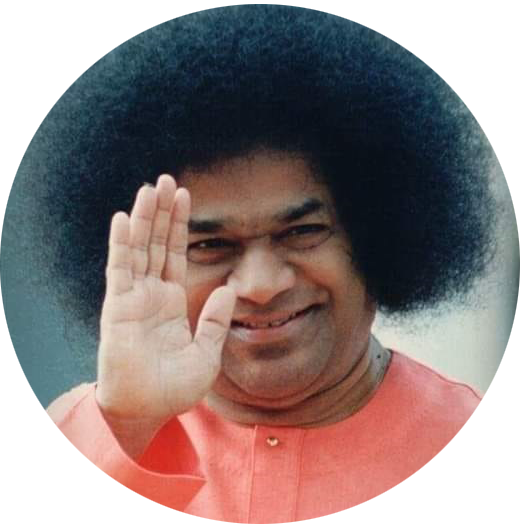
Pathways to God by Jonathan Roof, Vol. II
Excerpts shared for educational and spiritual purposes with reverence to the author. This is a non-profit project dedicated to selfless service.
Liberation - Chapter XIII
1.
The End of Delusion
People today struggle to determine
what is real and what is delusion. The problem is compounded because we live in
a world which manufactures imagery on an unprecedented scale. Advertising
barrages us with products that portray lifestyles of glamour and materialism.
Even religions and philosophies compete for our allegiance with myriads of
programmes and promises. The very volume of information available to us
compounds the problem of determining what is real and what is transient.
Science and technology are unable to
settle the matter. They have found nothing that cannot be divided and pulled
apart. Rather than answering the question of life's meaning, they only add more
questions to our list.
And yet the quest for a firm spiritual
foundation in life has not completely eluded pursuit. The experience of saints
and sages has testified to the truth that can be found within oneself. That
truth is self-evident and self-validating when experienced by the seeker. The
realization of self has been called liberation, or in the traditions of India,
moksha or mukthi. The terms refer to the realized person's experience of
reality which lies beyond the delusions of materialism and empty imagery.
“The disappearance of
delusion is the liberation all crave for. Moksha is the kshaya (disappearance)
of moha (delusion).”
– Sri Sathya Sai Baba Sathya Sai Speaks 7, p.308
The concept of moksha, or liberation,
requires a reorientation of our thinking. We have grown to believe that
happiness is derived from objects outside of ourselves. Our minds possess a
natural tendency to investigate external objects. The senses are directed
outward and so the mind too is focused in that direction. The mind must be
redirected to investigate itself.
Actually, real happiness derives from
the cultivation of inner truth. The disappearance of delusion results from
recognition of divinity within. That divinity is discovered when we experience
the truth of our own consciousness. Unburdened by mental baggage, the real
content of spiritual consciousness consists of truth, bliss, and awareness. The
experience of that state confers wholeness, in which we discover all joy and
peace within ourselves. The outer world only mirrors the self. Its treasures
are small and unimportant compared to the knowingness and bliss within. The
liberated individual does not depend on external objects or experiences for his
or her happiness.
“Moksha is only
another word for independence, not depending on any outside thing or person.”
– Sri Sathya Sai Baba Jnana Vahini, p.6
2.
The Purusharthas: One's Goals in Life
Hindu culture defines four goals (purusharthas)
for life in the world. These aims of living are righteousness (dharma),
wealth (artha), desire (kama), and liberation (moksha). When one
lives correctly, he or she employs wealth for righteous purposes and desires
only liberation. However, in our age the common practice is for people to
desire wealth and to forget both righteousness and liberation. Our senses
attract us to outward objects of gratification and we lose sight of spiritual
goals. With practice we reverse the process and attain fulfillment. The wise
aspire only to liberation.
“If we combine dharma
(righteousness) with artha (wealth) and kama (desire) with moksha (liberation),
then we realize that we will have to acquire wealth for the sake of dharma and
we must turn all our desires to acquire moksha.”
– Sri Sathya Sai Baba Summer Showers 1974, p.635
Moksha, or liberation, grants release
from the suffering engendered by uncontrolled desires. When unfulfilled desires
persist they bear misery. Even when fulfilled, they cause us to crave for
further gratification. They allow us no peace or satisfaction. These harmful
desires are not the simple physical needs for such basic requirements as food
or sleep. They are the cravings for wealth, power, fame and worldly
achievement, which are manifestations of ego.
Harmful desires result in our search
for happiness outside of ourselves. In small doses such goals are not a great
obstacle, but when they detract from our ability to know ourselves, then they
become a hindrance. The cycle of craving for objects of desire prevents us from
going within to the source of real happiness. Only when the inner truth is
attained by intense spiritual search can we realize our goal.
“Of
these purusharthas, the final consummation is moksha; that is the very crux of
the problem of life. Moksha means liberation from bondage to both joy and
grief, which are the obverse and reverse of the same coin. Moksha is the
recognition of the truth; but thought is simple, it requires the cultivation of
viveka (spiritual discrimination), vairagya (detachment), and vichakshana
(keenness of intellect) to know the truth and escape from the temptation to hug
falsehood.”
– Sri Sathya Sai Baba Sathya Sai Speaks 4, p. 108
3.
Human Birth: An Unparalleled Opportunity
Neither animals nor the inhabitants of
heavenly realms can aspire to liberation. Only through a human birth can one
attain that goal. Through life on earth, aspirants assimilate knowledge and
gain the experience to earn that consummation. On this plane Seekers can
practice devotion to God to earn the Lord's grace for the fulfillment of their
high destiny. One's birth in this world provides an unparalleled chance to
realize the aim of life. When seekers look inward, they can overcome the cycles
of action and reaction. They can rise above the senses to know their reality.
“All bodies other than
human are merely instruments for the experiencing of the fruits of action. The
human is the only instrument for liberation.”
– Sri Sathya Sai Baba Upanishad Vahini, p.63
Spiritual liberation is a more noble
achievement than even the attainment of heaven. The heavenly realms reward
those who perform good actions, but even those realms provide no permanent
rest. When the individual's good karma (meritorious action) runs out, one again
incarnates in the world. Such efforts are temporary at best. Actions in the
world result in reward or punishment, but they cannot expose the truth of the
self. Only liberation reveals the truth of the self, which liesbeyond the reach of
the mind or intellect. That consummation requires perception of higher
consciousness, the atma. That state remains unconditioned by growth or decay.
“The sastras (holy
texts) speak of aspirants who discarded even Higher regions like heaven, which
are attain able by persons who perform the prescribed rites; for, liberation is
beyond the reach of those who dwell therein. Heaven and hell are results of actions,
they are objects made, and so they cannot be eternal; they are conditioned by
birth, growth, decay and death.”
– Sri Sathya Sai Baba Upanishad Vahini, p.66
4.
Liberation: A goal to Which All May Aspire
All may aspire to achieve liberation.
The attainment is not restricted to exceptional souls. Its accomplishment is
not limited to those with prodigious intellectual capacity or superhuman
devotion. Moksha is not reserved just for the saintly or powerful. All may
reach that peak. That aim is only the realization of our own self-nature. All
possess it already, if they could but shed the delusions which hide it. Its
attainment is not dependent on unusual physical or mental characteristics.
“You
must have heard of people seeking moksha and getting moksha and many may be
under the impression that it is some rare honour that only a few secure or
that it is some area like paradise or a colony of the elect or a height
that some heroic souls alone can climb to. No, moksha is something which all
must achieve, whether they are heroic or not; even those who deny it have to
end by realizing it. For, everyone is even now seeking it when he seeks joy and
peace; and, who does not seek joy and peace? Moksha is when you have lasting
joy and lasting peace.”
– Sri Sathya Sai Baba Sathya Sai Speaks 4, pp.294-295
That destination can be attained by
the peasant or king, farmer or business man. The door is open to any class of
person, whether outwardly spiritual or not. Unfortunately, many seekers do not
believe in their own ability to accomplish the task. They deny themselves the
opportunity, and so the fault is their own. The search should not be put off
for some future date. The rare chance to be born as a human being, and to be
aware of that goal, must not be lost. When will such a chance again present
itself?
“It
is not right and it is a weakness to think that only yogis, jnanis, and rishis
are entitled to moksha. The destination is available for everyone.”
– Sri Sathya Sai Baba Summer Showers 1974, p.65
If we perform our duties according to
our own station in life, then we may attain the goal. Householder or student,
business person or monk, all may reach the goal. Perhaps all do not believe in
the attainment of moksha, because they are unable to gauge who has reached the
goal. It is not possible to tell from outward appearances who has achieved
moksha. No halo of splendour or fragrance of heavenly flowers crowns that
victor. No outward signs of divine brilliance or saintly conduct betray that
winner of the game. Thus it is improper to assume that mukthi cannot be
accomplished, simply because you do not recognize it in others. It may occur
wherever men and women act according to their duty.
“He
has declared that the grihastha (the householder) too attains moksha; only he
must follow strictly the dharma (spiritual duty) laid down for his ashrama
(role in life). There is no doubt that everyone, to whichever ashrama he may
belong, who adheres to the dharma of that ashrams, will attain moksha.”
– Sri Sathya Sai Baba Dharma Vahini, p.49
The performance of work in the world
does not preclude liberation. If one works in society and remains mindful of
his spiritual practice, the quest may be fulfilled. If one strives with
sincerity and devotion, there is no need to retire to the solitude of the
forests or mountains. In fact, life in the world may be a better training
ground for the reduction of ego and desires. When we are surrounded by
temptation, and yet we can perceive its unreality, liberation lies close at
hand. Life in the world is more conducive to progress than is life in a
solitary cave while still burdened with desires.
“You can attain
moksha, even while performing worldly duties; ifyour mind remains
immersed in divinity.”
– Sri Sathya Sai Baba Summer Showers 1973, p.131
One need not wait until death for
liberation; it is attainable even in this lifetime. When the obstacles to
moksha are overcome, the goal is won. There are no prerequisites of age or
education. We need not wait for our hair to turn gray and our teeth to fall
out. Who can say what progress has already been made in past lives? Dhruva
attained liberation while still a child. When one conquers ego and desire the
goal is won. It is weakness to avoid the quest or to believe ourselves
incapable of its achievement.
“When the obstacles in
the path of truth are laid low, deliverance is achieved. That is why moksha is
something that can be won, here and now; one need not wait for the dissolution
of the physical body for that.”
– Sri Sathya Sai Baba Sathya Sai Speaks 3, p.140
When freedom from delusion is
attained, the tyranny of the mind is overcome. All will taste that fruit some
day. The natural evolutionary process of man dictates that all will climb that
peak. Just as an apple ripens on the tree, gaining colour and sweetness, so too
each aspirant ripens in understanding. Each apple falls from the tree when its
time has come. So too, each of us will encounter that divinity within and will
experience liberation from the grip of desire.
“Mukti,
or liberation, is the attainment and experience of pure, unalloyed
and absolute bliss. Some ignorant people think that mukti is attained only
after death or in some future life. This simplistic view involves a gross
misconception of mukti. Mukti really means freedom from bondage and implies an
ascent from a lower state to a higher state. It is the result of a process of
transcendental evolution by which the human becomes the divine.”
– Sri
Sathya Sai Baba Summer Showers 1979, p.16
The realization of mukthi
arrives like the brilliance of light where there was only darkness. We have
long staggered about in a darkened room, tripping over objects and bumping into
walls. Embarking on the spiritual journey represents a search for the light
switch. Those who have found that switch can direct us to it, but still we must
flip the switch for ourselves. When we complete our spiritual practice, the
switch is within our grasp. But only illumination of the bulb allows us
awareness of the truth. We had some idea, even in the dark, of the contents of
the room. But only when we see with the light on, do we really understand what
is there. Nothing really changed in
the room by that illumination. The changes are within us. Nothing new is
acquired, but ignorance has gone.
“Mergence
in the cosmic consciousness (brahman), of which each is an expression, is not a
novel achievement gained by effort. It is only the awareness, in a flash, of an
existing fact. One is brahman already, inherently inseparably so.”
– Sri Sathya Sai Baba Sathya Sai Speaks 11, p.298
Moksha is the final
transmutation for all souls. It is as natural and inevitable as the
caterpillar's transformation into a butterfly. The end of a student's career at
school is the attainment of a degree. Over many years the pupil acquires
knowledge and skills. He forces the contents of thick books into his head.
Liberation is a similar process, except it requires the removal of desires and
ego, not the addition of something new. Success arrives when the pristine atma
is discovered beneath the dross of sensory attachments. Liberation comes when
impurities are removed.
“Milk
when curdled is rendered separable into butter and whey, and butter when melted
and clarified becomes ghee; ghee is the finale, the anta (final stage) of milk.
So too, man's final irrevocable transmutation is liberation, moksha.”
– Sri Sathya Sai Baba Sathya Sai Speaks 6, p.25
5.
Self Knowledge: Key to Understanding
In the Viveka Chudamani, Shankara
declares: "Liberation cannot be achieved except by the perception of the
individual spirit within the universal Spirit. It can be achieved neither by
yoga (physical training) nor by sankhya (speculative) philosophy nor by
the practice of religious ceremonies, nor by mere learning"...
Only self-knowledge grants liberation.
We may recite holy texts or compose sacred prayers. We may sing with great
beauty or travel on countless pilgrimages. But unless we know ourselves, moksha
cannot be won. The mere acquisition of facts cannot help. Knowledge of the
world does not spare us when death knocks. To attain the goal of life we must
know who we truly are.
The great Indian sage, Ramana
Maharshi, instructed his students to ask, "Who am I?" To gain
liberation we must answer that question. The reality of the self is atma,
unchanging pure consciousness, characterized by truth, awareness and bliss.
“When you knock at
another's door and a voice from inside accosts you with the question, "Who
is it?" you automatically answer, "It is I."That does not
satisfy the questioner. So, another question eliciting further information
follows. Then only will the door open. The door of liberation can also open
only to those who can explain who the “I” truly is.”
– Sri Sathya Sai Baba Sathya Sai Speaks 2, p.83
We are easily captivated by our
worldly roles. We believe ourselves to be the characters whose roles we portray
on the stage of life. Rarely do we delve within and realize that we are only
like actors who hold little attachment to the parts they play. Our true nature
is like that of a witness, not bound by the fates and tangles of the world. We
must learn, as Sankara says, that "the atma is the witness of the
individual mind and its operations. It is absolute knowledge."
“The
person must know himself as the real person; the "I" must become
aware of the “I” that is self-realization. The eye can see the star that
is billions of light-years away; but it cannot see itself! The eye must see the
eye, so that it can claim to have self-realization, a vision of itself as it
really is.”
– Sri Sathya Sai Baba Sathya Sai Speaks 6, p.299
6.
The Mind: Captor or Liberator
Mastery of the mind is essential in
the quest for liberation. The mind is the key to self-realization. Turn the key
to the left and the door is locked: turn it to the right and the door opens. A
weak mind is controlled by the senses. A strong mind masters the senses and
sees beyond them. The senses are directed to the outside world, and direct the mind to external objects.
But a strong mind can focus within. When the mind focuses within, it yields to
the intellect (buddhi). The intellect reflects the light of the atma. The mind
is compared to the moon, because it owns no light of its own. It only reflects
the sunlight of the atma. When the mirror of the mind is polished clean, it
reveals divinity.
“The
mind of man alone is responsible both for his bondage and for his liberation.
The difference between bondage and liberation exists only in our thought.”
– Sri Sathya Sai Baba Summer Showers 1974, p.12
In India a simple method is used to
catch monkeys. A fruit is placed in a heavy jug with a small opening at the
top. A monkey, upon examining the vessel, reaches into the opening to snatch
the fruit. When it puts its hand around the fruit, it can no longer remove its
hand from the jug. In its desire for the food, the monkey holds tight even
though it is caught by the person who set the trap. The monkey traps itself as
a result of its own desire.
Our thoughts are like monkeys. Our
thoughts are easily engaged by the sights, tastes, sounds, feelings, and smells
of the world. The mind grasps sensory objects and fails to release them, even
though these objects cause suffering and bondage. A wise person trains the mind
to pursue only worthwhile goals. When we practise spiritual disciplines,
harmful tendencies of the mind dissipate. Godly thoughts cleanse desire from
the mind, allowing the intellect to control our actions. Like removing a
cataract from the eye, removing desire from the mind enables it to see clearly.
When obstacles are cleared from the mind, divine light shines unimpeded. The
mind is a useful servant, but an ignorant and domineering master.
“Moksha, or
liberation, results from the breaking of the mind, with all its vagaries and
wishes. You have to break your mind (like a coconut) but
how can you do it when the fibrous armour of sensual desires encompasses it? Remove them and
dedicate the mind to God and smash it in his presence. That moment, you are
free.”
– Sri Sathya Sai Baba Sathya Sai Speaks 4, p. l09
Atmic consciousness lies ever-present
within us, but it escapes our notice because of the distractions to our
attention. That atmic awareness is the witness; who observes but is never
engaged in the surrounding action. Everyday normal awareness is subjected to
various degrees of delusion. In the dream state even the most preposterous
events escape our ability to discern their unreality. When we
"awaken" the light of reason continues to elude us. The images of the
day also engage us in an unreal play. In truth, the events of worldly life also
have little real effect upon our inner truth.
Once a young man sought
self-realization. He travelled to the jungles and deserts in search of an
answer to his questions. He scoured temples, churches, and mosques for one who
could provide satisfaction to his query. Finally, one day on a mountaintop he
encountered a wise old sage. At last he had the chance to pose the question
that haunted him, "O master, is all this reality or is it just a
dream?" The old man looked at him for a moment before he replied,
"That depends. Are you awake or are you asleep?"
Like sleepwalkers, we move about
unaware of our reality. Getting caught up in events of the world, we lose
perception of our truth. The reality of a "cinema show" is that we
are observers. Images moving on the screen before our eyes can claim only
relative reality. And yet we cry and laugh with the charcters portrayed in the
drama. When our desires are removed, we can view events more clearly, without
being unduly shaken by them.
“The
awareness of one being only the witness of everything is the secret of
self-realization.”
– Sri Sathya Sai Baba Gita Vahini, p.226
Everyone will one day dispel the
darkness of ego. When the flash of moksha illumines one's consciousness,
shadows flee. Examination of our own minds teaches us that lasting happiness is
never won by the acquisition of material goods or worldly achievement. The
trophies that we won as children do not long hold our attention. Another prize
soon appears before us to lure us farther down the road in pursuit of worldly
success. The wise seek the light within, which alone grants lasting happiness.
Until that light is attained, we must continue to search.
“Ignorance
can be cured only by knowledge; darkness can be destroyed only by light. No
amount of argument or threat or persuasion can compel darkness to move away. A flash, that is
enough; it is gone. Prepare for that flash of illumination; the light is there
already, in you. But since it is heavily over laden by repressing factors, it
cannot reveal itself. "The liberation from night" which happens when
the light is revealed, is called moksha. Everyone has to achieve it, whether he
is striving for it now or not. It is the inevitable end to the struggle, the
goal to which all are proceeding.”
– Sri Sathya Sai Baba Sathya Sai Speaks 3, p.178
Like prisoners in a dream, we imagine
ourselves to be bound. Upon waking we are relieved to find that bondage was
only a creation of our minds. The light of awakening dispels the fierce
nightmare. Similarly, the inner light of realization frees us from the bonds of
desire created by the mind. Once the delusion is seen through, there is no
return to ignorance. Like a rope mistaken in the darkness for a snake, once the
reality is ascertained it no longer frightens us.
“Moksha
exists and is there self-evident. It cannot be produced anew by any karma. Themoment the ajnana
(ignorance) which hides it from experience disappears, that moment you are
liberated and you know your reality; you are free from bondage. Prior to that
moment, you were free, but you imagined you were bound and you behaved as if you were
bound.”
– Sri Sathya Sai Baba Upanishad Vahini, p.66
To realize pure atmic consciousness,
we must strip away mental delusions. Attainment of self-realization shows us
that even the desire for liberation was an error of understanding. The mind
creates the desire for moksha, but that desire is different from other desires.
That wish is like a match, which when lit results in its own destruction. That
is because liberation is a function of the mind - not of higher awareness.
Indeed, one of the most immediate results of realization is the cessation of
the desire for liberation itself. The desire no longer has purpose.
“The
Gita directs that even the eagerness to be liberated is a bond. One is
fundamentally free; bondage is only an illusion. So the desire to unloosen the
bond is the result of ignorance.”
– Sri Sathya Sai Baba Sathya Sai Speaks I0, p.311
7,
Renunciation: Freedom from Ignorance
So, how can one banish the delusions
of selfish desire? The practices of renunciation and spiritual discrimination
provide essential tools. Spiritual practice grants wisdom to discern between
transient and permanent phenomena. When we examine the reality of sense
objects, we perceive that each is a transient form and, like all forms in
nature, is subject to disolution and disappearance. An object may have
usefulness or beauty, but its reality (like our own bodies) is strictly
relative. The store of peace and joy within us constitutes a far more valuable
treasure.
“A
bird in flight in the depths of the sky needs two wings; a person moving on the
earth below needs two legs to carry him forward; an aspirant eager to obtain
the mansion of moksha, the abode of freedom, needs renunciation and wisdom,
renunciation of worldly desires and wisdom to become aware of the atma.”
– Sri Sathya Sai Baba Sutra Vahini, pp.17-18
Renunciation does not require us to
flee to the solitude of an isolated place. It does not entail abandoning our
duties and responsibilities. Renunciation means detaching ourselves from the
results of our actions. It asks that we surrender the outcomes of events to
God, for God is the doer of all action and he alone determines the outcomes.
We display remarkable ignorance if we
believe we can attain all our desires. Have the conquerors of history stopped
their marches in satisfaction with their gains? Have even the wealthiest men
ceased their striving for having satiated their hunger? The attainment of wrong
desires only throws fuel on the fire.
Our real choices are found in how we
react to events. Our opportunities lie in the way we adjust our attitudes and
increase our self-understanding. That alone is truly in our control- the world
does not succumb to our wishes. Liberation frees us from the shackles of
worldly striving by allowing us satisfaction with things as they are.
Renunciation is not an attitude of
uncaring. Neither is it indifference or self-centeredness. It means doing our
very best with love and patience. We can strive for the good of all. Still, the
results rest in the hands of God. When we cease to seek for worldly rewards, we
better serve others.
When we focus on service to others,
personal cravings no longer cloud our judgment. Inner peace grants satisfaction
with the world as it is. Desire produces dissatisfaction with life. If one
desires fame or fortune, removing the body to a distant forest provides no
cure. Renunciation and surrender grow in the mind. The tests of living in the
world provide a better gauge of success than removing oneself from the
battlefield.
“Liberation means
getting rid of bondage. Many people give up hearth and home, wife and children,
property and possessions, and, escaping into forest retreats, pride themselves
on their "renunciation."But-this act of fleeing cannot be honored by
that name, for such an act by itself cannot confer release when the mind still
remains bound. The fundamental bond which must be eliminated is the bond of
ignorance. Death is sweeter than the bondage that ignorance can impose on man.
Cast away ignorance: you are free, liberated from all bonds that very moment.
All spiritual disciplines have this liberation as their goal.”
– Sri Sathya Sai Baba Sathya Sai Speaks 10, p.88
Seekers travelling to visit Sathya Sai
Baba have been known to state, "I want liberation." Sathya Sai Baba
replies with a simpleprescription.
He says that when you remove the "I" of ego and the "want"
of desires, what remains is liberation. Ego and desire form the roadblocks on
the path to realization. They are the obstacles that we throw before ourselves.
If we realize that we already possess truth, divine consciousness and bliss
within, we can renounce desire for external objects. The source of joy lies buried
within us.
“Liberation and ananda
are in your hands already, packed between the upper cover(I) and the lower
cover (want). "I" means the ego; "want" means desire.
Remove the two covers, the ego and desire. What remains is liberation, ananda.”
– Sri Sathya Sai Baba Sathya Sai Speaks 9, p.59
Until illusory desires evaporate, the
mind holds no opening for liberation to enter. As long as the motion picture
plays we cannot see the screen. So, unless we clear out the clutter of
distractions from our consciousness, we cannot appreciate the truth that is
already there. The most basic component of consciousness is the atma, blissful
self awareness. That self-awareness does not submit itself to scrutiny by any
instrument of lower consciousness, because it dwells on a higher level than the
mind (manas) or intellect (buddhi). The capacity of the mind and intellect is
inadequate to the task of analyzing it. Atmic consciousness partakes only of
truth and divinity, our most basic reality. However. atma's very existence is
doubted by the mind, because it will not yield to rational
analysis.
“We talk of moksha.
What is it? It is only giving up the anatma, the unreal. Suppose you want a
tumbler of fruit juice. Unless you throw away the water already in the tumbler
you cannot pour the juice in the tumbler. Similarly, unless you give up
materialism, atmabhava (spirituality) cannot come to you. Moksha is not a
distinct and different sadhana. It is only giving up unnecessary desires.”
– Sri Sathya Sai Baba Sathya Sai Speaks II, p.28
Without controlling the outreaching
senses, no release from desire is attainable. Without controlling desires, the
ego holds sway. Like a mad dog barking at itself in a mirror, the ego is
motivated by delusion. Such a dog sees another, where truly there exists itself
alone. Control of the mind and senses precedes self-discovery. Inquiry into the
truth of objects illumines their unreality. The value that we perceive in
objects is only a reflection of the truth that hides within ourselves. Ralph
Waldo Emerson observed that "Beauty is in the eye of the beholder,"
We might just as easily say, "Desire is in the eye of the beholder."
When we exercise spiritual discrimination, the atma illumines the intellect and
the intellect controls the mind. Only then can the mind wield control of the
senses.
“For
experiencing the atma as your reality, control of the senses, removal of
physical attachment and truth are essential.”
– Sri Sathya Sai Baba Upanishad Vahini, p.76
The destruction of bad habits assists
in the task of self-mastery. Bad habits waste time; they consume our lives and
offer little compensation. The mind chooses the path of travel for the chariot
of the body. If the charioteer loses control of the horses (the senses) he
endangers the vehicle (the body) and the passenger (the atma). So, the wise
driver steers away from the ruts of bad tendencies and searches for the smooth
road of wisdom.
“An
individual who wants to attain self-realization and secure the vision of the
Lord, should first give up bad listening, bad vision and bad food. From that
day, he will have moved closer to his objectives.”
– Sri
Sathya Sai Baba Summer Showers 1978, p.179
8.
Surrendering the 'I'
The aspirant who renounces wrong
desire is well on the path to liberation. Developing broad vision and striving
for the benefit of others, he or she overcomes ego. Concern for others
diminishes the importance of one's own desires. Service to those in need grants
greater satisfaction than the fulfillment of personal cravings. Aid to
unfortunate brothers and sisters releases us from the tyranny of our own
cravings. Undue concern for ourselves pushes liberation away. If we remain
unable to release the small self, how can we grow into a larger identity? Ego
and desire walk hand in hand. To eradicate desire the ego must also be subdued.
“The state of desire-lessness is really
the state of ego-lessness.
And what is moksha or liberation except liberation from bondage to the ego? You
deserve liberation when you break away from the bond of desire.”
– Sri Sathya Sai Baba Gita Vahini, p.247
No boundaries should limit our concern
for others. All are brothers and sisters, endowed with the same spark of
divinity. The atma in one person originates in the same divinity as the atma in
another. When we recognize God as the inner motivator of all, we surrender to
his will. His will directs us along paths of mutual benefit. Liberation from
the delusion of the ego requires that we recognize God as the doer. When the
power and omnipresence of God illumines our consciousness, the ego disappears
like a mist before the rising sun. Ego is ignorance; it contributes nothing to
lasting joy, but much to grief.
“Without
surrender, there can be no liberation. So long as you cling to
the narrow "I," the four prison walls will close in on you. How to
kill the "I?"Place it at the feet of the Lord and say, "You,"
not "I"- and you are free of the burden that is crushing you.”
– Sri Sathya Sai Baba Sathya Sai Speaks 2, p.196
Until ego is renounced and we
surrender our desires to God, realization cannot last. Even if one experiences
moksha (liberation) as a result of intense practice, the experience fades when
the ego regains power. Because of one's past effort, he or she may experience mukthi
in a flash. That illumination can result from the spiritual practice of past
lifetimes. Like an instantaneous refresher course, that blessing reminds one of
past progress achieved. However, without surrendering desire and ego,
liberation cannot remain.
“There are three kinds
of liberation. It is experienced in one type of samadhi. Then, a person who is engaged in
sadhana can suddenly-like a flash of lightning-have a clear vision of the
truth, but it fades and ordinary life resumes. Liberation cannot be
permanent without total surrender.”
– Sri Sathya Sai Baba My Baba And I, p.202
Surrender requires us to renounce
selfish desires. However, one must overcome not only the smaller desire for
material gains, but ultimately the worthier desire for spiritual gain. The
treasure of inner divinity satisfies any desire to be other than what one
already is. When one knows the self no more search is required. The end of the
search dictates the demise of the three gunas (attributes). The laziness of
tamas and the activity of rajas are vanquished. With the attainment of moksha
even spiritual desire (sathwa guna) disappears. For all is God; there is no
higher or lower. And all must one day reach that destination. We should not
forever travel the dusty road of search. Divinity lives within us. It is not
found in pious practice, in churches or in temples. It comprises our own basic
reality, the atma.
“Conquer thamas
(inertia) through rajas (activity) and rajas through sathwa (spiritual search),
and finally free yourself even from the sathwa-guna through non-attachment.
Only then can you reach the stage of oneness with the universe. Guna means a
rope, so sathwa-guna, too, binds. Oneness with the universe is the stage when
man is fully free, fully awake, fully wise.”
– Sri Sathya Sai Baba Sathya Sai Speaks 10, p.330
Atma vidya (consciousness of
inner reality) endows us with full contentment. In that state even spiritual
desires are extinguished. Desire exists only where there is duality. For there
must be someone to desire and something to be acquired. If we attain oneness, then
there can be no second. Even the performance of our duties is only relatively
real. The nature of the realized person impels him or her to perform beneficial
service, but there is no imperative. Action is performed freely from love.
“The Lord who
incarnates to restore dharma, himself advises the renouncing of all dharma, for
the sake of the ultimate liberation or moksha, and in the same Bhagavad Gita he
recommends in the last chapter the giving up of even the craving for moksha or
liberation, for there is, in reality, "no bondage and no release." It
is only a delusion born of ignorance, whichdisappears when the
light of knowledge is allowed to illumine the place where darkness prevailed.”
– Sri Sathya Sai Baba Sathya Sai Speaks 6, pp.51-52
9.
Fortitude: The Key to Victory
So how do we get liberation? Intense
practice of spiritual disciplines yields that victory! Sometimes spiritual
effort appears to produce no results. However, persistent effort achieves all.
No exertion is wasted in the endeavour. A stone may be struck with a hammer 20
times and no fracture appears. But on the twenty-first blow the rock splits
cleanly. The break in that stone depended more upon the first twenty blows than
upon the last stroke. Persistence overcomes any obstacle to spiritual victory.
Devotional singing, meditation, study, and service all strike the boulder of
ego. Regular practice ultimately results in moksha.
“Strive-
that is your duty. Yearn-that is your task. Struggle that is your assignment.
If only you do these sincerely and steadily, God cannot keep back for long the
reward of realization. The river strives, yearns, and struggles to merge with
the sea from which it originally came.”
– Sri Sathya Sai Baba Sathya Sai Speaks 10, p.130
One cannot expect instant results in
the quest. The journey of self discovery requires lifetimes of struggle. Even
if one believes that one has surrendered to God's will, only patience and
persistence validate the effort! For how many of our lifetimes has God waited
for us to turn towards him? Can we not also exercise patience? Our success
depends on our karma and effort. We must demonstrate steadfastness to prove
that we are earnest in our quest. The achievement of liberation is not
fulfilled as a passing whim.
“If
in the case of a person who has limited power and a worldly position, there are
restrictions regulating your entry into his house. What is the wonder that in
the case of God, who has unlimited powers, there are regulations restricting
your entry into his mansion? If you want to enter the palace of moksha, or
liberation, you will find that at the main entrance there are two guards. This
entrance is the place where you offer yourself and may be called the gate of
surrender. The two guards who are there are srama and dama. The meaning of this
is that you must make an effort and you must have patience.”
– Sri Sathya Sai Baba Summer Showers 1973, pp.129-130
The burden of the journey is made
lighter when we strive in the company of other spiritual aspirants. Even
difficult tasks pass more quickly when we share them with others. Satsang (the
company of spiritual aspirants) enables us to work at a steady and disciplined
pace. When we share our search with others, we learn by their examples and
benefit by their strength. Concern for fellow companions reduces our ego and
adds joy to the trip. Good company allows us to gauge our own progress against
the touchstone of other's experiences. One who lives alone in a cave cannot
conquer anger and ego. These demons can only be overcome in the company of
others. Fellow travelers encourage us to persist when we find no strength of
our own.
“Satsang,
or the company of the virtuous, is of supreme importance. Satsang leads to
non-attachment. Non-attachment induces equanimity which, in turn, leads to
liberation during life.”
– Sri Sathya Sai Baba Summer Showers 1979, p.94
Steady practice endows us with
self-confidence. When we experience the difficulties of the path, and still
persist, we grow in self assurance. That assurance grants satisfaction in what
we have accomplished. Satisfaction bestows joy and eagerness to advance in
reducing ego. As the swelling of inflamed ego abates, we no longer occupy
ourselves with self-concerns. Then, focusing on the needs of others, we become
fit for self-realization.
“You
should develop self-confidence and with that you will get self-satisfaction.
Once you acquire self-satisfaction, you will be able to show self-sacrifice and
this will result in self-realization. Self-realization thus ultimately depends
on the base of self confidence.”
– Sri Sathya Sai Baba Summer Showers 1973, p.249
Self-confidence grows when we
experience the benefits of the spiritual path. Peace, joy, and respect for
higher values add light to our lives. The guiding star of inner divinity
manifests when we live in accordance with high principles. Appreciation of our
own divinity instills confidence in God. Without confidence in ourselves we
cannot develop faith in God. As we awaken to our spiritual strengths, and see
our faith in God justified, we become increasingly aware of the divinity that
surrounds us.
“Have faith in
yourself, your own capacity to adhere to a strict time-table of sadhana, your
own ability to reach the goal of realization. When you have no faith in the
wave, how can you have faith in the ocean?”
– Sri Sathya Sai Baba Sathya Sai Speaks 5, p.230
We cannot simply demand liberation
from our teacher. Grace only follows deservedness. We must first exert
ourselves to the full extent of our capabilities. Our duty requires more than
just finding a qualified teacher. Only intense practice yields success. When
asked by Dr. John Hislop for the principal reason why aspirants did not achieve
spiritual victory, Sai Baba replied, "Lack of intensity." The full
programme of spiritual practice must first be completed.
“The
key to liberation has to be cast and forged and filed and fitted for each
aspirant. It cannot be gifted in one movement by one word. Ramakrishna himself
sought for it through years at inexplicable anguish; how then can he
short-circuit the process for another? No one can just pass it on, saying,
"Take!" The flower has to yield the fruit and the fruit has to grow,
ripen and fall.”
– Sri Sathya Sai Baba Sathya Sai Speaks 2, p.82
The attainment of moksha arrives with
a flash of recognition. But that realization results from supreme effort. As in
one's search for lost treasure, a map must be found and studied. When the
location of the treasure is revealed, earnest digging must commence. With one's
great exertion the layers of earth lying atop the treasure chest are parted.
When the final shovelful of soil is removed from atop the treasure ... there it
is! It appears suddenly, but only as a result of much previous labour. The digging
does not create the treasure, it only uncovered the gold that long lay there.
Similarly, spiritual practice does not create liberation; it allows us to
uncover the inner divinity that has long-existed. When the dirt of ego and
selfish desire are removed, the treasure stands revealed.
“Sadhana
(spiritual practice) does not bring liberation. It only calms and controls the
rajasic (active) andthamasic (inert)gunas (attributes). The sathwic guna has
always the liberation desire. When the sathwic guna in man is in control,
liberation comes.”
– Sri Sathya Sai Baba Conversations, p.100
10.
Love and Duty: The Direct Path
Selfless actions result in purified
character. We draw close to our destination when we act with love and kindness
towards all. Service to others lifts us above the inertia which holds us down.
Selfless service for others also overcomes desire for results, for we do not
act on our own behalf. When we manifest such spiritual attributes, we align
ourselves with divine will. By demonstrating noble attributes, we reduce
negative karma from the past and earn God's grace. Our actions prepare us for
the victory of liberation. They are the validation of our good character. If we
do not act as we believe, how can we expect to experience moksha?
“An
individual's response to good and evil in the world depends on his karma
(results of past actions), which is a correct measure of his gunas (inner
tendencies). Karma is the key to liberation.”
– Sri Sathya Sai Baba Summer Showers 1979, p.28
Karma can deliver us close to the
destination of moksha. However, effort must be used without undue desire for
results. When work is performed without attachment to the benefits, it frees
the mind from desire. Work done in that manner expresses the God within.
Helping others is a natural expression of inner divinity. When karma (action)
is performed with an eye to our own benefit, it only increases ego and desire -
the enemies of liberation. The ego's gain is realization's loss. )
“Karma
will bring about bondage only when it is engaged in with a view to the fruit
thereof. When done without any thought of the fruit, it leads, on the other
hand, to liberation, or moksha itself! Why, even liberated persons engage in
karma, though they do not derive any benefit there from, just for promoting the
welfare of the world!”
– Sri Sathya Sai Baba Prasanthi Vahini, p.60
Virtue breaks down the ego, replacing
selfishness with selflessness. Concern for others enhances one's ability to
conceive of the atma. Those who serve others prepare for the gift of God's
grace, and progress fast along the path to moksha. Their selfless actions help
them to castoff the ego and win liberation. They attract the assistance of God,
which overcomes any obstacle on the path.
“God
loves those who do good to mankind as his dear children. They are ideal
brothers for their countrymen. They deserve and achieve the awareness of the
atma.”
– Sri Sathya Sai Baba Vidya Vahini, p.8
The heart seeks unity; it shelters all
with its wise love. The mind, on the other hand, separates and analyzes,
seeking differences in small things. The heart searches for wholeness; it does
not condone conflict. The liberated individual does not judge or condemn.
Incorrect actions result only from ignorance and distorted vision. All people
seek happiness and peace. The attitude and energy of love draw us near to God,
who is always ready to respond in kind. The one who becomes love has discovered
the nature of God. And what is liberation but expressing the wisely loving
nature of the God within?
“Realization, which is
not possible through logic, which is not possible through offering sacrifices
and which is not possible through discussion and other disciplines, can be
achieved only through love.”
– Sri Sathya Sai Baba Summer Showers 1972, p.249
Spiritual love expresses oneness with
others. When we truly love another we feel their joys and sorrows as our own.
That love does not seek return. It is not qualified by physical relationship or
debt of gratitude. Love speaks of the most basic manifestation of the divine
joy that flows from within us. That love recognizes that no differences
separate us; that we all declare the same message. It flows from a purified
consciousness as a consequence of spiritual discipline. Such love naturally
induces awareness of the atma. Ego cannot survive where wise love reigns. The
mind fails to generate desire where love sees only oneness.
“Liberation
happens when you love every being so intensely that you are aware of only one.
Soak your heart in love, soak your acts in righteousness, soak your emotions in
compassion; then you attain God soonest.”
– Sri Sathya Sai Baba Sathya Sai Speaks 8, p.52
Liberation can only increase one's love. No
selfishness accompanies the wish for moksha. For that mergence expands one's
identity. The liberated person continues to serve others. The realized man or
woman can only serve with greater selflessness. To believe otherwise
demonstrates a fundamental misunderstanding of the nature of liberation.
Buddha's realization did not decrease his usefulness to society. On the
contrary, he continued to teach and to serve others with greater effectiveness.
“The choice of merging
or of rebirth upon the dawn of freedom rests with the wish. There is no
selfishness in the wish to merge with God. It is not contraction, it is
expansion.”
– Sri Sathya Sai Baba Conversations, p.10
The experience of moksha grants a man or
woman greater tendencies toward goodness. When ego and desires are minimized,
he or she serves from compassion and not from selfishness. The muktha
(liberated soul) sees self in all and so naturally seeks to relieve suffering
and ignorance. The experience of realization enhances performance of moral
duty.
“Thejnani (one who has
attained wisdom) has the highest moral character, after the illumination he has
achieved. By the subjugation of his impulses and propensities to his cleansed
will, and the subjection of his will to the ideal of goodness which is God, he
becomes the embodiment of dharma (spiritual duty).”
– Sri Sathya Sai Baba Sathya Sai Speaks 7, p.285
An attitude of universal love
naturally flows from the experience of liberation. When one experiences the
unified consciousness of atma he or she naturally grows in compassion. In that
state all are recognized to be a part of oneself and of God. Love comprises the
essential and validating product of that victory.
“In
the mundane world man considers the four purushartas as the means to
liberation. This is not correct. Dharma (righteousness), artha (wealth), kama
(the satisfaction of desires), and moksha (liberation), which are considered
the four aims of human existence are not all. There is a fifth aim for mankind
which transcends even liberation. This is Parama Prema (supreme love). This
love principle is divine.”
– Sri Sathya Sai Baba Santhana Sarathi, Feb.95 p.29
11.
Devotion: The Simplest Path for the Kali Yuga
In the Kali Yuga, the current
age of spiritual decline, the simplest means to liberation is through
remembrance of the name of God. During previous yugas, meditation and ritual
worship were prescribed as the best methods. Such practices require difficult
training and strenuous effort. In those ancient eras people lived virtuous
lives. Winning God's grace demanded tremendous discipline and effort. In our
own time the simple practice of remembrance of God's name wins his heart.
Perhaps attracting God's attention today requires less effort, when so few
people strive for virtue or liberation. Remembering God's name promotes ego-lessness and desire-lessness. The
practice reduces our attachments to material objects and readies us to receive
God's grace.
“Dhyana
(meditation) was prescribed as the means of liberation for men in the kritha
yuga, tapas (spiritual discipline) as the means during the tretha yuga and
archana (ritual worship) for the dwapara yuga. But, for people of this yuga,
the simple remedy prescribed is just namasmarana, the constant awareness of the
name.”
– Sri Sathya Sai Baba Sathya Sai Speaks 11, p.162
Although wickedness runs rampant in
our time, more doorways to liberation now stand open. Perhaps the central
entrance for the majority of devotees is namasmarana (repitition of
God's name), with Sai Baba's fresh and full instructions on its proper use. The
classic doorways are also there: meditation and prayer, study and yoga,
devotional singing, devotional rituals, spiritual retreat-and always the wise
love-in-action of service undertakings.
Today, augmenting all of these, is the
vast increase in channels for spiritual education. These include the widespread
availability of printed and audiovisual material, television, radio, and live
presentations. It is also true that more spiritual discrimination is required
to select the useful material from the mountain-loads of the spurious and the
harmful teachings.
“This
age of rampant wickedness offers more facilities for liberation than any
previous one, for education is much more widespread now.”
– Sri Sathya Sai Baba Sathya Sai Speaks I0, p.339
Perhaps the very volume of educational
material available sometimes discourages our quest. So many spiritual
disciplines call out for our attention. Meditation, service, devotional rituals, song meetings,
study groups, and yoga programmes all clam our for our notice. How can we
possibly follow even a fraction of all the messages we hear? We need not master
all spiritual paths. It is sufficient to learn one path well. Mastering one
path endows us with the benefits of all the approaches.
“Therefore,
if you want to get realization, then it is not necessary for you to follow all
the various types of bhakti (devotional practices) that have been described. If
you attach yourself to the Lord through one chosen path, like prema (spiritual
love), it will be possible to realize Him.”
– Sri Sathya Sai Baba Summer Roses On The Blue Mountains, p.
109
By following one path, we acquire the
benefit of many practices. For example, the path of bhakti (love for
God) eventually endows us with discrimination between the Real and the unreal.
That devotion focuses the intellect on what is true and lasting, for only God
walks with us all the days of our lives. Love for God overcomes attraction to
worldly objects. The bliss of selfless love causes lesser objectives to pale in
comparison. Devotion armours the mind against temptations of physical
attraction. When we know God we seek to remain always in His favour. And when
we trust God, surrender naturally grows within us. Any such spiritual
discipline, when devotedly practiced, may result in liberation.
“Bhakti
(devotion to God) is defined as the means of discovering the divine reality
within each being. Four steps are laid down in the scriptures to help man
succeed in this effort: discrimination between the permanent and the
impermanent; withdrawal from the process of catering to the senses; positive
control of the feelings, thoughts, and pursuits; and incessant yearning for
liberation from all bonds.”
– Sri Sathya Sai Baba Sathya Sai Speaks 9, p.106
Devotion to God is a potent means for
winning His grace. With devotion our limitations in other areas of spiritual
practice may be overcome. Even if we lack understanding of God's formless
divinity, or if we are unable to skillfully serve others, we may still achieve
moksha. Arjuna learned of God's grace while discussing his duty with Krishna on
the battlefield of Kurukshetra. Krishna promised him success despite Arjuna's
shortcomings. Krishna to Arjuna:
“The
contemplation of the Godhead as 'above and beyond all attributes' is necessary
for the attainment of jivanmukthi (attainment of liberation while in the body).
If that is difficult and beyond your capacity, you can do another thing.
Dedicate all worship, all adoration, all Vedic rituals and vows and vigils with
all the fruits that may accrue, to me. Take me as the ultimate goal, as the
final aim which transforms all acts into worship; fix your mind on me, meditate
on me; I shall then shower my grace and take you across the ocean of change, of
samsara; I shall favour you with the goal you seek.”
– Sri Sathya Sai Baba Gita Vahini, pp.196-197
One-pointed devotion results in
liberation during the life of the devotee. That path is the simplest path of
discipline. When we depend on God he takes care of our needs. The bhakta
(devotee) is like a kitten. The kitten cries for milk and the mother cat
carries the kitten to where it may drink. Still, true devotion requires virtue
and great mindfulness.
“Single-minded
devotion is the easiest path to salvation. In fact, the ananyabhakta (devotee concentrated
on God alone) becomes ajivanmukta (one liberatedduring life).”
– Sri Sathya Sai Baba Summer Showers 1979, p.151
12.
Grace: The Essential Ingredient
Even difficult karma cannot preclude
liberation, if God's grace is bestowed. An aspirant who works tirelessly and
still comes up short, may receive God's Grace to lift him over the edge. With
exemplary effort, past misdeeds are overcome. One who loves and serves others
may be given God's Grace to negate the burden of past karma. Grace overcomes
obstacles and may even supply the final missing ingredient for
self-fulfillment. If some quality of character is lacking in the seeker, the
Lord may provide it.
“If
you have the money, you pay the price and purchase the sweet. If the desire to
eat is strong and you do not have the money, you may request the shopkeeper to
give you one. He will give you one. Similarly, when you want to taste moksha
and feel that you do not have sufficient strength, you may pray to God and God
in his great mercy will give you the needed faculty.”
– Sri Sathya Sai Baba Summer Showers 1972, p.282
In truth, grace is more than just an
aid on the path. Grace is essential for liberation. Even our best efforts can
only prepare us and predispose us to that realization. The spiritual practices
that we perform only quiet and prepare the mind and heart. The spark of
illumination required to complete the transformation has only one source. That
consummation requires God's approval. One may prepare a fireplace with sticks,
paper, and logs, but still a spark is required to light the tinder. We must
develop knowledge and surrender, but only the divine spark ignites the atmic
flame.
“It
is obvious that we cannot experience the pure effulgence of sat-chit-ananda or
truth-consciousness-bliss without divinegrace. Human effort
alone is not enough to attain spiritual beatitude.”
– Sri Sathya Sai Baba Summer Showers 1979, p.13
The Lord does not readily light that
flame unless we have prepared ourselves through long sadhana (spiritual
practice). There must be a waning of ego and a waxing of love. We must detach
from egoic consciousness and attach to universal consciousness. We must employ
prodigious effort and patience, and then trust that God will grant that
culmination. Intensity of effort and devotion to God ultimately brings his
approval.
H:
Is it possible for Swami to give the lady self-realization?
Sai:
When there is that feeling, that depth of feeling, Swami can give it. Oh, yes.
She has such a depth of feeling for the body. If she has the same intensity for
God-realization, Swami can give it. Just now.
Conversations, p.8
When preparations are complete, the
Lord is drawn to the site. We need not fear that our efforts will be
overlooked. When intensity burns bright and devotion warms the air, the guru
appears. Ripe fruit falls naturally from the tree. The fulfillment of all
creatures is assured in the divine plan.
“When
the thirst for liberation and the revelation of one's reality is acute, a
strange and mysterious force in nature will begin operating. When the soil is
ready, the seed appears from somewhere! The spiritual guru will be alerted and
the thirst will get quenched. The receiving individual has developed the power
to attract the giver of illumination.”
– Sri Sathya Sai Baba Sathya Sai Vahini, p.97
The Lord is ever-willing to guide us
on the path. Even small efforts on our part are reciprocated in manifold ways
by the Lord. His grace stands ready to match and exceed our own small efforts.
He encourages our progress towards liberation and prompts us to press on when
we dawdle along the way. Holy festivals remind us of the need to persevere.
They are wake-up calls on the calendar of our lives. Chief among these holidays
on the Indian calendar is Mahashivaratri, the night of Shiva. Shivaratri
is said to be the most auspicious day of the year to attain spiritual
liberation. The festival occurs at the dark of the moon in the Indian month of
February I March. At that time the negative pulls of the lower mind are
weakest. During Shivaratri harmful effects of the mind are most likely to be
overcome. The mind is made of desire and at that time desire ebbs to its lowest
level.
“If
you make the slightest effort to progress along the path of liberation, the
Lord will help you a hundredfold. Shivaratri conveys that hope to you.”
– Sri Sathya Sai Baba Sathya Sai Speaks 2, p.149
So great is God's grace that he grants
our requirements without our request. He even accords us liberation itself when
the time is right. If we heed his directives and concentrate on our spiritual
practices, he fulfills even the promise of moksha. Devotion to God and
surrender to his will enables us to achieve that goal without even asking.
“Acquire
butter, that is to say, the grace of the Lord, by implicit obedience to the
rules of life laid down by Him. When that grace is won, one need not pray
separately for moksha or liberation. He knows best what you should get and
when. He will confer what you deserve and what is beneficial. Yearn for Him,
suffer anguish for Him; there is no need to yearn for moksha then.”
– Sri Sathya Sai Baba Gita Vahini, p.252
13.
Atma and Brahman: From the Particular to the Universal
To find divinity within ourselves, we
must examine what is true and lasting in our nature. We must look beyond the
body and the personality to discover that which does not change. Those
attributes which seem to define us-appearance, attitudes and disposition-are
only costumes. With each lifetime we do a new outfit and play a new role. Our
true identity is not bound up in the superficial roles that we play. The names
and forms which seem to identify us are found to be unreal when compared to the
divine self within. Ego usurps the crown of self-identity. It actually blinds us to our higher
self. When we play a role, ego causes us to forget that we are only actors in a
play. Our genuine identity rests in our atmic basis: the consciousness and
bliss of unconditioned being.
“The
disappearance of the wave form and the wave name is called moksha; that is, the
merging of the wave in the ocean from which it seemed to differ.
De-individualization is, in other words, moksha.”
– Sri Sathya Sai Baba Sathya Sai Speaks I, p.161
The renunciation of ego occurs
naturally with the passage of time. It is not a loss; it is a gain. It is the
trade of a small and limited self for a larger and grander identity. It is the
river's mergence with sea. Who will bewail the loss of the river when
confronted with the grandeur of the ocean? The river banks which appeared to
limit the waters widen to become the shores of the ocean. Ego vanishes and the
self expands One without a second. The river is ego. The ocean is atma/Brahman.
“Liberation
is just the awareness of truth, the falling off of the scales of delusion from
the eye. It is not a special suburb of select souls; it is not a closed
monopoly of expert sadhakas. Like the Godavari (a river) losing its form, its
name and its taste in the sea, liberation dissolves the name and form,
aptitudes and attitudes. You are no more separate, particular, individual. The
rain drop has merged in the sea, from where the drop a rose. Of course there
was no bondage at any time and no prison; there was only a fixation in the mind
that one was bound, that one was in prison, that one was limited and finite!”
– Sri Sathya Sai Baba Sathya Sai Speaks 4, p.274
Many aspirants secretly fear the
transformation to a larger identity. But it is only because they have not yet
seen their new splendour.
They torment themselves with unreasonable fears. The old identity is not really
lost, it is only recognized to be temporary and small. Liberation causes no
destruction of anything spiritually dear or important. Do we mourn when we
throw away an old newspaper? Why then bewail the disappearance of the equally
transient ego? Moksha indicates the loss of fear, ego, and selfish desire. It
marks the end of pain and grief.
“But,
please do not be-afraid of reaching the goal of moksha! Do not conceive that
stage as a calamity. It is the end of calamity. It is death to all grief; the
birth of joy, a joy that knows no decline, the death of grief, grief that will
nevermore be born.”
– Sri Sathya Sai Baba Sathya Sai Speaks 3, p.178
The emergence of our identity into a
larger whole requires more than an intellectual exercise. The caterpillar may
believe that its transformation will result in a new caterpillar of great
dimensions. However, its evolution awards him the wings of a butterfly. So
atmic realization lies beyond the ken of intellectual comprehension. It demands
a higher mode of understanding, dependent on direct perception-on experiential
knowledge.
Once that realization dawns, the
process is still not complete. The implications of the experience are not all
immediately apparent. A young adult, who receives a license to drive,
experiences an immediate sense of liberation. Still he or she must explore the
roadways that freedom opens. The driver must still enter the automobile and
drive. The freedom of moksha continually transforms the individual until
patterns of egoic behavior disappear. Life continues to be rearranged as
motivations change due to the incorporation of new and more universal insights.
Liberation is not the end of the road; it is only the beginning of
God-knowledge.
“The
state of liberation (moksha) transcends the body-mind-ego complex. Therefore,
the transcendence is beyond one's physical, mental or intellectual effort. When
awareness dawns, the darkness of ajnana (ignorance) disappears. When the lamp
is lit darkness is no more.”
– Sri Sathya Sai Baba Sutra Vahini, p.36
Once ego is relegated to its proper
and insignificant role, we experience the unlimited and all-inclusive self.
Freed from selfish desires, lower consciousness escapes from the prison of ego.
The mind is composed of desire threads, woven by the ego. Liberation snaps
those threads. They lose the strength to bind us. Then consciousness expands
until we realize that everything is a part of ourselves.
“You
see the phenomenal universe, only as Jongas you have not crossed the threshold
of the mind. Once you go beyond the mind, you will experience nothing but the
self. On reaching the sea, the river loses its individuality; its name and form
and becomes one with the sea. So also, the knower of Brahman verily becomes
Brahman.”
– Sri Sathya Sai Baba Indian Culture And Spirituality, p.
I 25
Atmic consciousness proves that
nothing exists apart from Oneness. All awareness and bliss emanate from that
inner sun. Wholeness characterizes self-knowledge. No questions and no answers
blemish that immaculate sheet.
“The
realization that you are the atma and that there is nothing except the atma
anywhere at any time - this is self-realization; it is the atma-sakshatkara,
the realization of the atma, of yourself, by yourself as the self.”
– Sri Sathya Sai Baba Sathya Sai Speaks 7, p.349
The atma blazes as the light by which
an objects are discerned. Like sunlight, it creates all colours but remains
untouched by anything. It forms the basis for all awareness- the screen upon
which the film show projects. Because it encompasses all that we experience, it
is equated with the fullness of creation. As Upanishadic sages expressed it
thousands of years ago, "Atma is Brahman." The nature of the self is
no different from the nature of creation. A drop of the ocean conveys the same
taste as the whole. In all the thousands of years since that revelation,
nothing fundamental has changed. When atma is experienced all else essential is
known.
“The
atma alone has to be loved; all other things are loved for the sake of the
atma. When the atma is understood, everything else is understood. All effects
are subsumed by the cause. The ocean is the goal of all the waters, so too all
tastes find their goal in the tongue; all forms realize themselves in the eye;
all sounds are for the ear; all resolutions have the mind as their goal. That
is to say, the entire jagath (creation) merges in Brahman.”
– Sri Sathya Sai Baba Upanishad Vahini, p.39
Once God's sweetness manifests within
us, we perceive it everywhere. Like one who has been cured from defective
sight, all that we see assumes new brilliance. Liberation transforms
consciousness, unifying our vision. The seeker becomes the sought. The inner
world and the external world both partake of that new-found wonder. However,
moksha is no self-delusion. Quite the opposite is true. That bliss is the
reality of creation. Only the dark clouds of ignorance and ego hide the light
of that sun. God shines through the eyes of everyone. A candle placed into a
pot with many holes projects many small lights, but the source is one. If we
trace the atmic light back to its source, we find there only God. The light in
each of us originates in that same source.
“If
a doll made of salt is sunk into the sea for finding its depth, the doll gets
dissolved in the water and becomes irrecoverable. In a similar manner, the
jivatma (individual soul) in search of the paramatma (universal soul) loses its
individuality and identity. Brahman (the universal absolute) is an unfathomable
ocean. A jiva which goes in search of Brahman becomes one with Brahman.”
– Sri Sathya Sai Baba Summer Showers 1979, p.100
Bliss derives from our own
consciousness. We assign that bliss to outside objects, because it cannot be
seen initially without such aids. Our search for God follows a similar pattern.
At first we seek him outside of ourselves in various people and places. As we
grow in spiritual maturity, we find that God lives. within ourselves. God
exists in everything, and cannot be identified as anything separate. Like
butter in milk, God is omnipresent. But to gain awareness of him we must chum
the milk and separate the cream.
As our journey
unfolds, we travel from the particular to the universal, from form to the
formless. At first we adore God in images and pictures, but with time we must
recognize that God dwells within ourselves. We must transcend forms and images
and realize formless divinity. At first form is necessary, but with time the
formless is perceived. The transition from worshipping God-with-form (Shiva) to
worshipping God-without-form (Brahman) may take one of various courses.
God-with form, for example, may come to symbolize God-without-form. We see
Shiva, in reality, as a symbol of formless Brahman. We may simultaneously
worship both Shiva and Brahman since they are One. Or we may use, as a symbol
for Brahman, energy, which is all pervasive. Energy may be further symbolized
by candlelight on an altar. Or we may use the symbol of electricity-a pervasive
formless energy that enters countless vehicles to make possible countless
activities otherwise impossible. We see such symbols as suggesting One, One
life One energy, eternal, infinite, and unchanging, that pervades every
transient form in existence.
“Just
as for every auspicious act the right foot is placed first, the right foot of
nirgeuna bhakthi (formless devotion) must be used for the attainment of
liberation. That is the "all-auspicious."That is to say, the sadhana
(practice) of the formless God head alone gives illumination. Both aspects have
value and are indispensable. How long can anyone have one foot inside and
another outside? Even if that were possible, of what avail is it? So saguna
bhakti (devotion to Godwith form) has to be adopted as sadhana (a temporary
spiritual practice) andnirguna bhakti (devotion to formless God) as the goal to
be reached.”
– Sri Sathya Sai Baba Gita Vahini, p. 202
When we become aware of formless
divinity, liberation is attained. The arrival at that destination confers the
end to anxiety and illusion. Self-knowledge grants certainty and finality. It
offers peace, for it is subject to no further transmutation. Atmic awareness is
our natural and most basic condition, cleansed of delusion. It is our origin
and our goal.
“The
realization of that reality is the state called mukthi. Then all varieties of
troubles and travails, doubts and dilemmas, come to an end. Man then overcomes
sorrow, delusion and anxiety and is established in the holy calmness of santhi
(peace).”
– Sri Sathya Sai Baba Prasanthi Vahini, p.24
When formless comprehension is
attained, what more can be accomplished? Who is to accomplish what, and for
whom? Effort and dharma continue, but they are tempered by realization of the
wholeness and inherent perfection of all things. Realized men and women will
still fulfill their duty; it is their nature to do so. They continue to serve
the poor and sick, because they see themselves in others. Such service
sanctifies their time and gives them joy. But, really, what more can be
achieved? What can be desired that we do not already possess? Joy flows from
living every moment for every moment without thought of reward.
“Like
flowers of variegated hue, each redolent with fragrance, men are basically all
of the same genus of Brahman. The fragrance arises from the divine essence
which is the real reason for existence; for everyone has to realize that
essence and thus end the series of
births and deaths. Like a student leaving college once the degree is awarded,
once the truth is realized, man has liberation. He can leave his college and
his study and all that bother.”
– Sri Sathya Sai Baba Sathya Sai Speaks 2, p. 124
The treasure of liberation lies within
each person. With such a priceless possession within our reach, how can we fail
to seek it? Other goals fade in significance beside it. The promise of
liberation, and our great opportunity to secure it in the time of the avatar,
offers a prize of incomparable value. The prospect should fill all aspirants
with supreme joy, and joy is a direct expression of divinity.
“Happiness
is essential for God-realization. It is one of the major gates to divinity. It
is not just a fault if a person is not happy; it is one of the most
serious of all faults. It is a barrier to realization.”
– Sri Sathya Sai Baba Conversations, p.68