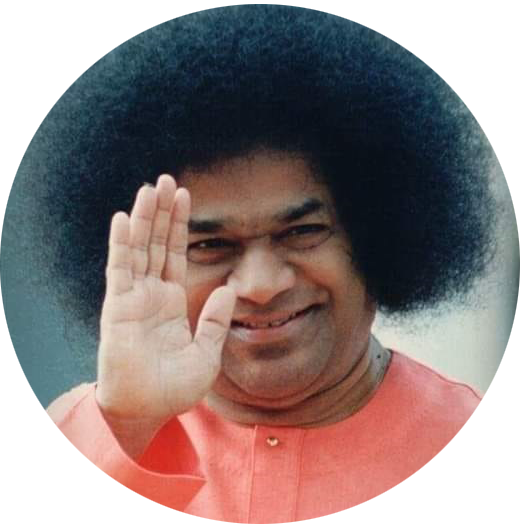
Pathways to God by Jonathan Roof, Vol. II
Excerpts shared for educational and spiritual purposes with reverence to the author. This is a non-profit project dedicated to selfless service.
FOOD:
The Basis of Life – Chapter VII
1. Unity of Mind and
Body
Human life combines material and spiritual elements in a
complex interplay. Each aspect strongly impacts the other. In fact, they merge
inextricably together. In a great painting, colour and line reflect the spirit
of the artist. However, the physical medium also influences the possibilities
of the artist's expression. Without physical representation in canvas and oil,
the spirit of the creator remains invisible. In a similar manner, our physical
bodies comprise the medium through which divinity expresses itself. Our bodies
manifest divine will and influence how we experience God. The condition of
one's body can affect his level of spiritual attainment. It is well-recognized
that our mental attitudes affect' our physical health. For example,
psychosomatic illnesses are identified as originating from within our own
minds. Asthma or skin rashes often derive from stress or psychological causes.
Less well recognized is the fact that our attitudes and behaviour are swayed by
the purity of the food we eat. The condition of the physical body also impacts
the higher faculties. Our emotional, mental, and spiritual vehicles all derive
from subtle aspects of the fare we ingest. So we must exercise great care in
choosing the foods we provide to our bodies and senses.
The importance of food to spiritual progress has been
observed since ancient times. Early leaders of the Vedic and Jewish religions
laid down elaborate rules for the preparation and consumption of food. They
understood that the subtle ingredients of the items they consumed impacted
their spiritual outlook. Indeed, spiritual disciplines, such as meditation, may
fail to achieve success if we ignore dietary cautions.
“The
body and life in it are based on food and are sustained by food, 'annam'. So,
food decides the level of attainment, high or low. Nowadays, emphasis is being
laid on discipline and regulated behaviour (nishta), without reference to food
(nashta). However great and learned a person may be, however much he pays
attention to the teachings of the Vedanta (the ageless wisdom) and takes care
to spread them, if he neglects the strict code laid down for the food that is
the very basis of the body and its functions, he cannot succeed.”
– Sri Sathya Sai Baba Gita
Vahini, p.244
We consume "food" through
our mouths, but also through our eyes, ears, skin and nose. For the sights,
sounds, and feelings that we provide to our senses also feed our bodies and
minds. The books that we read, the television or movies that we view and hear,
all contribute to the shaping of our personalities. They supply the raw
materials for our thoughts and ideals. We must exercise care in furnishing pure
and beneficial sustenance to all of our senses. For example, too much
television or loud music fills the senses with "junk food" tasty but
containing little or no nourishment.
“Sathwic
(spiritual) food should not be interpreted as something Which you take by way
of your mouth alone. We have five different organs-sabda, sparsa, rupa, rasa
and gandha. That is your ears, eyes, mouth, skin and nose. What you smell, see,
hear, touch and eat will all constitute what you take in as food.”
– Sri Sathya Sai Baba
Summer Roses on the Blue
Mountains, p. 118
Of course, the fare that we consume through our mouths also
constitutes an important part of our diet. But the spiritual ideals that we
aspire to and the holy company we keep play a more crucial role in our
development. Spiritual disciplines open our eyes to our inner divinity. They
promote the growth of love and self-sacrifice. When the mind and intellect
aspire to universal ideals, the body benefits in improved health. When the
higher faculties operate properly, the body and senses are more easily controlled.
“Vedanta
(the ageless wisdom) is the best and highest food that man can consume; it
keeps your propensities pure, your body in perfect trim, your passions
well-controlled, your emotions clear and lucid, your thoughts simple and
sincere. Good company, satsang, is more nutritious than fruits and nuts, milk
or honey. It will keep you young and fresh, full and free, beyond the
disintegrating influence of time and space.”
– Sri Sathya Sai Baba Sathya Sai Speaks 7, pp.425-426
2. Sathwic
Food: Pure Oil for the Divine Flame
Spiritual
aspirants usually express a keen interest in knowing what constitutes pure and
healthful food. But unchanging prescriptions deny the difficulty of stating
concrete answers. Cultural preferences and personal dietary needs cloud the
issue. What constitutes a correct menu at one stage of life is rendered
inappropriate in another stage. Food for the baby provides no satisfaction to a
labourer. The labourer's diet demands volumes that would be inappropriate for
an office worker. Medical conditions and food availability may dictate
particular diets for some aspirants. Even Sai Baba sometimes recommends that
one person eat a particular item, while another is advised not to. The doctor
prescribes different medicines for patients based on their individual
requirements. One method for determining correct foods is to observe the
results derived from various diets. A proper diet nourishes the body without
causing sluggishness or over-stimulation. A proper balance in eating cares for
the body without devoting too much attention to its maintenance. Sathya Sai
Baba reiterates the words of Socrates when he says: "We should eat to live
and not live to eat." Food is medicine for the body; it maintains health
but is not an end in itself.
“The
17th chapter of the Gita clearly defines the nature and tastes at the three
types of "food" eaten by man. The food that promotes love, virtue,
strength, happiness and cordiality are sathwic (conducive to spiritual effort).
That which inflames, arouses, intoxicates and heightens hunger and thirst is
rajasic (promotes involvement with the world). The food that depresses,
disrupts, and causes diseases is thamasic (causes lazy behaviour).”
– Sri Sathya Sai Baba Sathya Sai Speaks 7, p.437
We
could follow the example of the fabled devotee Sabari. As a young girl, she ran
away from home to avoid an unwanted marriage. Taking refuge in the hermitage of
Matanga Rishi, she devoted herself to spiritual practices. Her receptor told
her of the imminent arrival of Rama, the divine incarnation. And so she spent
all her days preparing for Rama's visit. Sabari took such care in selecting
only the sweetest fruits for Rama that she tasted each one to gauge its
suitability. She examined each item to see that it provided a fit offering for
God-in appearance, taste and healthful nutrition.
And,
although we need not taste each item in the market, we could exercise similar
care in gauging the suitability of the items that we feed to the Lord within.
We may safely conclude that items derived from clean and natural sources
provide the best nourishment. For example, fresh organic fruits, nuts and
vegetables contain healthful energies and promote pure impulses. They do not
suffer from the inclusion of additives, preservatives and colouring agents.
They may be purchased directly from field or orchard, while they retain their
vitality. Even these provisions satisfy best when cooked lightly. The energy
within foods dissipates when cooked too long.
“Uncooked
food, nuts and fruits, germinating pulses are the best. Use these at least at
one meal, say, for the dinner at night; this will insure long life. And, long
life is to be striven for, in order that the years may be utilized for serving
one's fellow beings.”
– Sri Sathya Sai Baba Sathya Sai Speaks 11, p.149
The use
of salt and spices requires some restraint. Excessive salt promotes high
blood-pressure and other undesirable effects. Spices add zest to a meal, but
may also inflame the senses. The climate of a region seems to bear on what is
appropriate. Hotter climates allow for more spices, perhaps as a reflection of
the environmental temperature and need for preservatives. In any case, ideal
consumption satisfies and sustains the body without causing over-stimulation or
heaviness. Tastes that induce one to over-eat cater too much to the senses.
“The
food we consume should be tasty, sustaining and pleasant. It should not be too
"hot" or too salty; there must be a balance and equilibrium
maintained. It should not arouse or deaden. Rajasic food enrages the emotions;
tamasic food induces sloth and sleep. Sathwic food satisfies, but does not
inflame the passions or sharpen the emotions.”
– Sri Sathya Sai Baba Sathya Sai Speaks 9, p.126
Sathya
Sai Baba consistently advises us to avoid eating meat. Even as a small child he
refused to eat flesh. He offered protection to various animals, which others
planned to kill for their meals. He states that animals were not created to
provide food for human beings. By eating animals we assimilate low qualities
and mean attitudes. Killing animals for food expresses violence, which
contradicts the spirit of universal love that spiritual aspirants strive for.
Cows, chickens and such creatures inhabit God's creation to evolve along their
own paths.
“Rajasic food generates virulent thoughts. By consuming
non-vegetarian food we develop brutal mentalities. Those who are practising
meditation must abstain from meat. We should also remember constantly that
ahimsa, or nonviolence, is the supreme dharma (spiritual duty). It is a sin to
kill innocent animals for the sake of filling our stomachs. We must remember
that God dwells in all creatures.”
– Sri Sathya Sai Baba Summer Showers 1979, p.96
A vegetarian menu best satisfies our health
requirements; Modem production of meat introduces antibiotics, hormones and
steroids into the flesh, which are then consumed by the eater. The many
additives remain in the flesh and generate subtle dangers to man's health and
mental state. Sathya Sai Baba states that vegetable proteins provide a cleaner
and more healthy source of nutrition than animal proteins.
“Besides
this, it is significant to note that those who live on vegetarian food are less
prone to diseases, whereas non-vegetarians are subject to more diseases. Why?
Because animal food is incompatible with the needs of the human body. Doctors
speak about proteins being present in non-vegetarian food, but the fact is that
there are better quality proteins in food articles such as vegetables, pulses,
milk, curd, etc. Non-vegetarian food not only affects man's body but also has a
deleterious effect on his mind.”
– Sri Sathya Sai Baba Indian Culture and Spirituality, p.34
Sathya
Sai Baba advises against drinking alcohol and ingesting intoxicating drugs.
Consumption of liquor induces undisciplined and animal like behaviour.
Intoxicants dissipate the body's energy and foster ill health. Alcohol and
drugs frequently cause one to act without consideration of consequences or
propriety. They often hold prime responsibility for criminal activities and
family discord. Money is better spent for the upkeep of the home or for service
to others, rather than for the purchase of drugs and liquor.
“By
moderating and modulating habits of eating and drinking, one can lay the
foundation for a spiritual life. One must prefer sathwic to rajasic foods. By
drinking intoxicating stuff, one loses control over the emotions and passions,
the impulses and instincts, the speech and movements, and one even descends to
the level of beasts. By eating flesh one develops violent tendencies and animal
diseases. The mind becomes more intractable when one indulges in rajasic food;
it can never be remoulded, if tamasic food is consumed with relish. To dwell in
ramathathwa (the reality of God) constantly, one has to be vigilant about food
and drink, consumed by both body and mind.”
– Sri Sathya Sai Baba Sathya Sai Speaks 5, pp.19-20
3. Moderation: A
Sensible Course
Moderating
one's eating habits requires the same care as choosing correct foods. Either
too much or too little nourishment causes ill health. Moderation in both
quantity and frequency of eating produces the best results. However, many
variables contribute to determining an individual's needs. One who engages in
strenuous activity requires more food than an inactive person. In addition he
or she may need to eat more frequently. A spiritual aspirant, on the other
hand, may be able to subsist on one light meal a day. But medical conditions,
such as hypoglycemia, may necessitate frequent small meals. An appropriate
program fits the individual like a well-tailored suit.
“Most
illnesses are due to over-eating or faulty eating habits. "Mitha thindi,
athi hayi": moderate food gives immense ease. The food must be clean and
pure and derived through pure means; and the strength derived from it must be
directed towards holy ends.”
– Sri Sathya Sai Baba Sathya Sai Speaks 2, p.178
Spiritual aspirants avoid eating too much, or too
frequently. Hunger justifies feeding the body, but only in the required
quantities. Ending a meal before hunger completely ends affords time for the
food to enter the blood stream to satisfy the appetite. By maintaining
awareness of eating habits, we can reduce our food intake as we age and our
needs diminish. Sathya Sai Baba enjoins us not to waste food. We should take
care that our consumption is based on the body's actual requirements.
“Do
not eat until you feel proper hunger. Practise the art of moderate eating. When
you feel three-fourths full, desist from further eating; that is to say, you
will have to stop even when you feel you can take a little more. The stomach
can be educated this way to behave properly.”
– Sri Sathya Sai Baba Jnana Vahini, p.3
Proper
quantities of food promote good digestion. The stomach should not be completely
filled, but left with a small capacity. A combination of liquid and solid food
provides a mix that can be digested efficiently. Some experimentation helps us
to determine what quantities and foods suit our own requirements.
“The
correct thing would be to divide the stomach into four equal parts and fill two
parts with solid food and one part with liquid food leaving the fourth part
empty. Filling the stomach with solid food completely promotes tamoguna
(laziness) which is positively an impediment to meditation.”
– Sri Sathya Sai Baba Summer Sowers 1979, p.87
Eating
too little weakens the body and mind. Excessive fasting injures health just as
overeating also causes harm. To paraphrase St. Francois de Sales, "The
spirit cannot endure the body when overfed, but if underfed, the body cannot
endure the spirit." Although occasional reduction of food intake can clean
and purify the system, moderation should be exercised. The body is our only
boat to carry us across the river of life. Thus we must maintain its strength.
If it remains sturdy but light, we can skip across the crests of joy and the
troughs of adversity. Undue fasting is a needless austerity that punishes the
body for imagined sins. Starving the body conveys no virtue.
“While
doing penance, the Buddha had in the beginning given up food for several days.
This resulted in a dissipation of his physical and mental energies. Realizing
that a healthy body and a sound mind are necessary prerequisites for effective
penance, he went to a nearby village and partook of curds and appeased his
hunger. From that day, he continued taking food in small quantities every day.
He was thereby able to meditate with great ease and realize the truth.”
– Sri Sathya Sai Baba Summer Showers 1979, p.86
If
devotees of Sathya Sai Baba engage in excessive fasting, they set a bad example
for others. Observers will believe that Sai Baba ruins the health of his
devotees. The aspirant may better spend time in service or devotion, rather
than concentrating too much on self and body. The body should not become the
focus of our attention. Attractive appearance does not justify diverting time
from study, service, or devotion. Physical beauty fades like a mirage in the
desert. The form is impermanent and subject to disease. We are wiser to spend
our time in discovering our own immortal divinity, the atma.
“If
your body wastes away as a result of these fasts, God will be blamed; so you
are only drawing down the calumny of people on the God you adore. They will
come to you and say, "What! Before you started this Sai Baba puja
(devotion) you were looking much better; now, you have become so thin and
frail; you can scarcely move!" and they continue talking against me in the
same strain.”
– Sri Sathya Sai Baba Sathya Sai Speaks 5, pp. 163-4
Healthy
eating maintains the strength of the whole body. It comprises a holy ritual for
sustaining the inner life force. Only by maintaining the body can we persevere
on our journey of self-discovery. Without the strength we derive from food, we
could not perform our own duties or serve others. Proper motivation should
direct our consumption. The body should not be fed in response to sorrow or
other emotions. Food cannot substitute for the attention or affection that one
craves. Careful self analysis reveals whether food is wasted or offered to our
inner divinity.
“Eating
food is a holy ritual, a yajna. It should not be performed during moments of
anxiety or emotional tension. Food has to be considered as medicine for the
illness of hunger and as the sustenance of life.”
– Sri Sathya Sai Baba Vidya Vahini, p.38
Over-identification
with the body results in undue importance being attached to food. If we focus
too much attention on the body's needs and appearance, then mealtime usurps
more attention than its due. Such attention could be better employed in
meditation, study or service. Once we realize our true nature, we overcome
excessive attachment to the physical form and its needs.
“When
you cultivate the attitude that you are the body, the body will demand from you
more food, more variety in food, more attention to appearance and physical
comfort. A large portion of the food now consumed is superfluous; man can live
healthily on much less.”
– Sri Sathya Sai Baba Sathya Sai Speaks 5, p.49
4. Food for Thought
In
India the role of food in influencing a person's thoughts and feelings has long
been recognized. Even in the days of Krishna, some 5000 years ago, the
relationship between food and one's thoughts was known. In one incident related
in the epic Mahabharata story, Krishna spoke to his disciple Arjuna about the
importance of food. Krishna to Arjuna:
"Food
makes man strong in body; the body is intimately connected with the mind.
Strength of mind depends on strength of body too. Moral conduct, good habits,
spiritual effort-all depend on the quality of the food; disease, mental
weakness, spiritual slackness- all are produced by faulty food".
– Sri Sathya Sai Baba Gita Vahini, p.239
Not
only the gross part of food, but also the subtle essence contributes to our
development. The coarse elements of food build the physical body. But even the
subtle components of food are employed by our emotional and mental faculties.
Good or bad character qualities may be ingested with our meals. The purity and
quality of our nourishment effects our intelligence and emotional state.
“Sometimes
to satisfy our palate we consume all types of food not knowing that through it
bad qualities like lust, anger, greed, attachment, arrogance and selfishness
grow in us. Many of the different foods that we eat change, in the gross
appearance at least, into waste matter which is not of any value and gets
excreted out. In a subtle way, the same food is changing into our blood and
muscle. Even more subtle parts of this food will appear as our mind. Therefore,
either for the distortions in our mind or for the sacred thoughts that generate
there from, the food that we take is mainly responsible. Therefore, good
qualities like peace, forbearance, love and attachment to truth can only be
promoted by taking good food.”
– Sri Sathya Sai Baba Summer Showers 1973, p.137
The
subtle qualities of food are also influenced by its preparation. The thoughts
and feelings of the cook are said to affect a sensitive diner. We know that
freshness and cleanliness of food impacts the health of the consumer. Dirty
dishes or infections passed on by food handlers can make a diner sick. Improper
heating or storage fosters contamination that can cause severe illness. But it
is also true that the subtle aspects of food can be polluted by improper
handling. The good or bad thoughts that run through the mind of a cook pass
subtly into food. A susceptible person may feel the impact of those thoughts.
“There
are subtle invisible thought-forms that can pass from one person to another by
such means (food preparation). Here, one has to be very careful about food,
especially when one is proceeding Godward, through the steep path of yoga.”
– Sri Sathya Sai Baba Sathya Sai Speaks 2, p.70
In
fact, all aspects of food collection and preparation potentially influence the
quality of the food. Not all people are sensitive to these forces, but
aspirants can be particularly susceptible due to their spiritual practices.
Meditation and pure diet sensitize the seeker to both positive and negative
effects of environmental factors.
“The
food one eats has to be pure, free from the subtle evils Radiated by the
persons who collect the materials, who cook the dishes and who serve them. Yes;
all these have to be carefully watched by the sadhaka (spiritual aspirant).”
– Sri Sathya Sai Baba Sathya Sai Speaks 7, p.144
Sathya
Sai Baba tells a story to illustrate the point. A pious Brahmin householder and
his wife, who lived in Malur in Mysore state, once invited a monk named
Nithyananda to dinner. One day the itinerant sage sought alms at their door.
But to properly honour him they requested that he return for dinner the
following day. The added time allowed the brahmin and his wife to festoon the
doorway and to make arrangements for a special dinner. The wife of the brahmin
planned to prepare the meal herself. However, at the last moment she became
ill. And so she asked a neighbour lady to perform the task.
During
the dinner Nithyananda was overcome by the desire to steal a silver cup, which
stood by his plate. He hid the silver vessel in the folds of his robe when he
departed from the brahmin's house. That night the monk was racked with regret.
He returned to the brahmin's house the following day to admit his guilt and beg
for forgiveness. All were aghast that such a revered renunciate could stoop to
such a low deed. A wondering servant suggested that perhaps an impure desire
may have been relayed to the monk by the food he ate.
Upon
examination, it was discovered that the neighbour who had prepared the food was
an irrepressible thief. Her evil thoughts were transmitted to the sensitive
monk through the food he ate. This incident made clear to all involved the
importance of proper thoughts during food preparation.
Even
the atmosphere surrounding the growing of food contributes to the purity of the
final product. Growing plants assimilate pollution in their environment and
pass the impurities on to the consumer of the produce. Organically grown crops
and those grown with care in natural settings provide the best nutrition.
“The
atmosphere also affects the food man consumes. The pollution in the atmosphere
is imbibed by the plants, the plants supply the grain, the grain is the basis
of the meal, the meal shapes the character and behaviour of the person who
consumes it. When the environment is clean and free from evil vibrations, the
food too is pure, and the person develops a tendency to be loving and simple.”
– Sri Sathya Sai Baba Sathya Sai Speaks 10, p.85
5. Prayer: A
Purifying Fire
It
would be almost impossible to ensure that the food we eat is always grown,
prepared, and served under ideal conditions. We would have to maintain a vigil
at fields and orchards in widely scattered locations. Our cooks would have to
remain under constant surveillance. However, a solution to the problem does
exist. The simple process of offering a meal to God, before we eat, purifies
the repast. Prayer overcomes negative influences carried by food. Like a sacred
fire, prayer bums away harmful influences.
“If
you eat food without first offering it to God, you will be affected by all the
impurities and defects present in it. On the contrary, if you offer the food to
the Lord before eating, as suggested in verse 24 of chapter 4 of the Gita
("brahmaarpanam," etc.), it becomes prasad a gift from God, and
consequently all the impurities in the food are thereby eliminated.”
– Sri Sathya Sai Baba Indian Culture And Spirituality, p.79
Mealtime
prayers have been a tradition in most cultures from the earliest times. They
express thankfulness and praise of the Lord's bounty. They invoke His blessings
on our activities and ask for strength and health. However, they also bless the
food for its purification. The idea of holy food, prasad, is common to most
religions. It acknowledges the role of food in building our physical and
spiritual vigour. It recognizes the divine nature and origin of our sustenance.
The food prayer referred to in the Bhagavad Gita, a section of the Mahabharata,
is a frequently recited mealtime blessing in India. It contains elements of praise,
gratitude and purification. The Indian version of the prayer reads as follows:
Brahmaarpanam, Brahma
Havir,
Brahmaagnau Brahmana
Hutam,
Brahmaiva Tena
Gantavyam,
Brahma Karma
Samaadhinaha,
Aham Vaishvaanaro
Bhuttva,
Praaninaam
Dehamaashritaha,
Praanaapaana Samaa
Yuktaha,
Pachaamy Annam Chatur
Vidham.
An English
translation of the verses is:
The act of offering
is Brahman (the universal absolute),
The offering itself
is Brahman,
Offered by Brahman in
the sacred fire, which is Brahman,
He alone obtains
Brahman, who in all his actions,
is fully absorbed in
Brahman.
I am Vaishvaanaro,
the all-pervading cosmic consciousness,
Having come into
existence in all living beings,
and residing within
you.
United with the
body's energies,
I consume the various
sanctified foods.
An English prayer,
based on this translation, embodies the same sentiments:
O Lord, Thou art the
food,
Thou art the enjoyer
of the food,
Thou art the giver of
the food,
Therefore, I offer all
that I consume
At thy lotus feet.
Offering
food to God, who resides within us, acknowledges His roles in providing and
digesting our meal. It affirms our own innate divinity and acceptance of His
will. Prayer requests the Lord's blessings for our activities and devotes our
actions to Him. In addition to sanctifying the food, it dedicates our strength
to serving His purposes.
“Even
the food you take should be to propitiate Him who is resident in your bodies as
the universal dweller, eager to digest the food we place in it. It is the Lord
who receives the food, digests it, and supplies strength thereby to the various
parts of the body.”
– Sri Sathya Sai Baba Sathya Sai Speaks 10, p.269
One
might ask if God is truly aware every time food is offered to Him. Many stories
illustrate the omnipresence of the Lord in this regard. One of the best known
instances relates to Shirdi Sai Baba, the previous incarnation of Sathya Sai
Baba.
One
time a lady devotee sought Shirdi Sai Baba's blessing by preparing a special
meal for Him. She cooked a splendid dinner and laid it out in preparation for
His arrival. To her horror a stray dog wandered in and headed for the dishes.
Fearing the loss of all her hard work, she chased the dog away from the
sumptuous fare. Confident of her preparations she invited Shirdi Sai to the
table.
However,
to her surprise Shirdi Sai Baba refused the meal that she had so lovingly
arranged. He said "No, you drove me away when I wanted it; now I don't
want it?" For, the Lord who resides in all beings was also resident in the
stray dog. Shirdi Sai Baba disclosed in this incident the presence of God in
all beings. God resides in each creature, and so He is immediately aware when
food is offered to Him.
6. Dedicating Your
Strength to Serving Others
Some
gourmets devote great attention to the preparation of their meals. They employ
elaborate recipes and special methods to enhance the taste and appearance of
their edibles. Whole books and magazines expound upon the subject, reflecting
the desire of such people for new taste sensations. In such a manner, many
people cater to the desires of the body. However, the task of food preparation
need not be so complex. The nourishment of the body does not demand so much
concern. Time may be better spent in the quest for self-knowledge or in serving
others.
“If
you spend your life in merely searching for your food, what is the use? This
cannot certainly be the purpose of your life. Truly man's requirements for his
daily sustenance and upkeep are very few but the time men spend in fulfilling
their requirements is much larger than their need demands.”
– Sri Sathya Sai Baba Summer Roses On The Blue Mountains,
p.101
Realization
of truth and universal love afford more fitting goals for us than the pursuit
of food. Our lives offer greater promise than the mere survival of the body.
God provides for our basic needs, as he provides for animals in the wild.
Indeed, every person is dear to God and he ever looks to our needs. Our
distress concerning food and money is mostly misplaced. Worry does not
contribute in the least to the providence that we receive.
“God,
who finds the food for the frog that is trapped between a pair of large stones,
will certainly provide food for the human beings who are so close to him. Under
such circumstances, it is not right that man should hanker after food. On the
other hand, he should go after realization of truth and develop faith in God.”
– Sri Sathya Sai Baba Summer Showers 1973, pp.47-48
Little
is accomplished if we eat simply to sustain the body with no thought of serving
others. What is the use if we live for 100 years, but never contribute to the
well-being and happiness of those around us? Will the world notice our
departure? All our striving is in vain if we cannot develop a spirit of
self-sacrifice. Even the attempt at self knowledge justifies our efforts on
earth. After self-knowledge arrives, service to others naturally follows.
“Every person consumes quantities of food, but does not
stop to calculate what he does in return to the society that helped him to
live; the food must be transformed into service, either of one's best interest,
or of the interests of others.”
– Sri Sathya Sai Baba Sathya Sai Speaks 3, p.152
Proper
eating habits and pure food, dedicated to God, aid our progress toward
self-realization. We require strength provided by healthy fare, but food should
not distract us from our higher quests. The body must be maintained as a fit
vehicle to carry us across the river of life. But the form is only a vehicle
and not a goal in itself. Our true nature is atma, the divine consciousness
which resides within. Our goal must be to look beyond the body, personality,
and mind to the eternal consciousness where God is found.
“People
who want to develop themselves along the path of the atma (the inner divinity)
must have good health and for this purpose, the control of food is essential.
By eating clean food, we can get a clean mind and through a clean mind, we can
get a clear idea of the goal. Through such a clean concept of the atma, we will
be able to get rid of illusion or maya.”
– Sri Sathya Sai Baba Summer Showers 1978, p.173