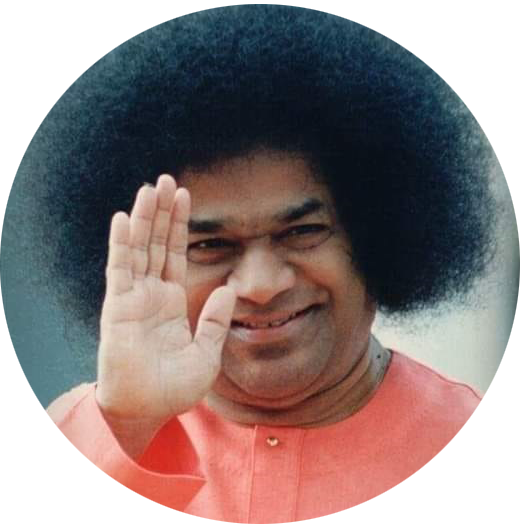
Sai Inspires – Prof. G. Venkarataman Guru Poornima Special Offering
(Daily Episode)
Part 23
In essence, there is
no difference between work and worship. But, unfortunately in these degenerate
days even worship is turned into some form of undesirable activity. Today devotion
is used for deriving sensory enjoyment. It is used more as a source of fleeting
pleasure than experiencing a fountain of enduring bliss. God will not approve
of such part‐time devotion. The Divine is Omnipresent and is watching every one
of your actions, wherever you may be. People in their ignorance imagine that
God takes no notice of them. Divinity cannot be understood as long as this
ignorance prevails.
–
Divine Discourse, December 18, 1994.
REFLECTIONS ON THE
ABOVE
Sai Ram. The Sai
Quote above offers the essence of what Lord Krishna teaches in the Gita as the Karma
Yoga, or the way to God via duty and righteous actions. In other words, Karma
Yoga offers a way of elevating even work into worship, thereby communing
with God constantly, instead of through rituals meant to mark one’s devotion.
What Swami is telling us is how humans, thinking they are worshipping God, not
only make innumerable mistakes but also get trapped in various delusions, all
of which totally annul the good they think they are doing. By contrast, the
Path of Righteous Action which is what Karma Yoga is all about, can go a long
way to make one very dear to God. So that is the gist and with that, let us
take a closer look at what Swami is teaching us.
Let us start with
devotion. People usually imagine devotion means performing various rituals, and
indeed there is a place accorded to rituals in the scriptures; further, Swami Himself
has elaborated on why and how they are important, especially in the context of
an individual trying to improve himself spiritually. On the other hand, it is
equally true that many, especially those with the means, often convert such
ritualistic worship into an ostentatious spectacle, converting it largely into
a PR affair that would attract attention to themselves, their social standing
and so on.
Swami is cautioning
us that while the individual might delude himself that such ostentatious ceremonies
might please the attendees, God would be hardly touched by them. God being the
resident of the Heart, would be more concerned with the kind of environment and
ambience that the individual is providing there.
He would make checks
like, “Is this man who calls himself My devotee, keeping his Heart clean and
fragrant enough for Me? Is he aware that the Heart is made dirty not by the
usual dust and garbage but undesirable tendencies like anger, hatred, lust,
sensual cravings of various kinds, jealousy, pride and so forth? Has he
cleansed the heart of such muck? Does he know that the fragrance I like are not
the expensive and imported room sprays now readily available but that of
virtues like truth, righteousness, compassion, forbearance, selfless love and
so on? It would seem that this devotee is more interested in making an impression
on his audience than on Me. In fact, I get the feeling that I am being used for
his PR promotion!”
Frankly, I cannot
assure you that this is the way God would actually think, but then examine carefully
the following words of Swami:
In these degenerate
days even worship is turned into some form of undesirable activity.
I also call specific
attention to another word that Swami uses in this context, which is very significant
namely, ‘part‐time devotion’. For Swami, devotion means that God is always on the
radar screen of the devotee. This is how Swami puts it:
The Divine is
Omnipresent and is watching every one of your actions, wherever you may be.
People in their ignorance imagine that God takes no notice of them. Divinity
cannot be understood as long as this ignorance prevails.
This is very true.
And I have seen many devotees, some of them quite big wigs who, when in the
outside world, are quite reluctant to even admit that they are followers of Sai
Baba. In fact, years ago, Swami would draw specific attention to such double
acting and say,
Wear vibhuti
prominently on your forehead and tell them boldly that you are headed for Puttaparthi
to have Sai Baba’s Darshan!
I guess that ought to
be enough to make clear what on‐off or part‐time devotion means. Let’s now move
on and consider the business of transforming work itself into worship. This is
a wonderful and highly practical approach recommended by Krishna, and it is in
fact ideally suited for present times, which is why Swami strongly endorses it.
He says [effectively]:
“Look, I know you are
an ultra‐busy corporate executive. Such an executive is also a child of God,
and it is God who has given him that role in this Divine Drama called life.
Thus, there is really nothing wrong in being a top CEO. However, the job is
such that you can easily forget God and, what is even worse, fall into wrong
paths. For you, the issue thus boils down to: “How to be a CEO and yet not
forget God? After all, a CEO cannot avoid being busy with travel, board
meetings, meetings with top clients, and so on. All these activities are bound
to make one lose sight of God. There IS a big problem here!”
God smiles and says,
“No son, there is really no problem, provided you keep in mind some simple
rules and observe some simple procedures.”
The rules are as
follows, and these by the way, are the basics of Karma Yoga:
• No matter who your
worldly employer might be, remember that you are really working for God! Does
that confuse you? Well, was it not God who created the Universe, the world with
everything that is to be found in it, and all of us too? The corporations too
came into existence as a part of His Divine Drama, and the part of CEO has also
been assigned only by Him. In that sense, whether we are aware of it or not,
all of us have given different roles to play by Destiny. It is important not to
ever forget that, indeed even for a second.
• Since God is the
Ultimate Boss and He does not like hanky panky, adharmaas company
policy is totally ruled out. Nor argument like share‐holders would not like
that, etc. In the final analysis, since all forms are His, even share‐holders
are Divinity in disguise.
• You may argue: ‘In
real‐life, the Directors and share‐holders would always argue for profits, no
matter how they are obtained. Yes, that is bound to happen, but treat it as a test
from God. God always likes to test; has not Swami said that God finds it quite
tasty to give tests to us?
• So, keep doing good
work always, and also constantly tell God, “Lord, I am doing this entirely for
Your pleasure. So, please make sure everything happens the way You like, i.e., in
accordance with Dharma.”
• And when the job is
done, you should, apart from making the usual report to your upstairs or
whatever, also silently thank God for being with you all along. The punch line would
be, “God, whatever I did was entirely for Your pleasure, and now, I offer this
entire work to You!”
Keep doing that all
the time, and you are home! I wonder whether you are able to see how simple and
ideal this is for today’s busy world. This formula fits every job; you can be President
of a country, a fireman, a police officer, a judge, a teacher, a cook, a
doctor, a clerk, a receptionist, an airline pilot, or whatever. Everyone’s life
is filled with action, all the time. If these actions are associated with life
as lived for God, then normal work, official duties, family obligations, in
short everything can be converted from mere action into worship; and boy,
wouldn't that see a sharp rise in your spiritual bank‐balance!
You know something?
God loves us all so much that He really bends backwards to show us many paths
to reach Him. Yes, they do involve some effort, but no one can say it is as
tough as winning the Wimbledon Finals. God’s methods are much simpler by
comparison. However, what is needed is constant application. And that is always
possible if we really love God full time and not part‐time as most tend to do,
alas without realizing it. So, that is really the essence of what Swami has
said in the quote of the day. Do take a few minutes off to ponder over it.
Thanks, and Jai Sai Ram.
Part 24
One filled with
Divine Love will be fearless, will seek nothing from others, and will be spontaneous
and selfless in expressing his love... There is no need to pray for gifts from
God. God will give of His own accord what is good for any devotee... God will
decide what to give, when to give, and where. Hence, all actions should be
dedicated to God and He should be allowed to decide what the devotee is fit to
receive ‐ the devotee should not try to tie Him down with demands. When, filled
with Pure Love and Total Faith the devotee leaves everything to God, He will
take care of His devotee. The problem is that people today lack such firm
faith.
–
Divine Discourse, June 20, 1996.
REFLECTIONS ON THE
ABOVE
Sai Ram. As most of
us are aware, the one theme that dominates most of Swami’s Divine Discourses is
LOVE. Now Swami uses the word Prema or PURE LOVE ever so often that we all
think we know what it is. Have not millions of books been written on love? And
what about the thousands of movies and TV serials and soap operas devoted to
the subject?
Arguing along those
lines, everyone believes that he or she is an expert and really knows what LOVE
is all about. Indeed, when students or, for that matter other groups shout, “We
love You Swami,” one wonders whether they really understand what they are
saying. I do not wish to appear like a spoil‐sport or as a supercilious critic
who imagines he is an expert on LOVE whereas millions of devotees who are
constantly expressing their love for Swami do not know even the A, B, C of it.
At the same time, it is absolutely important to understand that what we
normally mean by the word 'love' is quite different from what Swami means by
LOVE. Few bother to appreciate it, and so this reflection would be devoted entirely
to this perception difference, if I might call it that.
The best way of
explaining the difference that I just referred to would be to go back to an extensive
series of Discourses that Swami delivered in 1984, on the Essence of the
Bhagavad Gita. In the course of that, Swami says [this is a paraphrase]:
O man, do you realise
that when you say you love a person, you are loving that person for your own
sake and not for that person’s sake? Also, that true love does not ever change?
Let me decode this cryptic remark with an example. A little boy says he loves
his mother; of course he does, and so do all little boys all over the world, at
that age, I might add. But then is it not also a fact that after marriage,
hundreds of thousands of young men, if not millions, forsake their mothers
because they want to please their wives who do not like their husbands devoting
attention to their mothers?
In particular, most
of them are dead against being burdened with the old‐age problems of their
mothers‐in‐law. I know you would be up in arms with a zillion arguments to the contrary,
but please hold on for a second and hear me out! Swami says that it is equally
true that when a mother says she loves her son, she means she loves him for her
own sake. Swami goes on to add that there is a deep psychological and
philosophical reason as well for such attitudes, adding that these issues were
explained long, long ago by Sage Yajnavalkya to his wife Maitreyi.
Swami’s point is
simply this. Having been born in this world, almost all of us without exception
are held back by many attitudes, pre‐conceived notions, prejudices, etc., all
of which tend to make us selfish and look for the protection of self‐interest
in anything that we do. Yes, the degree might vary from person to person, but
the fact is that there is always an undercurrent of swartham and swaprayojanam
as Swami refers to selfishness and self‐interest, coloring all our actions.
Thus, while it is true that every mother does shower a lot of love on her
little children and even makes many a sacrifice for their sake, it is also true
that when in her old age these children sort of leave her to look after
herself, she does become disappointed and at times even bitter.
Such feelings of
betrayal are quite normal and people would even say that there is nothing wrong
in the abandoned mother feeling that way. However, let us leave aside such
issues about who is right and who is wrong and instead come back to the word
LOVE. The interesting point is that while we understand that word in a
particular way, in God’s dictionary that same word has an entirely different
meaning. That is what Swami explains to us again and again, and that also is
what we simply do not want to hear! Otherwise, why would Swami repeat what God
means by the word LOVE?
I know all this would
make many of you quite uncomfortable and even angry perhaps. But bear with me
for a few moments, while I highlight what God means by the word LOVE. As Swami
said in His 1984 Discourses, while humans love God for their own sake meaning
they expect God would respond by granting them all their wishes, God loves
humans for their sake and not His. This is how Swami explains the difference [a
paraphrase]:
O humans! You all say
that you love Me. Yes, you do love Me no doubt, but that is not Pure and
unselfish Love; rather, it is tinged by selfishness, meaning that you want Me
to grant this and that. Sure, I can grant all that you want and might even do
it. But are you aware that there is something I really want to give but which
none of you are too eager about? The tragedy is that you are not even aware of
what I am so eager to give you. And yet I am ready to give you all that you
want so that one day you may ask what I am so eager to give! The question now
becomes: “What is it that we all are anxious that God should grant us, and what
is it that God is so eager to give but we are not so enthusiastic about?” The answer
has been given by Swami Himself. Basically, we want happiness and God also
wants to grant us happiness. Believe it or not, the problem lies with the brand
we want and the brand He is ready to offer! To put it differently, we want
worldly happiness whereas He is more eager to give us Ananda or Bliss which is
nothing but Eternal Happiness. Swami says [this is a paraphrase]:
You want happiness no
doubt, but all of it connected with things material. Are you not aware that
anything material is transient? You buy a brand new shining car. You are proud of
it and parade it all over the place, showing off and feeling great. However,
soon your car becomes old and a beat‐up old jalopy, while others around you are
sporting the latest, shiny models. At this stage, you no longer like your car
and wish for something better than what your competitor has!
You want happiness,
and I fully appreciate that. In fact, Bliss being your nature, deep down that
is what you are actually hungering for. However, having lost your way in this
world, thanks to Maya I might add, instead of seeking Bliss which belongs to
the realm of the Heart, you are seeking worldly happiness which is connected
entirely with the mind. I know you are making a big mistake, but out of pity, I
do grant many of your worldly wishes but you end up with the cycle of pleasure
and pain, instead of Pure Happiness. When you knock on the wrong door, how can
you get a proper response? I have cautioned you about this on any number of
times; but alas, you hardly pay any attention! I do hope that one day in the future,
you would really seek what I have actually come down to give!
Let me put it to you
in black and white; what you really want is Bliss and that would be readily
available to you if you seek in the Heart, but sadly, you are not doing that. Keeping
this in mind, let us get back to the Sai Quote we started with. Basically,
Swami wants us to replace the Love we have for God which is strongly tinged
with selfishness and self‐interest, with Real Love for God; this is what Swami
refers to as Divine Love. At this point, let us go back again to the Sai Quote:
One filled with
Divine Love will be fearless, will seek nothing from others, and will be spontaneous
and selfless in expressing his love... There is no need to pray for gifts from
God. God will give of His own accord what is good for any devotee... God will
decide what to give, when to give, and where.
I hope that bit is
now easier to understand. Assuming that, let me go back to the 1984 Discourses.
As we all know, in life we appreciate reciprocity. If A shows courtesy to B,
then B expects a similar response from A. In the same way, if God loves us
selflessly, it implies that He would expect selfless love from us too. What
does loving God selflessly mean? It means that we have FULL FAITH in Him, and
are ready to accept anything that He gives us as Prasadam and nothing else. Let
us say we are doing something to please Swami. It does not work out and we feel
dejected. We also complain, “Swami, what’s happening? I was doing this to show
my love to You, and You are putting obstacles in my way? Is this fair?” By the way,
years ago, I used to do this sort of thing quite frequently. It was only much
later that I realised that for God success and failure mean nothing; what is
important is the quality of our faith and our sincerity.
There is one more
thing, and that is the sense of doer‐ship. The moment I think I am doing something
for God, it means I have forgotten that truly speaking God is the Real Doer!
And a reminder about that comes via tough obstacles or even total failure. As
an eager beaver in the early days after coming here, I tried to do many things;
almost all of them were projects connected with the Hospital, and almost all of
them bombed, meaning they flopped. For a long time, I was distraught, until it
dawned on me to ‘let go’. After that, things changed; I did my best and left it
to Swami. Some did not work out, but to make up for it, things also happened
which I did not even dream about. I realised what the Quote says. Just to
remind you, here it is again:
Hence, all actions
should be dedicated to God and He should decide what the devotee is fit to
receive. When everything is left to God out of pure love and total faith, He
will take care of His devotee.
I have tried it and
can tell you that it really works! Why don’t you too give it a try?
All
the best and Jai Sai Ram.
Part 25
Many people imagine
that they are caught up in the coils of Samsara (worldly life) and are the
victims of worldly existence. This is a ridiculous idea. It is not family life
that binds you. It has no arms to clasp you. It is you who are endowed with
hands, eyes and ears. It is you who are holding on to worldly life and
suffering the consequences. This is the truth in the false and the unreality in
the Real. This accounts for the fact that in the world today the false is deemed
true and the truth is considered as untrue.
–
Divine Discourse, December 18, 1994.
REFLECTIONS ON THE
ABOVE
Sai Ram. The above
quote in essence is the answer that Swami gives to many people who say that
they are too busy to do service. The one who gives the excuse may be rich or
poor, young or old, educated or uneducated, but the standard argument often
reduces to: “Listen, I am of this world and very much in this world. Life is a
game of intense competition and survival and takes up all the time available. I
have so many things to do and so many responsibilities. Where is the time for
spirituality and that kind of stuff?”
That is the
ready‐made argument that people give. In private conversations, depending on the
maturity of the person concerned, Swami would sometimes gently edge that person
to change or simply leave it at that, allowing the person to mature.
Nevertheless, in public discourses, Bhagawan often took the subject head‐on,
and the remark you heard at start is typical of what He would say. After
pointing out that it is we who cling to the world and not the other way around,
Swami would usually illustrate His point with a simple example. Holding a
kerchief in His hand and stretching it out, He would say:
Here is the kerchief.
Now who is holding whom? Is the kerchief holding Me or am I holding the
kerchief? Obviously, it is the latter. If now I choose to let go, the kerchief
drops from My hand, and I am not tied to it anymore. Now tell Me, if the
kerchief was holding Me, would it have dropped so easily? Clearly not. It is I
who was holding the kerchief, and it was I who let it go. The moment I let it
go, it dropped.
I have seen this demo
of the dropping kerchief any number of times, but I don’t think it ever made
any impression on anyone, simply because few take the trouble to reflect deeply
on the implications of what Swami is telling us.
You may say, “OK,
mister wise‐guy, now you tell us what Swami means?” I shall certainly do this,
and via several examples, starting with Dr. A. P. J. Abdul Kalam. Most people
would know him mainly as India’s most dynamic President who made it almost a
religion to be in constant touch with the young people of India and inspire
them. I came to know him much earlier, way back in 1985, when I was on
sabbatical from my lab and holding the Jawaharlal Nehru Fellowship to engage in
academic study and research. I applied for this Fellowship because I was sick
and tired of doing scientific administration for nearly fifteen years and wanted
to get back to academia without management headaches; the Fellowship gave me that
chance.
At that time, my good
friend Dr. V. S. Arunachalam who was then the Scientific Advisor to the Indian
Defence Minister, told me that there was a project that Dr. Kalam was doing ‐ I
should mention here that by that time, Dr. Kalam had moved over from Space to
Defence Research, was working on major projects and reporting to Dr.
Arunachalam. He wantedsome help from me specifically, and would I be willing to
take some time off, go to Hyderabad, and do the needful? At first, I was
reluctant since it meant giving up precious research time and go back to
organisation, even if for only small spells. Nevertheless, it was a national
call and so I said yes. That’s how I came to know Kalam and realised what a
truly Spartan life he led.
Cut now to the year
2002. I am here in Prasanthi, and Swami had decided that we must have Dr. Kalam
as the Chief Guest for our Annual Convocation. Aware of the fact that I knew
him, Swami sent me to Delhi to personally invite the President. All the
official arrangements for the visit to Delhi were made and one fine morning, I
was in the President’s Office, sitting before him, with a table separating us.
There were many books on the table, mostly relating to constitutional laws,
Supreme Court Judgements, Parliament Rulings and that kind of thing. That did
not surprise me in the least; what surprised me was that sitting on top of all those
tomes was a book on the Ramayana written by C.Rajagopalachari, or Rajaji as he
was known, a celebrated freedom fighter of the old guard and who in fact served
as India’s Governor General after Lord Mountbatten stepped down after ushering
in Independence and presiding over the transfer of power from the British Crown
to India.
Now anyone sitting
where I was might not have noticed the Ramayana on the presidential table but I
did, and it made a huge impact on me. Why? Because the Ramayana is all about giving
up even a kingdom for the sake of Dharma. I was very happy, silently of course.
Later, after our conversation was over, Dr. Kalam kindly said, “Why don’t you
have lunch with me before going?” I readily agreed, and when it was time for
lunch, he said, “Come, let me first show you where I live.” This building was
huge, and meant to be THE symbol of power of the mighty British Empire. It was
truly palatial in size, with huge and stately rooms, close to about 500 or six
hundred of them ‐ I tell you, it was an awesome experience, to walk through and
past room after room. Dr. Kalam looked at me, smiled and said, “Now you would
know what I mean by saying that for my morning walk I simply walk across this building
from one end to the other!”
I am sure many of you
must be wondering whether I have gone off the track, on to something that has
nothing to do with the Sai Quote I am supposed to be discussing. Not at all. By
way of reassuring you, let me first highlight the key points made by Swami.
They are:
• It is you who
are holding on to worldly life and suffering the consequences.
• This is the truth
in the false and the unreality in the Real.
• This accounts for
the fact that in the world today the false is deemed true and the truth is
considered as untrue.
So, what do they
mean, and what has my digression into the story of my meeting with Kalam got to
do with it? That’s what we shall now consider.
Take Dr. Kalam. As
President, he lived in a grand palace built to glorify the British Empire; and
yet he lived like a simple man, because that was always his style. I have known
him earlier when he was Director of a Defence Lab in Hyderabad, and I too was
holding a similar post. As Director, he was entitled to a bungalow with three
bedrooms and all the rest, but he refused to occupy one saying, “I am a
bachelor, and one unit of the Guest House with just two rooms, one bedroom and
one living room would do for me.”
When he went to Delhi
on promotion and joined the ranks of top civil servants, he still refused a
bungalow and lived in the DRDO Guest House there, occupying just two rooms. Was
it any surprise that he did the same when he became the First Citizen? The
point is that he did not allow the world to capture him with his trappings. I
must here not forget to call attention to Harry Truman, who succeeded the
famous President Roosevelt or FDR right in the middle of WW II, and then served
one more term from 1948 to 1952. After stepping down and handing over to WW II
hero Eisenhower, the office of the Presidency, Harry Truman simply got into his
car along with his wife, and personally drove more than a thousand miles to his
home town in the state of Missouri, stopping over in ordinary hotels on the way
and mingling with ordinary people. He could have gone back home as a great hero,
riding in an official plane, and so on, but he said no. Again, a classic case
of refusing to be affected by the trappings of the world.
Let’s jump back to
Swami and examine what the tale of these two presidents have to do with Swami.
Both of them realized that what was real was the job of being President andNOT
the perks that come along with it. And when the day came, they were able to
walk away with great ease and comfort because no maya was holding them. This
brings me directly to the key sentence of Gita Vahini which sort of summarises
all this for all people. As best as I can remember it, this is what Swami says:
• You are born in
this world and must therefore live in this world. Accept that. By doing so, you
are NOT violating any commandment of the Lord.
• Destiny places you
in a certain position; it may be as a soldier or as a president or whatever. Do
your duty as you ought to.
• This means that
while your actions must relate to the world, the motivations for the actions
must be rooted in Eternal Values.
It is the last
sentence that holds the key. It is a command with deep and profound implications
and it means the following:
• Follow Dharma
always; never compromise on that.
• Don’t get attached
to the trappings of Office if you happen to hold a high one.
• Remember that at
the end of the day, it is Sathya and Dharma alone that are eternal.
Thus, when you are in
this world, see God’s immanence in the world; that is the part that is real;
ignore the trappings part, for that is unreal.
Bearing the above in
mind, it is most educative to examine the lives of Rama and Janaka. Both were
kings. While Janaka was born to be a king, ruled as one and finally gave up his
body as a king, he never allowed himself to become bound by the trappings of
royalty; and, he always adhered to Dharma.
What about Rama? He
was born to be a king but walked away from ruler‐ship when it came to upholding
a promise. That promise was actually made by His father, but it did not matter.
The father happened to be a king and a king’s word must always be honoured, or
else it would impair the rule of law. And so He went into exile. And by the
way, if you have read the Ramayana you would know two important things.
Firstly, just before He goes on exile, Rama gives away all His belongings as
charity for He does not want to be bound by possessions while leading the life
of a hermit in exile. Secondly, when Bharatha comes to persuade Rama to return,
Rama not only stubbornly holds on to His vow but also ticks off Sage Jabali who
tries to argue that world is the only reality.
As Swami says, the
world is a mixture of that which is Eternal and that which is transient. The
physical aspects that we see are always changing and that is the part which is
unreal. However, immanent in all things material and living is Pure
Consciousness or Atma or Brahman or God, call it what you will, and that is
Real. Thus the bottom line is:
Go through life
seeing God who is everywhere, in everything, and do this all the time. If you
manage to do this, then your actions would be in this world, but based on
values beyond this world.
By the way, seeing
the Omnipresence of God all the time is what Swami used to refer to as Constant
Integrated Awareness, or CIA, if you want to remember it! And living life using
CIA as the main compass is the central command of Gita Vahini. This was a
rather long reflection, but then it also shows how compressed Swami’s teachings
can be. Bearing that in mind, don’t you think we should spend more time
reflecting on the Message of the Lord than on other things, most of which are
trivial anyway?
Think
about it! Jai Sai Ram.
Part 26
The sandalwood tree
without any feeling of bitterness, imparts its fragrance even to the axe that
fells it. Divinity responds in the same manner. Some persons, blinded by their ignorance,
arrogance and folly, may say all sorts of things about God. They may even imagine
thereby that they have assailed God. But God remains totally unaffected. Even
to such bad and evil‐minded persons, He offers His blessings and benediction.
–
Divine Discourse, June 18, 1989.
REFLECTIONS ON THE
ABOVE
Sai Ram. The quote
that you heard is a beautiful one that reminds us of an important truth, one
whose subtleties we seldom bother to understand as well as appreciate. Over the
years, I have heard thousands of people tell me over and over again, “You know,
Swami is Pure Love.” And yet, do you know how many of these people also told me
that they have got angry with Swami, quarrelled with Him [mentally of course],
and so forth? You might legitimately wonder: ‘Quarrel with Swami? Get angry
with Him? What for?’ And the answer is, “For the usual things, such as not
granting this prayer or that!” It is in that context that the above quote
becomes crucially important; so, let us try to spend some time understanding
it, as carefully as we can.
It all starts with
the word LOVE and the different ways in which humans understand it, as opposed
to what God means by that very same word. For us, love means affection, deep attachment,
etc., and all that goes with these characteristics. What we fail to appreciate
is that this is merely a WORLDLY interpretation of the word LOVE, and since our
perception of the world is almost 100% dual, the consequences of what we call
‘love’ would also have to be a mixture of what is pleasant and unpleasant. We
all have heard the phrase ‘lover’s quarrel’, haven’t we? Where would all the
pulp writers who churn out romantic novels like a factory be, if there was no
such quarrel?
The point is that
love which implies attachment, affection, etc., is a strictly person to person feeling,
and hence, depending on the mood of the parties involved, the feelings can
easily swing from one direction to the other. When the two parties provide each
other satisfaction in the ways they expect, then there is amity, friendliness,
etc. But if one or the other party disappoints, there are sparks. This happens
between father and son, mother and daughter, husband and wife, between
brothers, friends and what not.
Inevitably, the
devotee carries over such an attitude when dealing with God also. As Swami says,
the devotee might declare that he loves God, but truly speaking, he loves God
because God grants him all that he wants. But suppose God takes a break, the
devotee becomes disappointed, and tries to attract attention with more pujas,
temple going, offerings of various kinds, and so on. And if God continues to
remain ‘aloof,’ then the devotee’s love for God often turns into
disappointment, and he even begins to say unpleasant things. No surprise then
that this happens when God comes down as Avatar. Swami has described any number
of times how, Arjuna, after having been taught the Gita and given a glimpse of
God in His Supreme Aspect, soon forgot that Krishna was God almighty and began
to slight, and even show disrespect. All this, says Swami, happens because
humans relate to God from a worldly perspective, where love is a relationship
between one particular being and another.
‘What’s wrong with
that?’ you might ask. Swami says in response,
Nothing, but then,
you must also be prepared for the consequences. Can you plant a neem seed and
expect the tree that grows to yield mango fruits? If your Love transcends bodily
relationship and is rooted in your true nature as the Atma, then things would
be different. When you show Pure Love to a human, he may not quite respond with
Pure Love, but with God it would be different. God being the Embodiment of Pure
Love, would always respond with Love and nothing else.
It is to drive home
that point that Swami says:
The sandalwood tree
without any feeling of bitterness, imparts its fragrance even to the axe that
fells it. Divinity responds in the same manner.
Describing how God
responds to evil persons, He then adds:
God remains totally
unaffected. Even to such bad and evil‐minded persons, He offers His blessings
and benediction.
There is an
Upanishadic story that illustrates this point which is worth narrating here. In
brief, the story goes as follows:
There is a saint, who
one day while having his bath in a river, sees a scorpion that had fallen into
the river and was drowning. Instinctively, the saint picks up the scorpion and
drops it on the river bank where it would be safe. Unfortunately, even as he is
doing so, the scorpion stings him. Unmindful of the pain and the injury, the
saint resumes his bath. But strangely, the scorpion slips back into the river;
once more the sadhu saves it but only to be stung again. Amazingly, the story
repeats a third time, at which point a man sitting some distance away on the
river bank watching all this drama could not take it anymore. Walking along the
bank and coming close to where the saint was, he shouts, “You know that the
creature you saved was a scorpion, and you also know what scorpions do. Why on
earth did you save it? I can understand you’re doing it the first time, but
after being stung, why did you keep doing it again and again? Are you mad?
Don’t you know anything about this world?”
The sadhu smiled, and
standing in the water replied, “Son, in this world, beings that are created act
according to their nature. The scorpion did what it was supposed to and I did what
I was supposed to.” Puzzled, the man on the bank asked, “Listen, I do not
follow you at all. You were supposed to save yourself, particularly after the
nasty experience the first time; but you did the exact opposite. How come?”
The saint replied,
“You are right. If I thought I was this body that you see, I would not have done
what I actually did. But then I believe I am not this body but the Eternal Atma
within.
Pure Love is the
nature of the Atma; it has no memory of past acts of hate or whatever, and always
returns all actions with Pure and Selfless Love. Now tell me, given that Atma
is my nature and given that the Atma can offer only Pure Love, what was I
supposed to do?” That story may not cut much ice with the hard‐boiled eggs of
today, and so let me at this point remind you of a couple of incidents that
happen in the Mahabharatha.
When the Pandavas
return from exile and the Kauravas refuse to hand back their kingdom, the
clouds of war begin to gather. In a bid to prevent war, Krishna goes to the
Court of the Kauravas to plead for some kind of an amicable settlement. Not
only do the Kauravas refuse to budge, but, contrary to accepted procedures,
they try to apprehend Krishna who has come as an unarmed emissary. It is a
different matter that Krishna skilfully turns the tables using His Divine
powers.
That is the first
incident, and cut now to a day a few weeks later, when preparations for war are
briskly going on, and both Duryodhana and Arjuna go to Krishna to seek support
from Him. You all know that story and I shall not go into that. My point in
bringing it up is mainly to draw attention to the fact that Duryodhana who,
just a few weeks earlier had not only insulted Krishna when He came as an
emissary but also ordered His arrest, that very same Duryodhana was now before
Krishna trying to persuade Him to loan His army! As everyone knows, Krishna
received with a smile, and even gave Duryodhana precisely what he wanted, the
army. In the words of Swami, Krishna offered to Duryodhana also His blessings
and benediction.
Wrapping up, let me
make the following observations.
• We all love God,
think of Him, worship Him, and make many offerings too. God is well aware of
this and, in the material and worldly plane, always returns love at the same
level as we give Him. The Puranas testify to this, for did not the Gods grant
even demons their various wishes?
• That said, God
plays another role as the Supreme Witness. At that level, He never does any
harm to anyone, although people always blame God for the difficulties they
experience. On the contrary, God always extends a helping hand.
• We see in the
life of Swami. In his early days, a person tried to poison Him. Of course,
nothing happened to Swami and the other person suffered. Who finally gave
relief to the suffering person? It was Swami. That is where the cutting of the
sandalwood tree and the fragrance attaching to the axe become meaningful.
• God is above human
qualities, and dwells in the realm of Advaitam where there is nothing but sheer
ONENESS. That is something we cannot understand, but great sages of yore
experienced it and they say, in that universe, there is nothing but Bliss and
Pure Love. Hence God is INCAPABLE of causing harm. Those are things that only
humans do, of course out of spiritual ignorance or ajnana.
• In short, while God
does come in human form for our sake, it is wrong of us to paint His nature in
a human texture. If, on the other hand, we try to rise to His level, and that
really is what He wants us to do, then we too would now know what anger, hatred,
jealousy, etc., are. Freed from negativity, we would then experience only
Bliss, and try to help everyone else we know to have that same experience.
I have an idea. Why
don’t we all try to do that just for one waking hour every single day? I mean
live with the attitude of a sandalwood tree, not wanting ever to see evil in
others even if there is, doing always good, and doing so as return even for
evil?
At least why not
think about it? Later, why don’t we give it a try? Still later, why don’t we
try and persuade others also to do the same? Just imagine if the six and half
billion people on earth were able to act like sandalwood tree for just one hour
a day every day, and are normal rest of the time [i.e., without being
particularly obnoxious], then how much better the world would be?
Jai
Sai Ram.
This is the last
episode of this series in the Guru Poornima 2016 season.