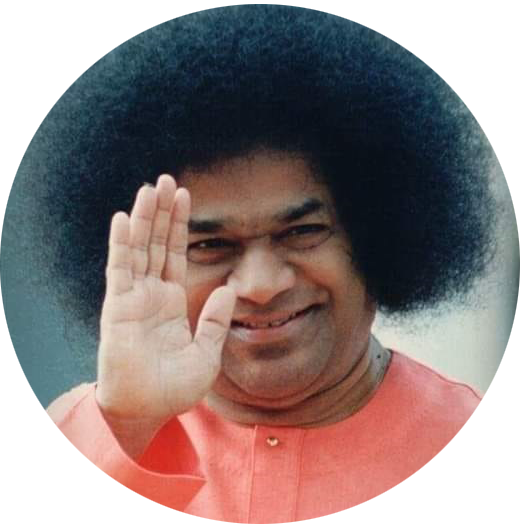
Ones of Divinity – compiled from the talks given by Ratan Lal (1918-2006)
PART III
THE ATMIC PRINCIPLE
The ultimate and sole
Reality is Sath, the plenitude of pure Awareness in which the world and
awareness of it rise and set, but which Itself shines forever without rising or
setting.
THAT WHICH EXISTS
When the mind is
silent, the Self shines as It is.
That which exists is
called by different names, such as Consciousness, Real Being, the One, Atman,
or God. It is the substratum of all manifestation. It is that which is Real.
Its nature is pure existence, without attributes, independent, beginningless, endless,
and unalterable. Existence and Consciousness are identical. When Consciousness
appears to get associated or entangled with the world, a phantom "I"
or the ego rises, which is only a reflection of its Source.
Atman is prior to
everything. It is the basis of everything. Being the substratum of everything,
axiomatic and a priori, Consciousness is not an object to be known.
When Consciousness
becomes conscious of something that appears as other than itself, it is called
mind. The mind identifies itself with matter and suffers its limitation. This
is illusion. The first thought that appears in the mind is "I am this body."
All other thoughts take their origin from this first thought. So, this
"I," or the ego, is the mother of all other thoughts.
The snake appears
when one does not recognize the rope and disappears when one recognizes the
rope. Even so, this world appears when the Self is not recognized and
disa13pears when the Self is recognized. When we wake up in the morning, the
first thought that rises is "I," and it is the last thought to
disappear before sleeping. Similarly, it is the first, the last, and the only
thought to be removed in order to dispel the ignorance that hides our True
Reality. To focus on names and forms is to fix attention on the seen instead of
the seer. What is needed is to draw the attention towards the seer and to hold
on to it. When the mind investigates its own nature continuously, it transpires
that there is no such thing as the mind. This is the direct path. When the
attention of the mind is withdrawn from the objects of sense, it realizes its
own Reality as Consciousness.
What exists is only
the Self. The Self is experienced where there is no "I." By utterly
destroying thoughts, in the place of their origin, we achieve non-attachment.
Not seeking what is other than the Self is detachment. Not leaving the Self is
Wisdom. Inquiry into the nature of the apparent "I" that is in
bondage, and realizing the nature of the implied "I" is realization.
The Atman has no sense of "I." Self-realization is only the
realization of one's own nature. It is obtained by distinguishing the eternal
from the transient. Abiding at the source of the mind, it is not difficult to
perceive its rise and fall. Changeless Being is one's true nature. Therefore,
to know the truth of one's being, and to be it, is release from bondage. Until
this state of tranquility of mind is firmly attained, the practice of abiding
in the Self and keeping the mind unsoiled by thoughts is essential. Illusion
(Maya) makes us regard Real as unreal, and vice versa.
Meditation is one's
nature. To hold on to it with effort is practice. When it becomes natural and
spontaneous, it is realization. Meditation is to be free from thoughts. The
highest state is to keep consciousness focused upon itself. In that state, even
if thoughts come and go they will not affect the Atman.
When Consciousness
appears. to have put on limitation, it is called mind. Self-inquiry is to
inquire into the mind and realize that Consciousness is the true nature of the
mind. When one feels happy momentarily about some external happening, what
really happens is that the mind turns inward and enjoys the bliss that is its
true essence. The reason for all suffering and sorrow is the limitation of
Consciousness, which is brought about by one's own ignorance. Through Divine
Love, one can discover one's identity. When immersed in worldly relations, one
thinks that one loves. This is not love but attachment. Only by activating
fundamental discrimination, which can discriminate between the real and the
unreal, between the sentient and insentient, can one discover one's true
nature. Devotion towards a Divine Being with name and form is the
first step. This will lead us toward our real and natural state. Once one loves
the real Being as much as one does the non real, Consciousness will reveal
Itself to Itself, and one's work will be over.
Inquiry is always
inquiry in the mind, by the mind, of the mind, asking itself, "Who am I?''
and waiting in silence for an answer. Any answer the mind would give would be
incorrect. Thoughts ought to be eliminated. When thoughts rise,
we should inquire, "To whom do these thoughts pertain?" The answer will
be, "To me." Then this thought will cut off all other thoughts, and
only one thought will remain, namely, "Who am I?" This thought itself
will, in the course of time, disappear, as the medicine dissolves after curing
the disease, and. only Awareness will remain. So, liberation is nothing else
but wiping out the false idea of being bound and abiding as Consciousness. As
long as one thinks oneself to be limited, separated from the rest of creation,
one will have to make effort. Worldly desires must be reduced. When there are
no desire and no fear, the attention is drawn toward the Spiritual Heart-the
seat of Bliss. All attention should be focused at the source of the mind until,
finally, the mind will plunge into the Heart and abide there.
Can the mind, which
is only an object, comprehend Being, which is the only subject? To believe that
is a mistake. The mind is awaiting liberation for its own sake; it desires the
heavens. The mind must be extinguished in the ocean of Consciousness. The seeker
can be liberated only when ignorance is removed. The Self is already realized.
It is perfect Existence, Consciousness, and Bliss. Being is free from all
thoughts and movements. To experience Being is only to be what one really is.
Knowing Self is being Self. Therefore, spiritual practices are only a
preliminary stage, which help to control the mind, to make it still. The
limited mind is the means to make. one free, though it cannot be free itself.
The freedom that one speaks of is more of getting rid of the feeling of being
an individual. Without this feeling, it is impossible for the mind to exist.
During Self-inquiry
one will experience varied results. Different states may be experienced. Still,
one should not give up the inquiry. Constant practice is needed to realize its
culmination. The mind, on losing its name and form, will forget all other names
and forms. It will come back to the place from which it departed, knowing that
everything was a dream, superimposed on the One, on which That exists. On the
world stage, different beings, according to their latent tendencies, play their
separate roles, and these roles make them feel happiness and pain. However,
beyond all these' roles there is nothing but one Consciousness, unchangeable
and full. All roles are played in the presence of Consciousness.
To realize the worth
of practicing Self-inquiry, first one has to be acquainted with this knowledge.
Belief in the oneness helps to make the mind commence the inquiry. The mind
must learn to obey, to turn its attention away from the external. Unless one wants
to be what one is, it is impossible to draw the attention inward and to love
Being itself. When the mind realizes its true nature and turns attention
towards the Being, it will be detached from all names and forms. Love and
knowledge must walk hand in hand. Knowledge without love is dry. Love without
knowledge is blind.